


Your Guide to Out of State Car Rental
- fantasma70
- Jan 9
- 13 min read
So, you're planning a road trip that crosses state lines? Let's talk about what an out of state car rental really means. It’s simply when you drive a rental car from one state into another. This could be as simple as popping over to a neighboring state for the day and coming right back, or it could be a massive cross-country adventure where you drop the car off on the other side of the country.
How Out of State Car Rentals Really Work
Ever wondered why there are special rules for taking a rental car into another state? The best way to think about it is like a library book. If you borrow a book from your local branch and return it to that same branch, it's simple. But if you try to return it to a library in a completely different city, they need a system to get that book back where it belongs.
Rental cars work the same way. They're valuable assets that a rental company tracks carefully, and each car is assigned to a home base. When a car leaves its designated area, the company has to deal with different state laws, insurance coverage, and the simple cost of getting the car back.
The Two Core Types of Interstate Rentals
When you boil it down, out of state rentals fall into one of two main buckets. Each one has a different impact on pricing and the rules you'll need to follow.
Round-Trip Rentals: This is the most common setup. You pick up a car in, say, Nevada, drive it into California for a few days, and then bring it right back to the same spot in Nevada where you started. These trips are usually the most straightforward and often come with unlimited mileage.
One-Way Rentals: This is when you pick up a car in one place and drop it off somewhere else entirely. Think renting a car in Boston for a fall foliage tour and leaving it in New York City. This flexibility is great, but it almost always comes with a "drop fee" to cover the company's cost of returning the vehicle to its home territory.
Why Rental Companies Have Special Policies
Believe it or not, rental agencies aren't trying to make your trip more complicated. They're just managing a giant, moving puzzle. When one of their cars goes on a one-way trip, it can leave a gap in their fleet back at the original location, where another customer might have been waiting for that exact car.
An out of state rental is less about the distance you drive and more about logistics. The policies are there to help the company manage its inventory and make sure cars are where they need to be.
This is exactly why those one-way fees can seem steep. You aren't just paying to use the car; you're helping pay for the cost of getting it back. That might involve an employee driving it back or the company offering a deep discount for another traveler to rent it for the return journey.
Knowing which rental locations are part of a company's main network can sometimes help you snag a better deal. A little inside knowledge goes a long way in making smart booking decisions and avoiding any sticker shock on your final bill.
What Goes Into Your Rental Price?
When you book an out-of-state car rental, the price you see at first isn't the final number. Think of it like booking a flight—several moving parts are working behind the scenes to calculate your total cost. Getting a handle on these factors is the key to knowing what you'll really pay.
The biggest drivers of your rental price are your travel dates and your specific route. Trying to rent a car for a Florida road trip during spring break? Expect to pay a premium. It’s all about supply and demand.
A one-way trip from New York down to Florida in October might be surprisingly cheap. But driving that same route in the opposite direction could cost a lot more, as rental companies know everyone—the "snowbirds"—is heading south for the winter.
The Mystery of One-Way Fees
One-way drop-off fees can feel like the biggest wild card, but there's a simple logic behind them: logistics.
Think of a rental company's cars like pieces on a giant chessboard. If you drive a car from a city with too many cars to one that desperately needs them, you're actually doing the company a favor. In that scenario, your one-way fee could be tiny, or they might even waive it completely.
On the flip side, taking a car from a hot spot where it's in high demand (like Orlando during vacation season) and dropping it somewhere less popular will likely come with a steep fee. That charge covers the cost of getting the car back where it's needed, whether that means paying an employee to drive it or offering a huge discount to another renter.
Unlimited Miles vs. A Mileage Cap
Another make-or-break detail is the mileage policy. You’ll usually see two main options, and the right one for you comes down to how far you're planning to go.
Unlimited Mileage: This is your best friend for a true cross-country road trip. You pay one flat daily rate and don't have to stress about watching the odometer. It gives you total freedom and a predictable budget.
Mileage Caps: Some rentals, especially for specialty cars or in certain areas, will have a daily limit—say, 150 miles per day. If you go over, you'll pay for each extra mile, and those fees add up fast. This can work for shorter trips if you're confident you'll stay under the limit.
Finally, the car itself makes a huge difference. A big SUV for a family trip through the mountains is always going to cost more than a zippy little sedan for city hopping. It’s a good idea to check out the different vehicle types available to find that sweet spot between what you need and what you want to spend.
By thinking through your route, timing, and mileage needs ahead of time, you can book your out-of-state rental without any last-minute sticker shock.
Navigating Insurance Across State Lines
Think of driving a rental car across state lines like playing a game where the rules change every time you enter a new area. Every state sets its own minimums for liability insurance, and the basic coverage that comes with your rental might not cut it everywhere you go.
This creates a tricky situation. The insurance that’s perfectly fine in the state where you picked up the car could leave you underinsured one state over. If you get into an accident, you could be facing a massive legal and financial mess.
This decision tree gives you a great visual for how things like your trip type and mileage needs should shape your rental strategy from the start.
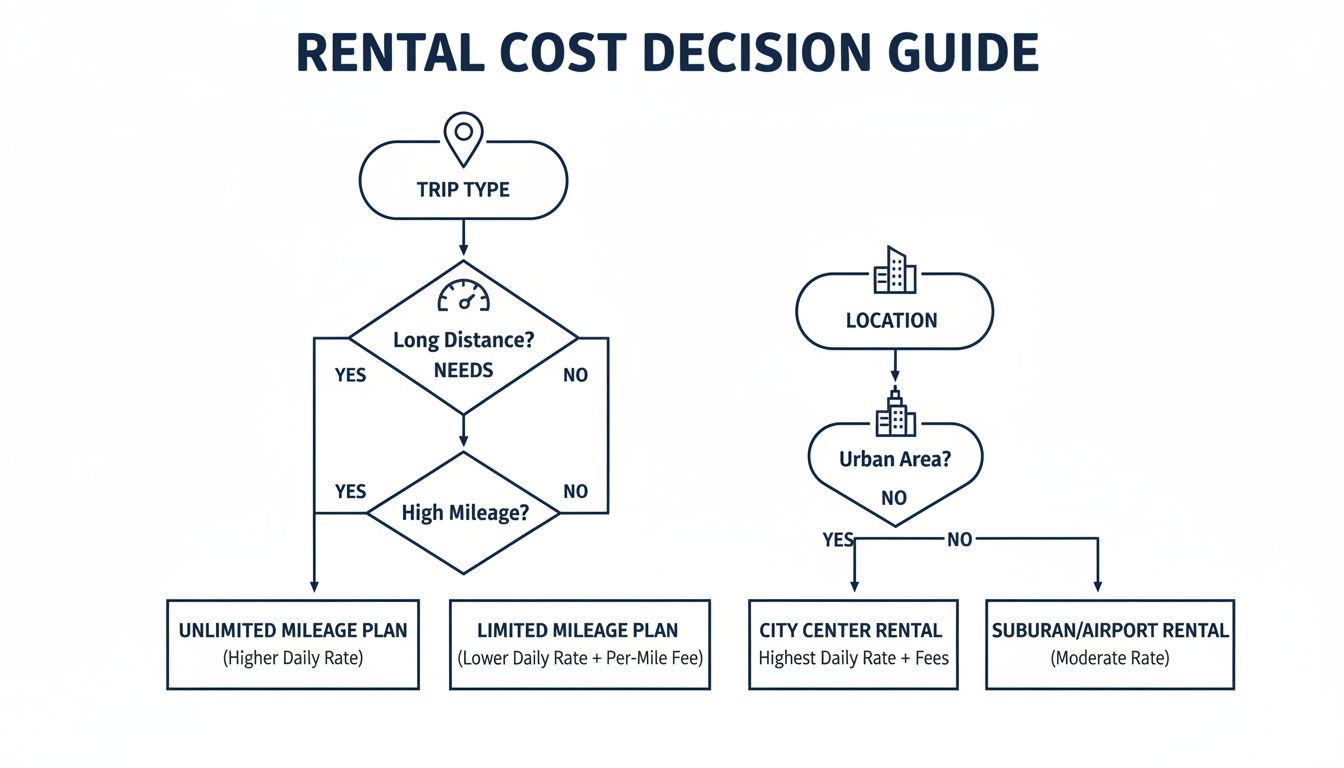
As the flowchart shows, figuring out if you need one-way travel and high mileage ahead of time is key to keeping the costs of an out of state car rental under control.
Your Three Main Insurance Options
When you're planning an interstate road trip, you really have three main ways to make sure you're covered. Each has its own good and bad points, so it pays to understand them before you’re standing at the rental counter.
Your Personal Auto Policy: A lot of personal car insurance policies will cover you in a rental. The key word is will. You absolutely have to call your agent to confirm that your coverage works nationwide and meets the minimum liability requirements for every single state on your itinerary.
Credit Card Benefits: Many premium travel credit cards offer rental car insurance as a built-in perk. This is usually secondary coverage, which means it only starts paying after your personal auto policy has paid out. Always dig into your card's fine print for any geographic restrictions or excluded vehicles.
Rental Company Coverage: This is where you see options like a Collision Damage Waiver (CDW) or Supplemental Liability Insurance (SLI). It can feel like a last-minute upsell, but buying coverage directly from the rental company is often the simplest, most straightforward way to know for sure you’re meeting all state requirements with no gaps.
The biggest mistake you can make is just assuming you're covered. Always, always double-check your policy details for an out of state car rental. A tiny clause about geographic restrictions buried in the fine print can completely void your protection when you need it most.
For even more protection on your trip, it's worth learning how to choose the right travel insurance for your adventure, as this can fill in gaps that your auto policy won't cover.
Comparing Your Car Rental Insurance Options
Choosing the right insurance comes down to your personal coverage, how much risk you're comfortable with, and the specifics of your trip. Here’s a quick comparison to help you sort through the options for your out-of-state rental.
Insurance Type | What It Typically Covers | Potential Gaps and Limitations | Best For |
|---|---|---|---|
Personal Auto Policy | Extends your existing liability and collision coverage to the rental. | May not meet higher liability minimums in other states; may not cover "loss of use" fees. | Drivers with robust personal policies who have confirmed their coverage extends to their entire route. |
Credit Card Benefits | Primarily covers collision damage to the rental vehicle (CDW/LDW). | Rarely includes liability coverage; may exclude certain vehicle types (e.g., trucks, luxury cars). | Travelers with premium cards who need to supplement their primary liability insurance. |
Rental Company's CDW/SLI | Provides direct coverage for the rental car and supplemental liability protection. | Can be expensive, with daily fees adding up significantly on longer trips. | Renters who want maximum peace of mind or whose personal insurance has significant gaps. |
By weighing these options against your travel plans, you can get behind the wheel with confidence, knowing you’re fully protected no matter which state line you happen to cross.
Your Pre-Rental Checklist for a Smooth Pickup
Walking up to the rental counter can feel like a final exam you didn't study for. To avoid that last-minute scramble, it’s best to get everything in order before you leave the house.
Think of it like packing a suitcase—each item is essential for a smooth trip. Having your documents ready ensures you get the keys in your hand quickly and start your adventure without a hitch.
Essential Documents and Payment
First things first, let's gather your core documents. It sounds obvious, but you’d be surprised how many rentals get delayed because a license is expired or a name doesn't perfectly match the reservation.
Valid Driver's License: Make sure your license is current and the name on it is an exact match for your rental booking. The photo should also be clear and easily recognizable.
Major Credit Card: The card must be in the primary driver's name. While some locations accept debit cards, they often come with extra hoops to jump through, like a credit check or a much larger security deposit.
Proof of Insurance: Keep your personal auto insurance card (or a digital version on your phone) handy. If you bought separate rental insurance, have that policy information ready to go, too.
Special Considerations for Your Trip
An out-of-state rental isn't just a simple in-town booking; it has a few more moving parts. Thinking about these details ahead of time will save you from surprises at the counter and make sure your rental agreement is set up correctly for the long haul.
Don't let a simple oversight at the pickup counter disrupt your entire trip. A few minutes of preparation can save hours of frustration and potential extra fees down the road.
Beyond just the car, remember to fit your rental plans into your overall travel strategy. For great advice on creating an effective travel itinerary that pulls all the pieces together, this guide is a fantastic resource.
Younger Drivers: If you're under the age of 25, double-check the "young driver" fee. This surcharge can add a pretty significant cost to your daily rate, so it's good to know what to expect.
International Travelers: You'll need your valid passport and, in most cases, an International Driving Permit (IDP) to go along with the driver's license from your home country.
Adding Another Driver: Planning to share the driving duties? Any additional drivers must be there in person at pickup with their own valid license. They’ll have to meet the same age and license rules as you, and an extra fee might apply.
Booking Your Rental Car Step By Step

Alright, you've got your documents ready. Now comes the fun part: locking in the perfect car for your trip. Booking an out of state car rental is pretty simple once you know the ropes. Let's walk through it together, from hunting for the best price to driving off the lot, so you can avoid any last-minute surprises.
The car rental world is massive. We're talking a global market valued at around USD 141.6 billion in 2024, with the U.S. chunk alone hitting nearly USD 49.8 billion this year. What does that mean for you? Options. Lots and lots of options. And with most rentals going to travelers just like you, companies are competing for your business. For a deeper dive into these numbers, you can explore these car rental industry insights.
This huge market is your playground, so the first step is always to shop around.
Finding and Securing Your Ideal Rental
A little bit of research upfront can save you a lot of money and headaches later. Following these steps will help you snag the best deal and steer clear of common rental traps.
Compare Quotes Online: Start with comparison sites to get a feel for the market, but don't forget to check company websites like Cars4Go directly. The daily rate is just the beginning—always look at the total estimated cost with all the taxes and fees included.
Read the Fine Print on Interstate Travel: This is a big one. Before you hit that "book" button, find the policy on geographic restrictions. You need to see in writing that they allow you to drive the car into every single state on your itinerary.
Reserve Your Vehicle in Advance: Spontaneity is great, but booking your car early usually pays off. You'll get better rates and more choices, especially if you're planning a one-way trip or heading to a popular spot.
Once you have that confirmation email, you're almost there. But the most important part of the whole process happens when you show up to get your keys.
The time you spend at the rental counter and in the parking lot is your final opportunity to prevent any misunderstandings. A thorough inspection is the best way to protect yourself from being held responsible for damage you didn't cause.
The Final Inspection Before You Drive Away
I know you’re eager to get on the road, but don't rush this part. A few minutes of careful checking now can save you from a world of frustration and unexpected charges later.
Walk Around the Vehicle: Do a full lap around the car. Look closely for any scratches, dings, or dents. Don't forget the bumpers, doors, and even the roof.
Check the Interior and Tires: Peek inside for any rips, stains, or other damage. Give the tires a quick look, too—they should all look properly inflated.
Document Everything with Photos: This is your golden rule. Use your phone to take pictures and video of every single scuff or scratch you find, no matter how tiny. Make sure your phone's timestamp feature is on.
Confirm All Damage with an Agent: Go back to the rental agent and point out every issue you documented before you leave. Make sure they add it to your rental agreement. This creates an official record that protects you.
By going through this simple checklist, you'll have a clear record of the car's condition right from the start. Now you can hit the road with complete peace of mind.
How to Avoid Common Rental Car Fees
That daily rate you see advertised for your out of state car rental? Think of it as the starting price. Extra fees can sneak onto your bill and quickly turn a great deal into a budget-buster. Knowing what these common charges are is the best way to keep your costs under control.
For instance, many people get caught off guard by airport concession fees. This is basically a surcharge you pay for the convenience of picking up your car right at the terminal. And if you’re planning an interstate trip, expect to see a one-way drop fee, which covers the company’s cost of getting the car back home.
Despite these potential extras, it's a good time to be a renter in the U.S. While prices have been going up in other parts of the world, the U.S. car rental market has actually seen prices drop by 4.8% year-over-year. The market is also growing steadily at a 7.5% annual rate, which helps keep things competitive. You can read more about these U.S. car rental market trends.
Simple Strategies to Lower Your Costs
With a little bit of planning, you can dodge a lot of these extra charges. It all comes down to knowing where the rental companies tack on fees and making smart choices to avoid them.
Book an Off-Airport Location: It might sound like a hassle, but taking a quick shuttle or rideshare to a rental office just outside the airport can save you a bundle by avoiding those steep airport fees.
Refuel the Car Yourself: Paying the rental company to refill the tank is a classic convenience trap. It's almost always cheaper to find a gas station and top it off yourself right before you drop the car off.
Decline Unnecessary Add-Ons: Do you really need the rental company's GPS or satellite radio? Your smartphone can handle navigation and entertainment just fine, and it won't cost you an extra cent.
The smartest way to save money is to know exactly what you’re signing up for. Take a few minutes to read the terms and conditions of your rental agreement, especially the part that lists all the potential fees.
When you understand what you're paying for, you can make better decisions and avoid nasty surprises on your final bill. A great first step is to find a company that believes in clear, upfront pricing. Before locking anything in, be sure to check out these excellent Cars4Go rental deals to find a fantastic rate without all the hidden costs.
Frequently Asked Questions
Got a few more questions rattling around before you hit the road? Let’s tackle some of the most common ones we hear about out of state car rentals. Getting these answers sorted out will help you book and drive with complete peace of mind.
Can I Take Any Rental Car Out of State?
Not necessarily. While most big rental companies are fine with you crossing state lines, there can be exceptions. You might run into restrictions with smaller, local agencies or for specific types of vehicles, like exotic sports cars or 15-passenger vans.
The golden rule is to always ask upfront. Before you book, double-check the company's policy and then scan your rental agreement for any "prohibited states." Driving into one of those could void your entire contract and leave you without insurance coverage.
Is an Out of State Trip More Expensive?
It certainly can be, but the biggest factor is whether you're bringing the car back. One-way rentals almost always come with a hefty "drop fee." Think of it as the company's cost for the hassle and expense of getting that car back to its home base.
If you’re doing a round trip and returning the car to the same location you picked it up from, the daily rate should be about the same as a local rental. Just keep an eye out for any mileage caps that could kick in on a long-haul journey.
What Happens If the Car Breaks Down in Another State?
Don't panic! Any good rental company will have your back with 24/7 roadside assistance. The first thing you should do is find the emergency number—it's usually on the keychain, a sticker in the glove box, or in your rental paperwork. Give them a call.
From there, they'll take over. They'll figure out what you need, whether it's a tow to a local mechanic, a quick fix on the spot, or even arranging for a replacement car from a nearby branch. Their job is to get you safely back on your adventure as quickly as possible.
Ready to plan your next road trip without any guesswork or hidden fees? With Cars4Go Rent A Car, you get straightforward pricing, great perks, and the freedom to see where the road takes you. Find the perfect ride for your trip and book your vehicle today.
Comments