


Your Guide to Car Rental Out of State
- fantasma70
- Jan 21
- 14 min read
Of course! Here is the rewritten section with a more human, natural, and expert tone.
So, can you take a rental car across state lines? Absolutely. In most cases, it’s not a problem at all, but you definitely need to do your homework. Every rental company plays by a slightly different set of rules, and what’s standard for one might be a costly add-on for another.
The trick is to look past the daily rate and understand the fine print. Things like one-way drop-off fees, mileage caps, and geographic restrictions can sneak up on you and turn a great deal into a budget-busting surprise. A little planning upfront goes a long way.
Your Essential Checklist for Out of State Rentals
Planning a multi-state road trip is half the fun, but navigating the rules of a car rental out of state can feel like a chore. It’s a bit like booking a flight—you know there are going to be different rules for carry-ons and seat choices depending on the airline. Rental cars are the same way.
To cut through the confusion and avoid any nasty surprises at the counter, you just need to know what to ask. Before you click "book," make sure you're crystal clear on three key details. Getting these right is the single best way to ensure your trip goes off without a hitch.
The Three Pillars of a Smart Rental
Think of these three points as the foundation of any good out-of-state rental. Get these squared away, and you'll be in great shape.
One-Way Fees: Are you dropping the car off in a different city? If so, expect a “drop fee.” It sounds annoying, but it’s just the rental company’s way of covering the cost of getting that car back to where it belongs. Always ask how much it is.
Mileage Caps: This is a big one. Many companies, including Cars4Go, offer unlimited mileage, which is perfect for a true road trip. But some policies have strict daily or total mileage limits. Go over, and you'll pay a hefty fee for every extra mile.
Geographic Restrictions: Believe it or not, some rental agreements will tell you where you can't go. Driving into certain states (or even across the border into Canada or Mexico) might be forbidden. You have to confirm your entire route is approved.
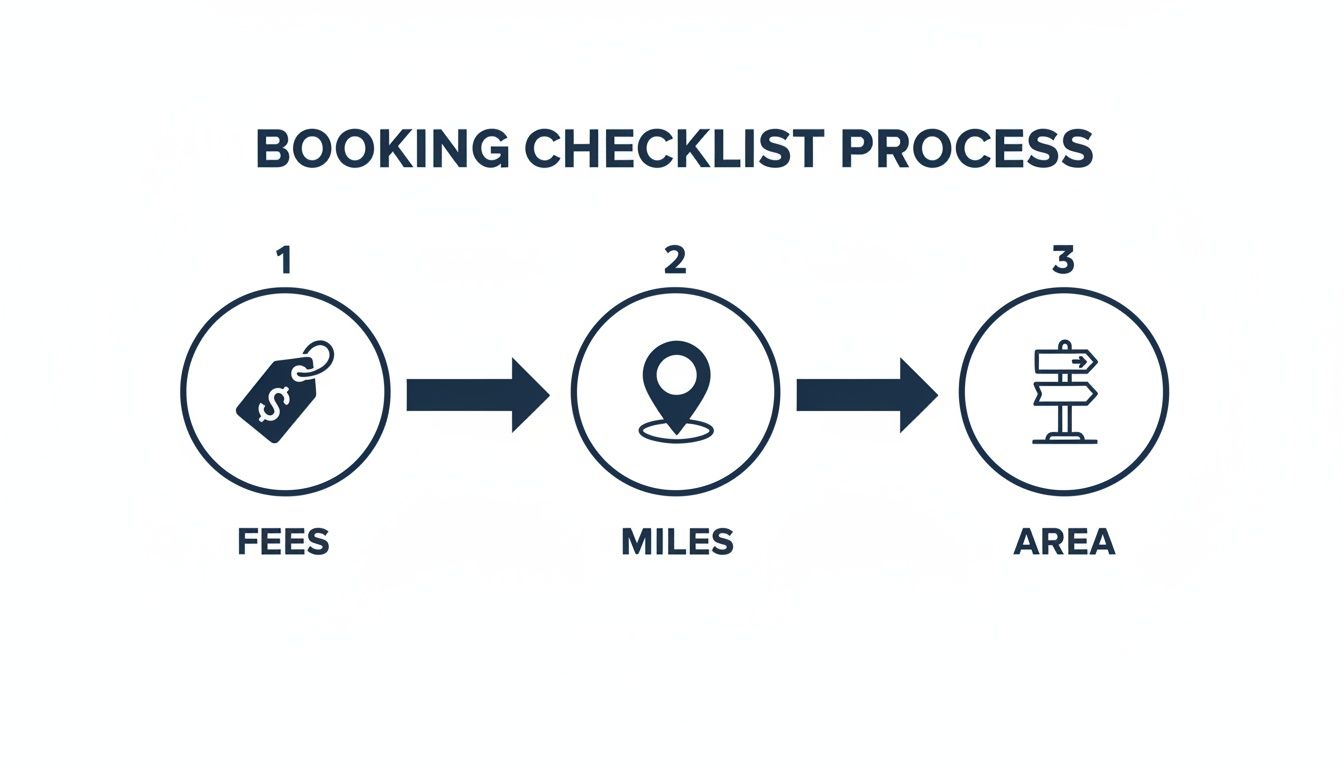
Before you finalize your booking, it’s smart to have a quick reference for these crucial points. I’ve put together a simple table to help you keep track of what to ask.
Key Factors for Your Out of State Car Rental
Factor | What to Verify | Why It Matters for Your Trip |
|---|---|---|
One-Way Fees | Is there a drop-off charge for returning to a different location? If so, how much? | This fee can add a significant amount to your total cost, sometimes hundreds of dollars. |
Mileage Policy | Does the rental include unlimited mileage, or is there a daily/trip cap? | Exceeding a mileage cap can lead to expensive per-mile charges that quickly inflate your bill. |
Travel Area | Are there any states or countries where you are not permitted to drive the vehicle? | Violating geographic restrictions can void your rental agreement and insurance coverage. |
Running through this quick check ensures there are no misunderstandings and helps you pick the right car and company for your specific trip.
Ultimately, this isn't about making things more complicated—it’s about simplifying them. By checking on these details before you commit, you’re setting yourself up for a smooth, stress-free adventure. You can just focus on the road ahead.
How to Navigate One Way Rental Fees

One-way rentals are the secret sauce for any great road trip, giving you the freedom to pick up a car in one state and drop it off in another. But this incredible convenience often comes with extra charges, sometimes called "drop-off fees" or "inter-city fees."
These fees can feel a bit random, but there’s a real-world reason they exist. Once you understand the "why" behind them, you can get much smarter about finding a great deal and planning your budget.
The Logic Behind Drop-Off Fees
Picture this: it's winter, and everyone is escaping the cold of New York for the sunshine of Miami. Hundreds of people rent cars to drive south, but almost no one is making that same trip back north. This creates a logistical headache for the rental company.
Before long, they have way too many cars sitting in Miami lots and a major shortage back in New York. The one-way drop fee is what they charge to solve this problem. It’s a fee that helps them cover the very real cost of getting that car back to a city where it’s needed.
Think of it as a logistics charge. It pays for the truck drivers, fuel, and time needed to move cars around the country and keep their inventory balanced.
This is exactly why the fee can change so drastically. A one-way trip between two busy airports with tons of back-and-forth traffic might have a tiny fee. But renting a car to a small, remote town could come with a hefty charge because it's much harder and more expensive for the company to retrieve it.
Strategies for Minimizing One-Way Costs
The good news is you don't have to just accept the first fee you see. With a little bit of clever planning, you can often knock that cost down significantly. Flexibility is your best friend here.
Spending just a few extra minutes checking different options can reveal surprisingly big price differences for what is essentially the same trip.
Here are a few things to try:
Compare Different Locations: Check the price for dropping the car off at an airport versus a downtown location in your destination city. Sometimes, just changing the branch can make a real difference in the fee.
Play with Your Dates: Rental prices are always in flux. If you can, try shifting your travel dates by a day or two. Avoiding a peak holiday weekend might not only lower your daily rate but the one-way fee as well.
Look for Special Promotions: Keep an eye out for deals. Rental companies sometimes run promotions that reduce or even waive one-way fees, especially on popular routes they want to encourage during certain seasons.
Finding Transparent and Affordable Options
The best way to handle a car rental out of state is to find a company that is upfront and honest about its pricing from the start. Nobody likes getting hit with a surprise fee at the last minute. Always look for a company that shows you the total, all-in price before asking for your credit card.
At Cars4Go, for instance, we believe in making our pricing as clear as possible. While we primarily specialize in round-trip rentals within Florida—which lets us offer great perks like unlimited mileage—we know how important it is for you to understand the fee structures of national brands for those bigger trips. You can explore our many car rental locations to see for yourself how local demand can affect pricing.
In the end, beating one-way fees is all about understanding why they exist and using that insight to your advantage. By checking different locations, staying flexible, and choosing transparent companies, you can get the freedom of a cross-country trip without wrecking your budget.
Decoding Your Rental Car Insurance Coverage
Let's be honest: insurance is probably the most confusing part of renting a car. It gets even more complicated when you’re planning on crossing state lines. The number one question I always hear is, "Will my personal car insurance cover me if I rent a car in another state?" The short answer is a frustrating "maybe."
Figuring out your coverage before you're standing at the rental counter can save you a ton of money and a major headache. The last thing you want is to be far from home and realize you made a bad assumption about your insurance.
Does Your Personal Policy Travel With You?
For most people, your personal auto insurance does, in fact, extend to rental cars. Think of it as your primary safety net—a protective bubble that follows you from your own vehicle to the one you're renting. But that bubble isn't always indestructible, especially when you're dealing with an out of state car rental.
Here’s the catch: state insurance laws can be wildly different. The fantastic coverage you have back home might not even meet the legal minimums in the state you're visiting. This is why the single most important thing you can do before your trip is to call your insurance agent.
Seriously, just pick up the phone and ask two simple questions:
Does my policy cover rental cars driven out of state?
What are my liability limits, and what’s my collision deductible?
That five-minute call will give you the clarity you need to walk up to the rental counter with confidence.
Understanding the Insurance Options at the Counter
When you pick up your rental, you'll almost always be offered a few different types of extra insurance. It can feel like a high-pressure upsell, but these options exist to fill real gaps that your personal policy might have.
Here’s a quick rundown of what they're usually offering:
Collision Damage Waiver (CDW/LDW): This isn't technically insurance; it's a waiver. By accepting it, the rental company agrees not to come after you for repair costs if the car is damaged or stolen. It's a lifesaver if your personal deductible is high or if your policy doesn't cover rentals at all.
Supplemental Liability Insurance (SLI): This is a simple liability booster. If you cause an accident, it protects you from claims for injuries or property damage, kicking in after your personal policy's limits are exhausted.
Personal Accident Insurance (PAI): This covers medical bills for you and your passengers if you're in an accident. It often overlaps with your existing health insurance, so check what you already have.
The smartest move is to know what your personal policy lacks before you go. If you find a major gap—like low liability limits or a sky-high deductible—buying the rental company's coverage can be a small price to pay for peace of mind.
Your Essential Documents Checklist
Having your paperwork ready makes picking up your car quick and painless. This is non-negotiable for any car rental out of state, and it’s especially critical for international visitors.
Before heading to the rental office, double-check that you have these three things:
A Valid Driver's License: Make sure it’s current and not expired. If you're visiting from another country, you should also have an International Driving Permit (IDP) to go along with your license from home.
A Major Credit Card: The card absolutely must be in the driver’s name. Rental companies place a temporary hold on the card as a security deposit, so make sure you have enough available credit.
Proof of Insurance: Keep a copy of your personal auto insurance card handy, whether it's a physical card or a digital version on your phone.
The rental market is incredibly competitive, with thousands of companies in the U.S. all fighting for your business. Out-of-state rentals are a massive part of this, with the market expected to hit USD 60.7 billion by 2025. This competition pushes companies to make their policies as clear as possible to win over travelers. You can explore more about these market trends and see what really influences a customer's choice.
Practical Tips for Saving Money on Your Trip

Everyone wants a good deal, but when you're booking a car rental out of state, the lowest advertised price is almost never the full story. The real savings come from understanding all the other costs—and perks—that can make or break your travel budget.
Focusing only on a low daily rate is a rookie mistake. It’s the hidden fees and surprise charges that get you. The smartest way to keep your trip affordable is to look past the sticker price and use a few practical strategies.
Look Beyond The Airport Terminal
Renting right from the airport is incredibly convenient, but you definitely pay a hefty price for it. Airport locations tack on special taxes and "concession fees" that can easily inflate your total cost by 10% to 30%. Those fees go straight from the rental company to your bill.
Here’s a simple trick: check the rates at off-airport branches, sometimes called "neighborhood" locations. A quick taxi or rideshare trip just a few miles away can often lead to some serious savings, easily covering the cost of the ride itself. It takes a little extra planning, but for a week-long trip, the difference can be huge.
Harness The Power Of Loyalty Programs
If you travel even occasionally, ignoring loyalty programs is like leaving free money on the table. Signing up is almost always free, and the benefits start rolling in right away.
Joining a rental company’s loyalty program is one of the easiest ways to unlock immediate perks. Members often get to skip the counter, receive exclusive discounts, and earn points toward free rental days or vehicle upgrades.
Even if you don't rent cars often, being a member can grant you access to special deals that the general public never sees. Over time, those points can easily turn into a free weekend rental, saving you a couple of hundred bucks on a future trip.
Focus On Unlimited Mileage
For any real out-of-state road trip, an unlimited mileage policy is an absolute must. Think of it as your financial safety net, giving you the freedom to explore without constantly glancing at the odometer.
A rental with a mileage cap might look cheaper upfront, but those per-mile overage fees are designed to sting. They can quickly turn a budget-friendly road trip into an expensive nightmare.
Always confirm that your rental agreement includes unlimited mileage. This simple check prevents any nasty surprises and lets you actually enjoy the journey. At Cars4Go, for instance, we include unlimited mileage on all our Florida rentals because we know that freedom is what a road trip is all about.
When you're comparing prices, it’s easy to get drawn in by a low base rate, only to be hit with extra fees later. This is especially true for out-of-state rentals where things like one-way drop-off charges can pop up.
Cost Comparison of Hidden Fees vs All Inclusive Pricing
Fee Type | Typical National Chain Cost | All-Inclusive Approach |
|---|---|---|
Out-of-State Surcharge | $25 - $50 per day | Included in the daily rate |
One-Way Drop-Off Fee | $100 - $500 flat fee | Transparently priced or included |
Additional Driver Fee | $10 - $15 per day | Often included for free |
GPS Rental | $12 - $18 per day | Included with certain packages |
The table makes it clear how an all-inclusive or transparent pricing model, while maybe appearing slightly higher at first, can save you a lot of money and stress in the long run.
Your Cost-Saving Checklist
Little details can have a surprisingly big impact on your final bill. Before you book your next car rental out of state, run through this quick checklist to make sure you’re getting the best possible value.
Free Additional Driver: Many companies charge $10–$15 per day to add another driver. Finding a rental that includes this for free is a huge win, especially on longer trips where you want to share the driving.
Included GPS: Using a dedicated GPS can be much more reliable than your phone in spotty service areas, but renting one can cost $12–$18 daily. If a company throws it in for free, that’s a valuable perk.
Avoid Pre-Paid Fuel: Pre-paying for a full tank of gas is almost never a good deal unless you are absolutely certain you’ll return the car running on fumes. You’re always better off filling it up yourself right before you drop it off.
By looking beyond the base rate and thinking about the total cost, you can find a genuinely great deal. If you’re planning a big trip, take a moment to explore different car rental deals to find a promotion that fits your adventure perfectly.
Finding the Right Rental for Your Travel Style

Let's be honest: a car rental out of state is never a one-size-fits-all deal. A family hitting up national parks has a completely different checklist than a business traveler bouncing between meetings in three cities. The secret to a great trip is matching the car to your journey, not the other way around.
Think of it like picking shoes. You wouldn't wear hiking boots to a wedding, right? The same logic applies here—the right vehicle makes the whole experience smoother and more enjoyable.
For Families and Leisure Travelers
When you're traveling with family or for fun, it all comes down to two things: space and freedom. Trying to cram kids, parents, and a week's worth of luggage into a tiny sedan is a surefire way to start an argument before you even leave the parking lot.
This is where an SUV or minivan really shines. You get plenty of room for people, bags, and all the souvenirs you'll inevitably pick up. But the real game-changer for any road trip is an unlimited mileage policy. It lets you take that spontaneous detour to a quirky roadside attraction without constantly crunching numbers and worrying about extra fees.
The demand for out-of-state car rentals is booming, especially for vacations. The global car rental market is expected to grow by a massive USD 188.3 billion between 2025 and 2029. North America is a huge piece of that pie, making up 40% of the growth. With over half of all rentals being for leisure, unlimited mileage isn't just a perk anymore—it's practically essential.
For the Business Professional
If you're traveling for work, your most valuable asset is time. Efficiency is everything. While a comfortable sedan is always a good starting point, the real win comes from services that cut out the hassle.
Look for companies that offer delivery and pickup services right to your hotel or airport terminal. This means you can skip the long rental counter lines and get on with your day. That's time you can spend preparing for a meeting instead of waiting around.
A few things business travelers should keep in mind:
Vehicle Class: A premium or full-size sedan helps you project a professional image.
Convenience Perks: Express check-in and counter-skip options are worth their weight in gold.
Connectivity: Make sure the car has essentials like Bluetooth and USB ports so you can stay connected while on the move.
For International Visitors
Driving in the U.S. for the first time can feel like a whole new world. For international visitors, a supportive rental company can make all the difference. The top priority should be finding a provider that offers clear guidance and robust customer service.
This means easy-to-understand policies on insurance and help navigating local driving laws. Multilingual support is a huge plus. It's also smart to consider any specific needs you might have, like looking into vehicle modifications for disabled drivers ahead of time.
In the end, choosing the right car is just about understanding what your trip demands. By thinking ahead about whether you need more cargo space or time-saving perks, you can make sure your rental car is an asset, not an obstacle. Take a look at the different car types available and find the perfect ride for your next adventure.
Your Out-of-State Rental Questions Answered
Even the best-laid plans can leave you with a few nagging questions before you commit to renting a car for a trip across state lines. Let’s clear up those common concerns so you can feel completely confident before you grab the keys and hit the road.
Can I Rent a Car in One State and Return It in Another?
Yes, you absolutely can. This is what the industry calls a “one-way rental,” and it's a standard option for road trippers and people who are relocating.
Just be aware that it almost always comes with an extra cost. You’ll likely see a "drop fee" or simply a higher daily rate baked into the price. This fee just covers the rental company's expense of getting that car back to its home base. Always look at the total price, including any one-way fees, before you book to avoid any surprises.
Do Rental Cars Have Mileage Limits for Out-of-State Travel?
This really depends on the rental company. Many major players offer unlimited mileage, which is exactly what you want for a long-distance drive. It gives you the freedom to explore without constantly checking the odometer.
However, some deals—especially the budget-friendly ones—might come with a daily or total mileage cap. If you go over, you'll get hit with per-mile fees that can really sting. For any kind of cross-country trip, locking in an unlimited mileage policy is the smartest move for your wallet.
Pro Tip: Don't just assume your rental includes unlimited mileage. Actually look for those words in the rental agreement before you sign. A quick check can literally save you hundreds of dollars.
Does My Personal Car Insurance Cover an Out-of-State Rental?
Often, yes, but you can't take it for granted. The coverage from your personal auto policy might extend to rental cars, but the rules can get tricky when you cross state lines. The minimum insurance requirements in the state you’re visiting might be different from your home state.
The best thing to do is call your insurance agent before you travel. Ask them directly if your policy covers out-of-state rentals and what your deductible is. While you're at it, check with your credit card company; many offer some form of rental car insurance as a perk, which can be a great backup.
What Should I Do If the Rental Car Breaks Down in Another State?
Any good rental company will have your back with 24/7 roadside assistance. Before you even pull out of the rental lot, find that emergency number. It's usually on a sticker on the window, on the keychain, or with the papers in the glovebox. Save it in your phone right away.
If you hit a snag, from a flat tire to a mechanical issue, just call that number. They’ll handle everything, whether it’s arranging a tow, sending someone for a jump-start, or getting you a replacement car. They’re prepared for this, so you won’t be left stranded, even if you’re a thousand miles from where you started.
Ready to plan your next Florida adventure with complete peace of mind? Cars4Go Rent A Car offers transparent pricing, unlimited mileage, and convenient delivery options to get you on the road hassle-free. Book your perfect rental today at Cars4Go!
Comments