


Your Guide to 4x4 Truck Rental in Miami
- fantasma70
- Dec 4, 2025
- 17 min read
When you rent a 4x4 truck in Miami, you’re not just getting a vehicle; you’re unlocking a whole different side of Florida. It’s your ticket to exploring everything from soft-sand beaches to the wilder trails of the Everglades—places a standard car just can't handle. It's the perfect choice for anyone looking to haul gear, tow a boat, or simply get off the beaten path.
Why Rent a 4x4 Truck for Your Florida Adventure?
Picking the right vehicle for a Florida trip is a bit like choosing the right shoes for a hike. A regular sedan is like a pair of sneakers—great for strolling down Ocean Drive but useless on a muddy, rutted trail. A 4x4 truck, on the other hand, is your all-terrain hiking boot. It gives you the power, grip, and ground clearance to explore with total confidence.
This isn't just about extreme off-roading. It’s about having practical access to some of Florida’s hidden gems. Imagine driving right onto a secluded, soft-sand beach near Key Biscayne or navigating the gravel roads to find that perfect, untouched fishing spot in the Everglades. A normal car would be stuck in seconds, but a 4x4 truck makes it look easy.
Go Where Other Rentals Cannot
The magic is all in the drivetrain. A four-wheel-drive (4x4) system pushes power to all four wheels at once, which means you get incredible traction on slippery surfaces like sand, mud, and gravel. Suddenly, your trip has a lot more possibilities.
A 4x4 truck turns a standard sightseeing vacation into a real adventure. It frees you from the pavement and lets you haul everything you need—kayaks, camping gear, fishing equipment—directly to where the action is.
It seems like more and more people are catching on to this idea. The global 4x4 rental market hit a staggering USD 72.4 billion in 2024, fueled by a growing love for adventure travel and getting out into nature.
When a 4x4 Truck is Your Best Bet in Florida
Still wondering if a 4x4 is right for you? Sometimes a standard car is all you need, but for certain Florida experiences, a truck is a game-changer. Here’s a quick breakdown to help you decide.
Activity or Destination | Standard Car Rental Suitability | 4x4 Truck Rental Advantage |
|---|---|---|
Beach Day with Gear | Okay for paved lots, but you'll have to carry everything. | Drive right onto designated soft-sand areas and unload with ease. |
Everglades Exploration | Limited to paved roads and main visitor centers. | Access remote trailheads, fishing spots, and unpaved scenic loops. |
Florida Keys Road Trip | Perfectly fine for driving the Overseas Highway (US-1). | Haul dive gear, kayaks, or even tow a small boat for water access. |
Camping in a State Park | Good for established campgrounds with paved access. | Reach more secluded, rustic campsites down dirt or gravel roads. |
Navigating Heavy Rain | Can be prone to hydroplaning; lower visibility in traffic. | Higher ground clearance and better traction provide more stability and visibility. |
Ultimately, a 4x4 truck gives you the freedom to say "yes" to more spontaneous adventures without worrying if your vehicle can handle it.
Practical Advantages for Miami and Beyond
In a place as diverse as South Florida, a 4x4 truck offers real-world benefits that go far beyond just heading off-road. The huge truck bed is a lifesaver for carrying bulky items securely. We're talking luggage for a big family, scuba gear for a trip down to the Keys, or a couple of coolers packed for a long day at the beach.
Hauling and Towing: Easily load up with fishing poles, paddleboards, or even hook up a small boat for a day on the bay.
Improved Safety: The higher seating position gives you a much better view of the road, and the extra traction is a huge plus during Florida’s notorious afternoon downpours.
Unrestricted Access: You can confidently explore state parks, scenic dirt roads, and remote coastlines without that nagging fear of getting stuck.
If you’re planning a trip and want ideas for destinations where a capable vehicle really shines, this guide to the best things to do in Siesta Key has some great inspiration. Once you're ready, you can check out our Cars4Go rental car locations in the Miami area to see what trucks are available for your dates.
Choosing the Right 4x4 Truck for Your Trip
Picking the right 4x4 truck rental for your Miami adventure isn't just a small detail—it can make or break the entire trip. Think of it like this: you wouldn’t bring a tiny carry-on for a month-long European tour, right? The same logic applies here. The right truck feels like it was made for your plans, while the wrong one can be a constant headache.
You’ll generally find yourself choosing between two main players: mid-size and full-size trucks. They might look similar at a glance, but they're built for very different jobs. Understanding which one fits your needs is the first step to a great rental experience.
Mid-Size vs. Full-Size Trucks
A mid-size truck, like a Ford Ranger or Chevy Colorado, is the nimble, efficient choice. It's perfect if you're a couple or a small family planning to hit a campsite in Ocala National Forest. You get plenty of room for your tent, cooler, and bags without having to wrestle a massive vehicle into a tight parking spot in South Beach. Plus, you’ll appreciate the better gas mileage on longer drives.
On the other hand, a full-size truck like a Ford F-150 or Ram 1500 is all about raw capability. This is the beast you call on when you’ve got big plans. Hauling a small boat down to the Keys? Loading up heavy-duty fishing gear and dive tanks for the whole crew? The massive space and power of a full-size truck are absolutely essential for jobs like that.
This simple visual can help you decide which route to take for your Florida trip.
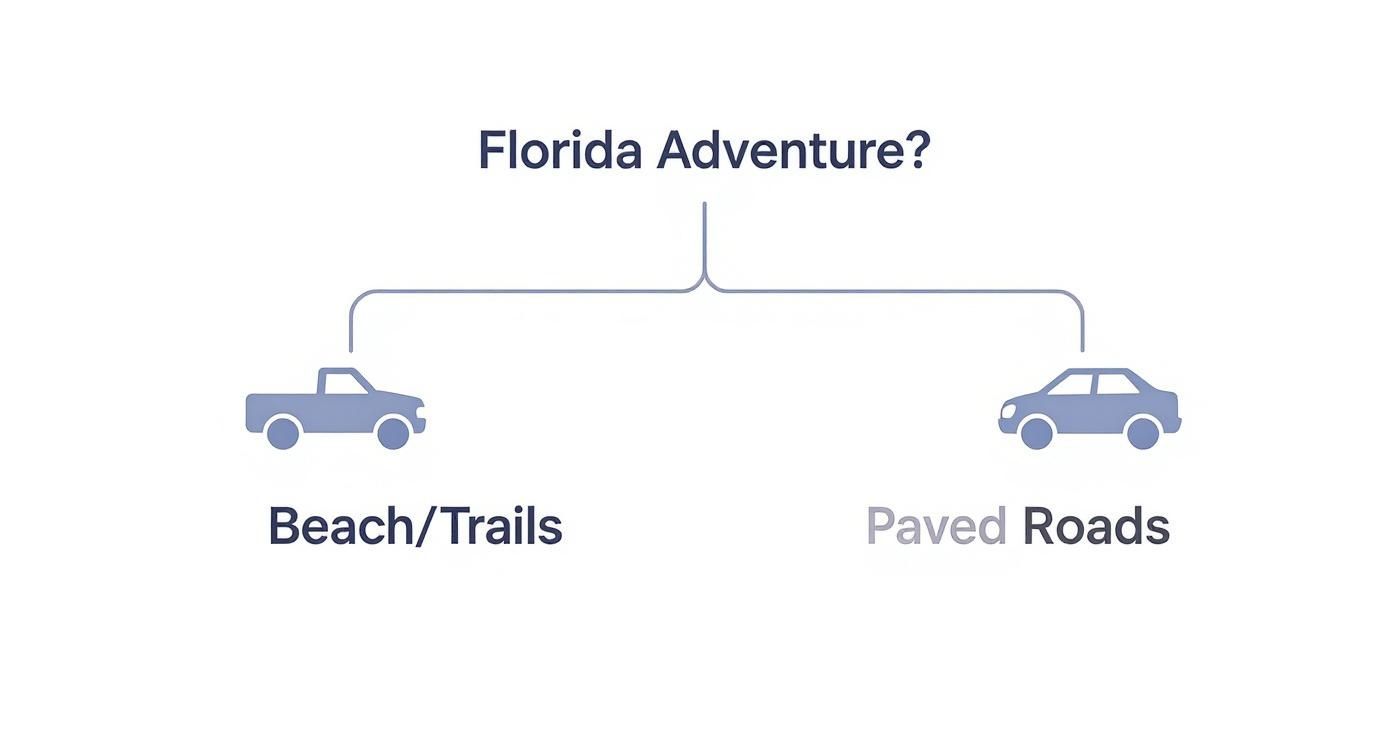
The takeaway is pretty clear: what you plan to do—whether it's hitting sandy trails or just cruising the coast—is the biggest factor in choosing your ride.
Understanding Payload and Towing Capacity
Okay, let's talk about two terms you absolutely need to know: payload and towing capacity. They might sound like technical jargon, but they’re actually simple concepts that are critical for your safety and convenience.
Payload: This is the total weight the truck can handle in its cab and bed. That includes you, your passengers, your luggage, coolers, and anything else you toss in there.
Towing Capacity: This is the maximum weight the truck can safely pull behind it. If you're renting a boat, camper, or a trailer with jet skis, this number is non-negotiable.
Pushing these limits is a bad idea. Overloading a truck strains the engine, suspension, and brakes, making it dangerous to drive.
The most common mistake people make is underestimating just how much their stuff weighs. A big cooler packed with ice and drinks, camping chairs, and a tent add up faster than you think. Always pick a truck with a capacity that leaves you plenty of wiggle room.
Here's a quick guide to put it all into perspective:
Weekend Beach Trip (2 people): A mid-size truck is perfect. You’ll have more than enough payload for chairs, an umbrella, a cooler, and beach toys.
Family Camping (4 people): A full-size truck is your best bet. The extra payload easily handles the weight of more people plus all the gear, from the tent to the firewood.
Fishing Trip with a Boat: This is full-size truck territory, no question. You'll need to know the boat's weight and confirm the truck’s towing capacity is well above that figure.
Essential Features to Look For
When you go to pick up your 4x4 truck rental, do a quick walk-around and check for a couple of key features. First, a durable bed liner is a huge plus. It protects the truck bed from getting scratched up by your gear, and it protects your gear from sliding around and getting damaged. It’s a win-win.
Also, look for tie-down points (sometimes called cleats) inside the bed. These are what you'll use to secure everything with ratchet straps or bungee cords. The last thing you want is your gear flying out on I-95. Taking a few minutes to check for these features can save you a world of trouble.
To get a better feel for our fleet and the specific options available, take a look at the different vehicle types we offer at Cars4Go. A little bit of planning upfront ensures every mile of your Florida adventure is a good one.
Getting the Keys: Rental Rules and Insurance Explained
Renting a vehicle, especially a beast like a 4x4 truck, should be the easy part of your Miami trip. But then you get to the counter, and the talk turns to rules, requirements, and a confusing menu of insurance options. It doesn't have to be a headache.
Let’s cut through the jargon. I'll walk you through exactly what you need to know about who can drive and how to handle insurance, so you can book with confidence and keep your money for the fun stuff.
Who Can Rent and Drive?
Before we even get to insurance, let's make sure you can actually get behind the wheel. Rental companies have a few non-negotiable rules to protect you and their trucks.
First up is age. The magic number in Florida, like most of the U.S., is 25. If you’re under 25, you might still be able to rent, but expect to pay a daily "young driver surcharge." This fee can add up quickly, so be prepared for it if you're between 21 and 24.
Next, you'll need your driver's license. This has to be a valid, government-issued license that hasn't expired. A picture on your phone or a temporary paper copy usually won't cut it, so make sure you have the real deal with you.
What if you're visiting from another country? The requirements are simple:
Your Home Country's License: You must have your valid license from home.
International Driving Permit (IDP): While not always required by the rental company, an IDP is a fantastic idea. It’s basically a United Nations-sanctioned translation of your license. If you get pulled over, showing an officer an IDP makes everything go much smoother.
Making Sense of Rental Car Insurance
This is the part that trips most people up and where you can easily overspend. The rental agent will offer you a few different types of coverage. Knowing what they are—and if you already have them—is the key.
You’ll primarily see two options:
Collision Damage Waiver (CDW) / Loss Damage Waiver (LDW): This isn't technically insurance. It's an agreement where the rental company "waives" its right to come after you for money if the truck is damaged or stolen. You buy this, you follow the rules, you can walk away from a wreck without a massive bill.
Liability Insurance: This is for other people. If you cause an accident, liability covers the damage to their car and their medical bills. This is required by law in Florida and doesn’t cover the truck you’re driving.
Here's the secret to saving a ton of money: Find out what insurance you already have before you get to the rental counter. You might be covered by your personal car insurance or a credit card and not even know it.
Your Pre-Trip Insurance Checklist
Don't wait until you're standing in line, feeling pressured, to figure this out. A couple of quick phone calls a week before your trip can save you a small fortune.
What to Do Before You Go:
Check Your Personal Auto Policy: Call your insurance agent and ask a simple question: "Does my policy cover rental cars, specifically a large 4x4 truck rental?" Find out if it covers both collision and liability, and ask what your deductible is.
Call Your Credit Card Company: Many travel and premium credit cards include rental car insurance as a benefit. The key is to ask if their coverage is primary or secondary (meaning it only pays after your personal policy). You'll also need to pay for the entire rental with that specific card to activate the benefit.
Once you’ve done this homework, you can walk up to that counter like a pro. You'll know exactly which coverages to politely decline and which you might need, ensuring you're fully protected without paying for the same thing twice.
Cracking the Code on Your 4x4 Rental Costs and Fees
Renting a 4x4 truck is your ticket to a real Florida adventure, but the last thing you want is a surprise on your final bill. Getting a clear picture of the total cost upfront is the key to a great trip. Let's walk through all the typical charges so you know exactly what to expect and can budget like a pro.

That eye-catching price you see online? That’s almost always the base daily rate. Think of it as the starting point. The final amount you’ll pay will include that base rate plus things like taxes, airport fees, and any extras you choose to add.
Beyond the Daily Rate
The base rate gets you the keys to the truck, but there are always a few other standard charges that come with the territory. It’s a lot like staying at a hotel—you have the room rate, and then you have taxes and maybe a resort fee. Car rentals work the same way.
Here are a few common line items you’ll see on just about every rental agreement:
State and Local Taxes: These are the standard, non-negotiable sales taxes required by the government.
Airport Concession Fees: If you’re picking up your truck right at the airport, the rental company has to pay a fee to operate there, and that cost gets passed along to you. It's often around 10-12% of the rental cost.
Vehicle Licensing Fees: This is a small daily charge that helps the company cover the cost of keeping its vehicles registered and on the road.
These fees are standard across the industry. Knowing they exist helps you understand the bigger picture of your total rental cost, which is why it's always a good idea to check out different rental car deals in Miami to see how various packages might bundle these costs.
Watch Out for Mileage and Fuel Policies
Mileage and fuel—these are two areas where costs can sneak up on you if you’re not careful. The good news is that most rentals within Florida come with unlimited mileage, but it’s always smart to double-check, especially if you plan on leaving the state.
Fuel policies are just as important. The best and most common policy is "full-to-full." You get the truck with a full tank of gas, and you just have to bring it back full. If you don't, they'll fill it up for you, but they'll charge a much higher price per gallon than any local gas station.
A simple pro tip: Plan a gas station stop within a few miles of the rental return location. And hang onto that final fuel receipt—it’s your proof if there’s ever a question about the tank being full.
Sample 4x4 Rental Cost Breakdown
To give you a clearer idea of how these costs stack up, here’s a sample breakdown for a one-week 4x4 truck rental in Miami. Keep in mind that these are just estimates, and your actual costs will vary based on the season, truck model, and your choices.
Charge Item | Example Cost Estimate | Description |
|---|---|---|
Base Weekly Rate | $450.00 | The core cost for renting the truck for seven days. |
Taxes & Surcharges | $85.50 | Includes state/local taxes and other mandatory government fees. |
Airport Concession Fee | $54.00 | A percentage-based fee for the convenience of an airport pickup. |
Child Safety Seat | $70.00 | Optional add-on for one week (e.g., $10/day with a weekly cap). |
SunPass Transponder | $40.00 | Optional fee for the transponder rental, not including actual tolls. |
Estimated Total | $699.50 | Your potential total before fuel, tolls, and the security deposit. |
This table shows how quickly the base rate can grow. By understanding each component, you can decide which add-ons are worth it and avoid any sticker shock.
Common Add-Ons and Extra Charges
Optional extras are all about convenience, but they do add to your bottom line. It’s best to think about what you really need before you get to the counter.
Here are a few popular add-ons you might be offered:
GPS/Navigation System: This can run you $10-$15 per day. Honestly, using Google Maps or Waze on your phone is usually the smarter, cheaper move.
Child Safety Seats: An absolute must if you're traveling with little ones. Expect to pay around $10-$15 per day, though many companies cap the charge for longer rentals.
SunPass Transponder: Incredibly useful for breezing through Florida's many toll roads. Renting one helps you avoid the headache and extra administrative fees of paying tolls by mail.
Finally, don't forget about the security deposit. This isn't a charge, but a temporary hold placed on your credit card—typically $200-$500. It’s there to cover any potential issues like damage, late fees, or an empty gas tank. As long as you return the truck on time and in good shape, the hold is released a few days after your rental ends.
Tips for Driving and Packing Your Rental Truck
Hopping into a 4x4 truck rental for the first time is a bit different, but it's an experience you'll enjoy. These trucks sit higher, feel longer, and have more heft than a regular car, which gives you a fantastic, commanding view of the road. That said, they do demand a little more awareness, especially when you're navigating busy Miami streets or squeezing into a tight parking garage.
Before you pull out onto the road, just take a minute to get acquainted with your new ride. Adjust your mirrors to shrink those blind spots—they're bigger on a truck than what you're probably used to. It's also a good idea to practice a few turns in the rental lot to get a feel for the truck's wider turning radius. Really, it all comes down to giving yourself a little extra room for every move you make.
Navigating Miami Like a Pro
Driving a big truck in a dense urban area like Miami comes with a few unique challenges, but they’re nothing a little preparation can't handle. Your best friends behind the wheel will be patience and foresight.
First off, remember that your braking distance is longer. Because of the truck’s weight, you’ll need more road to come to a full stop. Always leave a bigger gap between you and the car ahead, especially when you're stuck in rush hour on I-95. That one simple habit can save you a world of stress.
Next up is parking. Try to find spots you can pull straight through so you don't have to back out into traffic. When you do have to reverse, take it slow and make good use of your mirrors and any backup cameras. And a quick local tip: many parking garages in South Beach have notoriously low clearance heights, so always, always check the signs before you drive in.
Driving a truck is all about smooth, deliberate movements. Try to avoid sudden lane changes or slamming on the brakes. The more gradually you accelerate, turn, and brake, the more control you'll have.
Mastering the Four-Wheel Drive System
That 4WD system is what makes your 4x4 truck rental so capable, but it isn't meant for cruising on dry, paved roads. In fact, using it on dry asphalt can actually damage the drivetrain. So, when should you actually switch it on?
When to Use 4WD High: This setting is your go-to for low-traction situations where you’re still moving at a pretty good clip. Think gravel access roads in a state park or a firm, sandy path that leads down to a quiet beach.
When to Use 4WD Low: This is your heavy-duty crawling gear. Only use it for very slow, high-power situations, like trying to get unstuck from deep sand or mud, or climbing a super steep, loose trail somewhere it's permitted.
Most modern trucks make it easy, with a simple dial or button to switch between modes. It’s a simple tool, but it's incredibly powerful when you really need it.
Packing the Truck Bed Safely and Securely
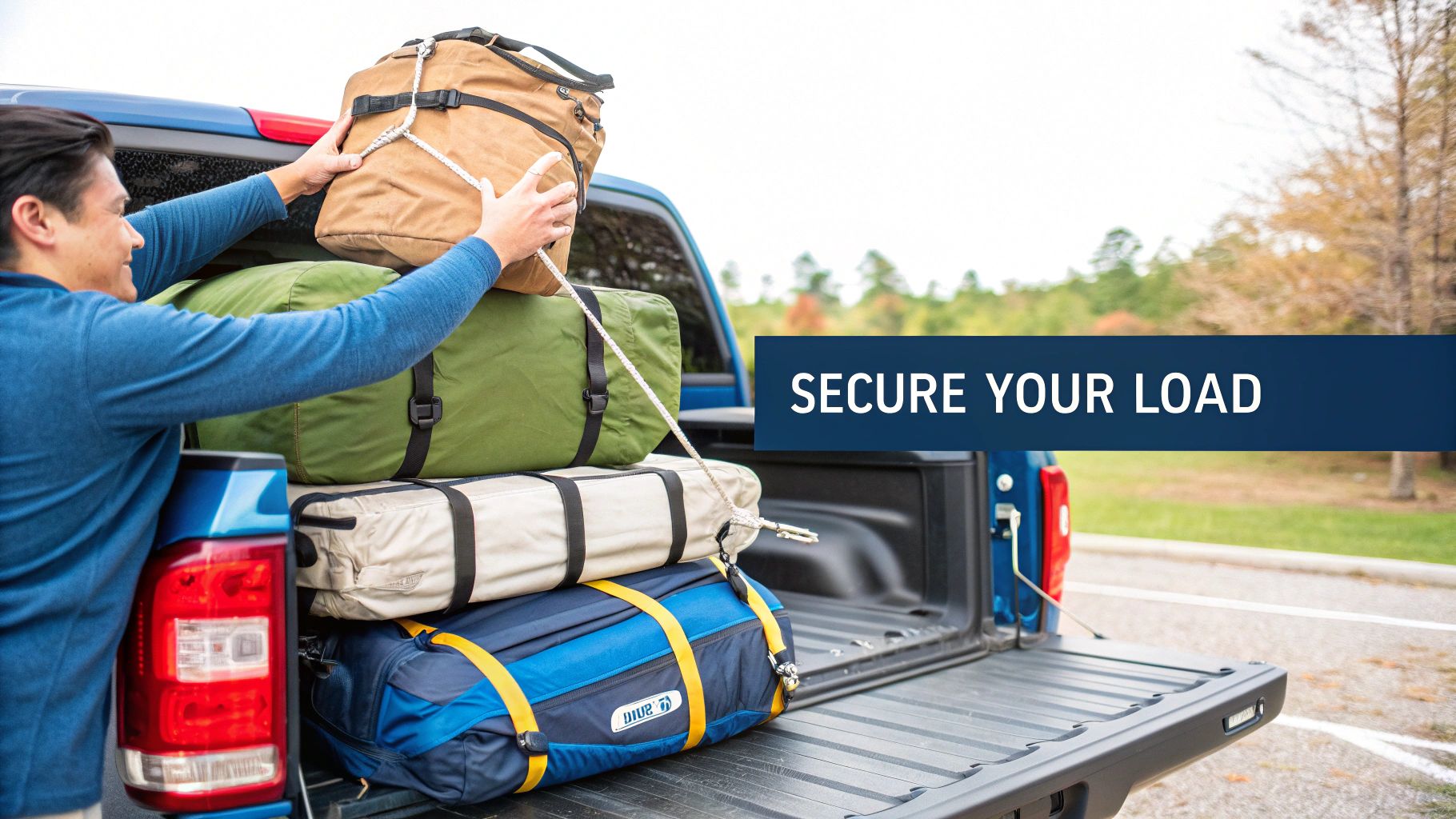
One of the biggest perks of renting a truck is that massive, open cargo bed. But loading it the right way is absolutely critical for safety. If your gear isn't tied down, it can become a dangerous projectile or even fly right out of the truck on the highway.
The golden rule here is to distribute the weight evenly. Put your heaviest items—like big coolers or bulky equipment—at the front of the bed, right up against the cab. This helps keep the truck balanced and improves handling. Lighter stuff can go toward the tailgate.
Once you've got everything loaded, it's time to secure it. This part is non-negotiable.
Your Cargo Securing Checklist:
Use Ratchet Straps: These are way better than flimsy bungee cords for anything with weight. Crisscross them over your cargo to lock everything in place.
Cover Your Load: A simple tarp can keep loose items from flying out and will also protect your gear from Florida’s famous surprise rain showers.
Check Your Straps: After you’ve been driving for a few miles, find a safe place to pull over and give your straps a quick tug. Cargo tends to shift and settle, which can make straps come loose.
Taking a few minutes to pack and secure your load properly means everything—and everyone—will get to your destination safely, ready for whatever adventure comes next.
Your 4x4 Rental Questions Answered
Alright, you've got the basics down, but it's totally normal to have a few more questions rattling around before you pull the trigger on a 4x4 truck rental. Let's clear up those last-minute details. We've put together the most common questions we hear from renters so you can book with confidence and get ready for your trip.
Think of this as your final checklist—straight answers to help you feel completely prepared for your Florida adventure, from the rules of the road to what to expect at the gas pump.
Can I Take a 4x4 Rental Truck Off-Roading in Florida?
This is the big one, and the short answer is a firm "it depends." While a 4x4 is built for tough terrain, your rental agreement is the law of the land here. Most contracts will strictly forbid true "off-roading"—which means things like blazing your own trail through the woods, mud bogging, or driving on dunes are out.
Doing any of that will almost certainly void your insurance and the rental agreement, leaving you on the hook for any and all damages. Trust us, that's a bill you don't want to see.
But it's not always a hard "no." The policy usually allows for driving on maintained, unpaved roads.
What's usually okay: Driving on designated gravel or dirt roads in places like state and national parks, especially if they lead to an official campsite or trailhead.
What's definitely not: Unmarked trails, private property without permission, beaches that aren't marked for vehicle access, or anything else that puts the truck at a high risk of getting stuck or damaged.
The single most important thing you can do is ask us for clarification. Be specific. "Can I take the gravel road to the Big Cypress National Preserve trailhead?" is a much better question than "Can I go off-roading?" We'll give you a clear answer.
What Is the Fuel Economy for a 4x4 Rental Truck?
Let’s be realistic about gas mileage. A 4x4 truck is a heavy, powerful machine, and it's going to be thirstier than your average sedan. That's just physics.
A mid-size truck, like a Ford Ranger, is the more efficient option. You can generally expect somewhere in the 20-24 miles per gallon (MPG) range on the highway, making it a solid choice for longer road trips across Florida.
A full-size truck, like the powerhouse Ford F-150, prioritizes strength over sipping fuel. For these, you’re looking at something closer to 15-20 MPG. Keep in mind that your actual mileage will swing based on a few things:
How you drive: A lead foot on the gas and hard braking will drink fuel faster.
Your load: The more weight you're hauling, the harder the engine works.
Using 4WD: Running in four-wheel drive mode uses more gas than standard two-wheel drive.
The best approach? Just plan for a bigger fuel budget from the get-go. That way, you can enjoy all the truck's capability without any sticker shock at the pump.
Do I Need a Special License to Rent a Pickup Truck?
Great question, and the answer is refreshingly simple: No, you do not need a special license.
To rent any of our standard pickup trucks here in Florida, your regular, valid driver's license is all you need. The same one you use for a small car is perfectly fine for getting behind the wheel of a Ford F-150.
For our international visitors, it's also pretty straightforward. Your license from your home country is the main requirement, but we strongly recommend getting an International Driving Permit (IDP). It's not a license itself, but an official translation that makes everything smoother if you're pulled over.
Can I Use a 4x4 Rental Truck for Moving?
Absolutely! A pickup truck is a fantastic choice for moving. Whether you're helping a buddy move a couch across Miami or hauling home a new find from a furniture store, that open bed is a game-changer.
Just a couple of quick things to keep in mind. We always appreciate a heads-up if you plan on using the truck for moving—transparency just makes sure everyone is on the same page.
Also, be aware of these points:
Restricted Materials: Our rental agreements typically prohibit hauling loose materials like gravel, dirt, or messy construction debris that can damage the truck bed.
Payload Capacity: Every truck has a weight limit. Make sure not to overload it and to spread the weight evenly for safe driving.
Insurance Coverage: Your rental insurance almost always covers personal moving, but it never hurts to double-check and be sure.
Renting a 4x4 truck for a day or two is often the most cost-effective and flexible way to handle a move on your own time.
Ready to book the perfect truck for your Florida adventure? At Cars4Go Rent A Car, we make the process simple with transparent pricing and a wide selection of vehicles to meet your needs. Book your 4x4 truck rental with us today and start planning your trip with confidence.
Comments