


What Is Personal Effects Coverage? Protect Your Belongings
- fantasma70
- Oct 9, 2025
- 10 min read
When you're standing at the rental car counter, you'll likely be offered a handful of extra insurance options. One you'll almost certainly see is Personal Effects Coverage (PEC). So, what is it? Think of it as a temporary safety net for your stuff—the luggage, laptop, camera, and other valuables you have with you inside the rental vehicle.
What Is Personal Effects Coverage in Simple Terms
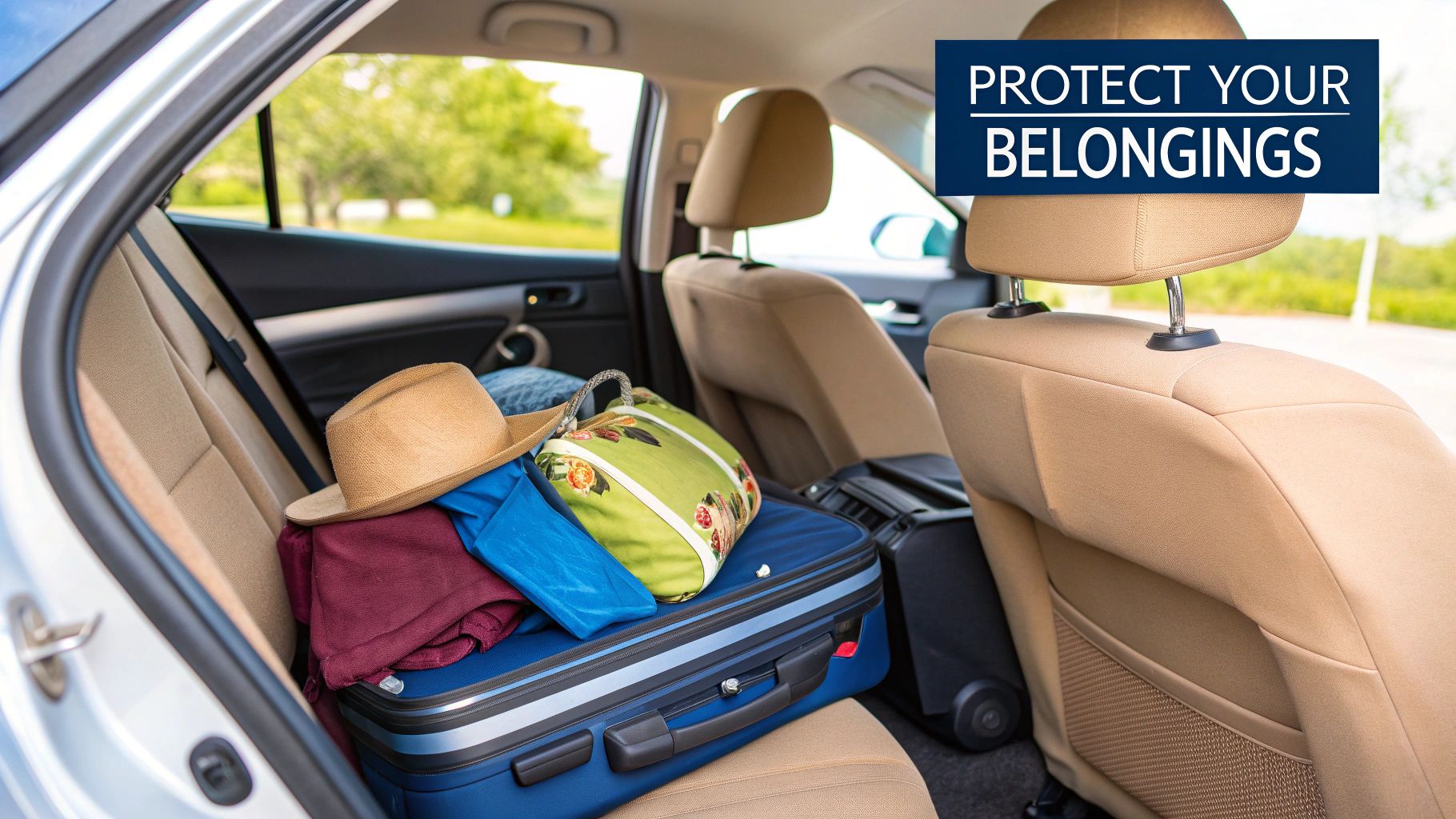
Let’s paint a picture. You're on a fantastic road trip, but you return to your parked rental car to find a broken window and your suitcase gone. The standard insurance you have for the car itself won't cover your stolen belongings. That’s the exact gap that Personal Effects Coverage is designed to fill.
This type of coverage became much more common in the mid-2000s as more people started traveling and realized they needed a straightforward way to protect their gear on the go. It covers the renter and anyone traveling with them, offering some peace of mind against theft or damage. For more insights on rental car protection, check out our other guides at https://www.cars4go.com/blogs.php.
Before diving deeper, it's really helpful to get a handle on [understanding insurance policy limits](https://nwclaimsmanagement.com/insurance-policy-limits-explained-3/). This concept is key because it determines the absolute maximum amount the insurance company will pay out if you file a claim.
Personal Effects Coverage (PEC) at a Glance
To make it even clearer, let's break down the essentials of PEC into a quick, easy-to-read summary.
Here’s a simple table that cuts through the jargon and gives you the highlights.
Aspect | Brief Description |
|---|---|
What It Is | An optional insurance plan that covers personal belongings inside a rental car. |
Who It's For | Travelers who want extra protection for items like luggage, electronics, and clothing. |
Typical Cost | Generally ranges from $5 to $10 per day, often bundled with other coverages. |
Main Benefit | Provides peace of mind and financial reimbursement if your items are stolen or damaged. |
This at-a-glance view should give you a solid starting point for deciding if this coverage is right for your next trip.
What PEC Actually Covers (and What It Doesn't)
So, what are you actually paying for when you add Personal Effects Coverage? In short, it’s protection for your stuff if it gets stolen from or damaged inside your rental car.
Think of the things you typically travel with: your laptop, that new camera, your luggage, and of course, your smartphone. PEC is designed to cover these kinds of personal belongings.
Laptops: If someone breaks in and snags your laptop, or if it's damaged in a covered incident, PEC can help.
Cameras: This covers your camera gear and accessories if they disappear from the vehicle.
Luggage: Get reimbursed if your bags are stolen right out of the car.
Smartphones: This includes your phone and other personal tech like smartwatches if they're taken from the rental.
This infographic gives you a quick visual of the typical items that fall under PEC protection.
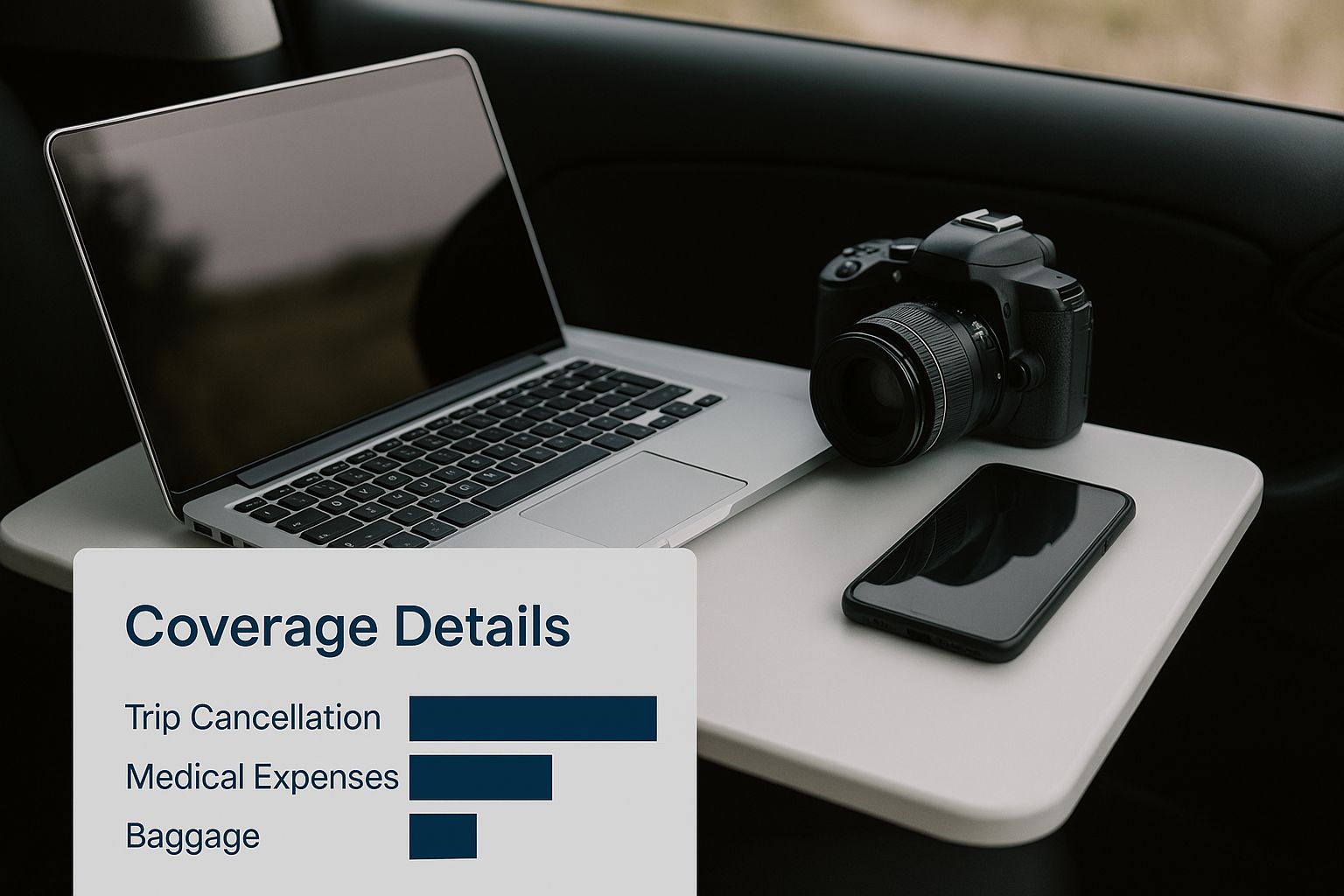
As you can see, the focus is squarely on the electronics and luggage that are most valuable—and most vulnerable—when you're on the road.
Essentially, personal effects coverage is for the belongings you wear or carry with you away from home. For instance, some policies in Ireland, like an add-on from Allianz, can protect individual items for up to €2,000, though your total claim limit depends on the specific plan you have. You can learn more about personal effects coverage at Allianz IE.
A Closer Look at What’s Covered
Beyond the big-ticket electronics, things like clothing and personal accessories are usually covered by PEC. Your tablet and earbuds also typically qualify as long as they were inside the car during the incident.
But here’s the catch: every rental company has its own rules, with specific limits per item and a total cap on what they’ll pay out. It's really important to read the fine print, because if the value of your stolen items exceeds those limits, you'll be on the hook for the difference.
Coverage Limit Highlight: Most providers cap single-item claims at €2,000 and have a total annual claim limit based on your policy.
Common Exclusions to Watch Out For
Knowing what isn't covered is just as important. PEC has some very specific exclusions, and you don’t want to find out about them after something goes wrong.
Generally, you can't claim for cash, financial documents, or valuable collectibles that were left in the car.
Cash and Securities: This is a big one. Money, stocks, and bonds are almost never covered.
High-Value Jewelry: Things like diamond rings or expensive watches often need a separate, specialized insurance policy.
Permanently Installed Equipment: The car's built-in GPS or sound system isn't your personal effect, so it's not covered here.
Pets and Perishables: Unfortunately, PEC won't cover pets or any food that might spoil.
Keeping these lists in mind is the best way to figure out if PEC is a smart buy for you. If you travel with expensive gear that isn't already covered by your homeowner's or renter's insurance, it might be just what you need. When in doubt, always ask the rental agent for the specific details of their policy.
Before you nod "yes" to Personal Effects Coverage (PEC) at the rental counter, it's worth taking a moment to ask yourself a simple question: am I already covered? You might be surprised to find you already have protection for your stuff, which could save you from paying for insurance you don't need.
Many people don't realize that their homeowners or renters insurance policy often has a built-in feature called off-premises coverage. Think of it as a safety net for your belongings that follows you outside your home. So, if your laptop gets swiped from your rental car while you're on vacation, your homeowners policy might be the one to cover the loss.
This coverage is usually your primary line of defense, meaning it pays out first, before a secondary policy like PEC even kicks in. The best way to know for sure is to pull up your policy or give your insurance agent a quick call.
Check Your Existing Policies First
A little homework before your trip can go a long way. Don't just assume you're covered; dig into the specifics to see what your policy actually says.
Homeowners or Renters Insurance: Scan your policy for terms like "off-premises" or "personal property" coverage. The most important number to find is your deductible. If it’s high—say, $1,000 or more—it might not make sense to file a claim for a smaller theft.
Premium Credit Cards: Some travel-focused credit cards come with perks like lost luggage or baggage delay reimbursement. While not the same as PEC, it's another layer of protection that can come in handy when you're on the road.
You might even have coverage for specific items you hadn't considered. For instance, specialized policies like UK car key replacement insurance explained can offer another form of protection for valuable personal items you travel with.
Pro Tip: Snap a photo of your insurance policy's main "declarations page" and save it to your phone. It's a lifesaver when you need to quickly check your coverage limits or deductible on the spot.
PEC vs. Homeowners/Renters Insurance for Travel
So, how do you decide which coverage is right for your situation? It often comes down to convenience versus cost. This table breaks down the main differences between using the rental company's PEC and relying on your own insurance.
Feature | Personal Effects Coverage (PEC) | Homeowners/Renters Insurance |
|---|---|---|
Deductible | Often has a low or zero deductible. | Typically has a higher deductible ($500-$2,500). |
Claim Impact | A claim won't affect your primary insurance rates. | Filing a claim could raise your future premiums. |
Convenience | The claims process is usually fast and simple. | Involves more paperwork and a longer process. |
Coverage Limits | Lower limits, typically capped around $1,500-$2,500. | Higher limits that cover your property's full value. |
Ultimately, PEC offers convenience and protects your primary insurance record, but your homeowners or renters policy provides more robust coverage, albeit with a higher deductible and a bit more hassle. Knowing the difference helps you make the right call for your trip.
When Buying Personal Effects Coverage Is a Smart Move
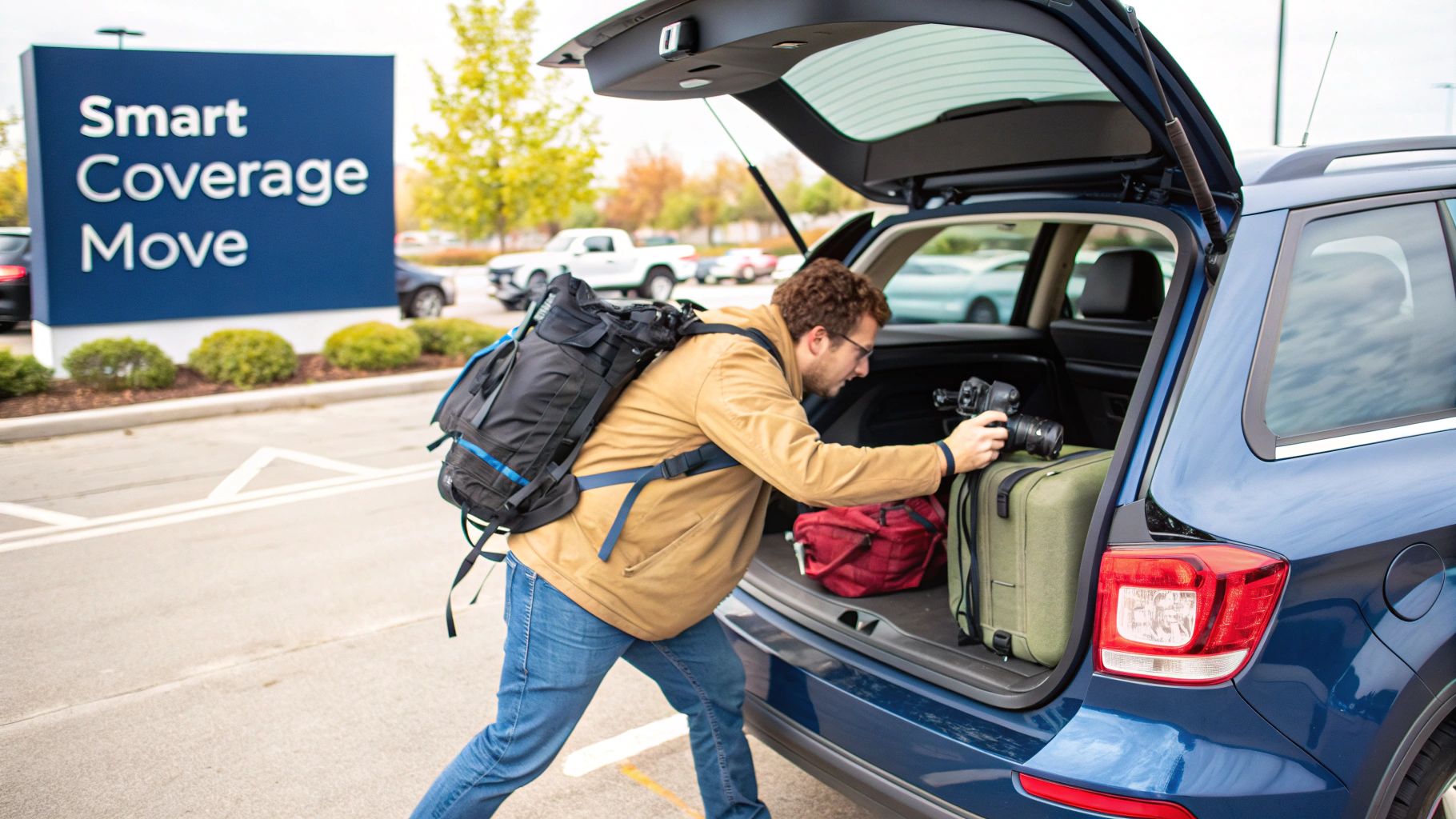
Standing at the rental counter, it's easy to feel pressured into buying extra insurance. But there are a few key situations where adding personal effects coverage (PEC) is a genuinely smart decision, shifting it from a "maybe" to a "must-have."
Think about your homeowners or renters insurance for a second. What's the deductible? If it's high, say $1,000, and a thief smashes a window and grabs your $800 camera, your main policy won't pay a dime. This is where PEC shines. It usually has a very low (or even zero) deductible, so you’re not left paying out-of-pocket for smaller losses.
International travel is another big one. Imagine trying to file an insurance claim from another country—dealing with language barriers, different laws, and time zones is a nightmare nobody wants. Grabbing PEC from the rental company keeps everything simple and local if something goes wrong.
Key Scenarios for Choosing PEC
So, when does it really make sense to check that box? Here are a few times when this coverage provides the most bang for your buck.
You Have a High Homeowners Deductible: We've all been there. If your policy’s deductible is higher than the value of the stuff you're traveling with, PEC perfectly fills that gap.
You Want to Avoid Claims on Your Primary Policy: Let's be honest, filing a claim on your home insurance can cause your rates to spike. Using PEC for a smaller incident keeps your main policy's record clean and your premiums down.
You Have No Other Coverage: If you don’t have homeowners or renters insurance at all, PEC is essentially your only safety net for items stolen from the car.
Industry data shows that the average claim for stolen personal items falls somewhere between $1,500 and $3,000. If your deductible is eating up a big chunk of that, you’re left holding the bag.
At the end of the day, it's a simple calculation of risk versus reward. If you want total peace of mind, check out our car rental deals and see how easy it is to budget for these useful add-ons.
How to File a Claim If Your Belongings Are Stolen
It’s a horrible feeling—returning to your rental car to find your belongings have been stolen. It's stressful, but knowing what to do next can make all the difference. The key is to act fast.
Your first call, without a doubt, should be to the police. Get an officer to the scene to file a report. You absolutely must get a copy of this police report, as it's the first thing any insurance company will ask for, whether it's your personal effects provider or your homeowners insurance.
Next, get in touch with the rental car company. They need to know what happened, especially if the car itself was damaged—think a broken window or a busted lock. They can also walk you through the specific procedures their insurance partner requires.
Gathering Your Documentation
After making those first crucial calls, it's time to shift gears and focus on building your case. Solid documentation is the foundation of a successful insurance claim.
Make a List: Write down every single thing that was taken. Be specific—include brands, model numbers, and any other identifying details you can remember.
Prove You Owned It: This is where receipts, credit card statements, or even the original boxes come in handy. Don't underestimate the power of photos or videos of you with the items, either.
Document the Scene: Use your phone to take pictures of the rental car. Get shots of any damage or signs of a break-in, like shattered glass on the seat.
Crucial Tip: Never leave expensive items like laptops or cameras visible inside a parked car. The oldest trick in the book is still the best: lock valuables in the trunk or, even better, take them with you.
With your evidence in hand, it's time to formally contact the insurance provider and start the claims process. Be thorough when filling out their forms and attach all the documentation you've collected. A well-organized, complete submission right from the start can help prevent frustrating delays down the road.
For more tips on navigating your rental, our guide to customer services and support offers some great resources.
Got Questions About PEC? We've Got Answers.
Even with the basics down, you probably have a few more questions about how personal effects coverage actually plays out in the real world. Let's walk through some of the most common ones so you're fully prepared before you even step up to the rental counter.
Is Personal Effects Coverage the Same as Personal Accident Insurance?
Not at all, though I can see why people get them mixed up since they're often sold together.
Here’s the simple way to remember it: Personal Effects Coverage (PEC) protects your stuff—your suitcase, your laptop, your camera. Personal Accident Insurance (PAI), on the other hand, protects you and your passengers. It covers medical costs and provides a benefit in case of accidental death.
Rental companies love to bundle these two into a single package, which just adds to the confusion. Just keep it straight: PEC is for your property, PAI is for your well-being.
What's the Typical Cost and Coverage Limit for PEC?
You'll find that PEC is usually pretty cheap, typically running between $5 to $10 per day. The exact price can shift a bit depending on the rental company and where you're renting.
As for how much it covers, you’re generally looking at a total payout limit somewhere between $1,500 and $2,500 for everything that gets stolen or damaged. But here's the catch you need to watch out for: most policies also have a per-item limit, which can be much lower than the overall cap.
Key Takeaway: The daily cost is low, but so is the coverage. Never assume all your valuables are fully protected. Always ask about both the per-item and total claim limits before you sign on the dotted line.
Does My Credit Card Rental Insurance Cover My Personal Items?
This is a huge point of confusion, and the answer is almost always a firm no. The free insurance that comes with your credit card is usually a Collision Damage Waiver (CDW) or Loss Damage Waiver (LDW). Its only job is to cover damage to the rental car itself, not the stuff you have inside it.
A few premium travel cards might have some separate perks like lost luggage insurance, but that's the exception, not the rule. Your best bet is to dig out your credit card's guide to benefits or just call them up and ask directly if they cover your personal belongings.
Should I Get PEC for a Business Trip?
That really boils down to who owns the gear you're traveling with. If you're carrying a company-owned laptop and other business equipment, chances are it's already covered under your employer's corporate insurance policy. A quick chat with your travel manager or HR department can clear that up.
But if you’re bringing a mix of your own personal items along with business gear, PEC can be a smart move. It acts as a simple safety net to fill in any gaps, protecting your personal belongings without the headache of filing a claim through a complicated business policy.
Ready to book your next trip with confidence? At Cars4Go Rent A Car, we offer transparent pricing and a range of options to ensure your peace of mind. Find the perfect vehicle for your Miami adventure at https://www.cars4go.com.
Comments