


USA Car Rental for Foreigners a Complete Guide
- fantasma70
- Nov 21, 2025
- 16 min read
Of course. Renting a car in the US as a foreigner is pretty straightforward, as long as you have the right documents lined up. You’ll definitely need a valid driver’s license from home, your passport, and in many cases, an International Driving Permit (IDP). A credit card is also a must-have for the security deposit.
Your Checklist for Renting a Car in the US
Renting a car is your ticket to freedom, letting you explore everything from the buzzing streets of Miami to the iconic coastal highways. But showing up to the rental counter unprepared can throw a wrench in your plans, leading to delays or surprise fees. Getting your documents and payment sorted out beforehand is the key to a smooth start.
Think of this as your pre-road trip checklist.
The Documents You Absolutely Can't Forget
First things first, let's talk paperwork. Without these essentials, you won't be getting any car keys.
Valid Driver's License: This is the big one. It needs to be the full, unrestricted license from your home country, not a learner’s permit. Make sure it has your photo and won’t expire during your trip.
Your Passport: This is your main photo ID in the States. The rental company will use it to confirm your identity and that you're in the country legally.
International Driving Permit (IDP): This one trips a lot of people up. An IDP isn't a license on its own—it's just a translation of your license into several languages. While it's not always mandatory, many rental companies and some states require it, especially if your license isn't in English. Honestly, it's worth getting one just to avoid any potential hassles.
An IDP is an official, UN-sanctioned translation that you carry alongside your regular driver's license. It smooths over any language barrier issues with rental staff or law enforcement and is a smart move for any international driver.
If you're unsure about the IDP, you can learn more about getting an International Driving Permit (IDP) before you travel.
Age and Driver Requirements
In the US, your age plays a big role in what you can rent and how much it’ll cost. While you can typically rent a car starting at 21, drivers under 25 should expect a few extra hurdles.
Most rental companies will add a “Young Driver Surcharge” for anyone between 21 and 24. This fee can run anywhere from $20 to $50 per day, which can seriously add up. On a 10-day trip, that’s an extra $250 just for being young! Younger drivers might also be restricted from renting certain vehicles, like luxury cars or big SUVs. It’s a good idea to check out the different available car types to see what's usually available for all age groups.
Payment: Why a Credit Card Is Your Best Bet
How you pay is just as important as the ID you bring. While you can't use cash, the difference between using a credit card and a debit card is huge.
A credit card is the gold standard for car rentals. The company will put a temporary hold (a "pre-authorization") on your card for the rental cost plus a security deposit, which is usually between $200 and $500. This money is just blocked, not charged, and the hold is lifted once you return the car in one piece.
Trying to use a debit card is a lot trickier, and many companies won't even allow it for international renters. The ones that do often ask for a much larger security deposit and might even run a credit check. Worse, they're taking actual money out of your bank account, which can tie up your spending cash for the rest of your vacation. For a hassle-free rental, a credit card in the driver's name is the only way to go.
Navigating US Car Rental Insurance
Walking up to a car rental counter in the US can feel like a pop quiz, especially when the agent starts talking about insurance. The jargon and acronyms—CDW, LDW, SLI—can make your head spin. But trust me, figuring out your insurance is the single most important thing you can do to protect yourself and have a genuinely stress-free road trip. This is a crucial step when you're sorting out a USA car rental for foreigners.
Don't think of insurance as just another upsell; it's your financial safety net. A fender-bender without the right coverage can quickly turn your dream vacation into a financial nightmare, with costs easily running into the tens of thousands of dollars.
Breaking Down the Main Types of Coverage
To make a smart choice, you first need to understand what you're actually being offered. US rental car insurance usually comes in a few key flavors, and each one handles a different kind of risk.
Collision Damage Waiver (CDW) / Loss Damage Waiver (LDW): You'll hear these terms used for the same thing. It's not technically insurance, but a promise from the rental company that they won't charge you if the car is damaged or stolen. This covers the car you're driving, and nothing else.
Supplemental Liability Insurance (SLI): This is arguably the most critical piece of the puzzle. SLI kicks in if you cause an accident, covering the costs for damage to other cars and property, plus medical bills for anyone else involved. Without it, you are personally on the hook for every penny.
Personal Accident Insurance (PAI): This covers medical expenses for you and your passengers if you're in an accident. It's good to have, but it often overlaps with travel insurance, so it's worth checking your existing travel policy to see if you're already covered for medical care.
Here’s a simple way to think about it: CDW/LDW protects their car, SLI protects everyone else, and PAI protects you.
Your Two Main Paths to Getting Covered
As an international visitor, you basically have two routes for getting insured. Each has its pros and cons, so let's look at them.
One option is to see if your premium travel credit card offers coverage. A lot of high-end cards include rental car insurance as a perk, but you absolutely must check the fine print. Before your trip, call your card company and ask specifically if their policy is valid in the United States and if it acts as primary coverage (meaning it pays first). The biggest question to ask is whether it includes liability—most credit card policies only cover the rental car itself (the CDW part), leaving you completely exposed to third-party claims.
Don't just assume your credit card has you covered. A quick phone call to your provider to confirm the specifics of their US car rental insurance policy can save you from a massive financial headache later.
The other, and frankly more straightforward, route is to buy an all-inclusive insurance package directly from the rental company. It might look more expensive at first glance, but it delivers total peace of mind. You drive away knowing you're fully covered by policies designed for that exact car and compliant with US laws. This approach takes all the guesswork out of the equation and makes things much simpler if you do need to make a claim.
A Quick Look at the Options
To really get a feel for how these different insurance types work, let's put them side-by-side. Deciphering the terms at the rental counter is a lot easier when you already know what you're looking for.
US Car Rental Insurance Options at a Glance
Insurance Type | What It Covers | Why You Might Need It |
|---|---|---|
Collision Damage Waiver (CDW/LDW) | Damage or theft of your rental car. | Protects you from a bill for dents, scratches, or even a total loss of the vehicle you are driving. |
Supplemental Liability Insurance (SLI) | Damage to other people's property and their medical bills if you are at fault. | This is essential coverage that protects you from potentially huge lawsuits and expenses. |
Personal Accident Insurance (PAI) | Medical expenses for you and your passengers after an accident. | Useful if your personal travel or health insurance has limited coverage for road accidents. |
So, let's tie it all together with a real-world example. Imagine you accidentally back into another car in a Miami parking lot, causing a fair bit of damage to both vehicles.
If you have zero insurance, you’re paying for everything out of pocket: the repairs to your rental, the repairs to the other car, and any medical claims if someone was hurt. It could be financially devastating.
If you only have the CDW from your credit card, the rental car's damages are covered, but you're still personally paying for the other person’s car. With a comprehensive package from the rental company, however, you’d simply file a report, pay a deductible (if there is one), and let the insurance company handle the rest. For most international travelers, this all-in-one approach is the safest and most relaxing way to hit the open road.
From Online Booking to Picking Up Your Car
Your American road trip really starts the moment you book your car, not when you land. Getting this part right sets the tone for your whole trip, and how you book can make a huge difference in what you pay and how smoothly things go once you're on the ground.
Timing is everything, especially if you're traveling during popular times like summer or spring break. My advice? Book your car at least a few weeks out. This usually locks in a much better rate. If you wait until the last minute, especially for a USA car rental for foreigners at a busy airport, you'll likely face steep prices thanks to high demand and whatever cars are left.
Direct Booking vs. Third-Party Sites
You've got two main paths here: book directly with the rental company or go through a third-party comparison site. While those aggregator sites are fantastic for getting a quick overview of prices, I've found that booking directly with a company like Cars4Go can save you a world of headaches if plans change.
When you book direct, you're their customer. Period. If you need to modify your reservation or have an issue at the counter, you're talking to the people who can actually help. Go through a third party, and you might get stuck in the middle, with the rental company telling you to call the booking site, and vice versa. It’s an extra layer of hassle you just don’t need.
On-Airport vs. Off-Airport Locations
Once you land, you'll have to decide where to pick up your car. On-airport counters are right there in the terminal, which is incredibly convenient after a long flight. You just grab your bags and walk over. The trade-off is that this convenience often comes with higher airport fees built into your rental price.
Off-airport locations are just a short shuttle ride away and can sometimes be a bit cheaper. But if you want to skip the queues and chaos altogether, a service like Cars4Go’s door-to-door delivery is a fantastic option. They can bring the car right to your hotel, which is a real game-changer. Take a look at the different car rental locations in Miami to see what fits your plan.
The Pickup Process: What to Expect at the Counter
This is where all your prep work pays off. Having your documents in order means you’ll be on the road in no time.
Documents in Hand: Before you even get to the counter, have your driver's license, IDP (if you have one), passport, and the credit card you used for the booking ready to go.
Inspect the Car Thoroughly: Don't just hop in and drive off. Do a slow walk-around and look for any existing damage—scratches, dings, dents, anything.
Video is Your Best Friend: Use your phone to take a quick video or a few photos of the car's condition, inside and out. This is your proof if any old damage is questioned when you return it. Pay close attention to the bumpers and windshield.
Check the Inside: Flip on the AC, check the lights, and make sure the radio works. It's also a good idea to confirm there's a spare tire and a jack in the trunk.
A five-minute inspection before you leave the lot is one of the smartest things you can do. It can save you from a massive headache and protect you from being blamed—and charged—for someone else’s mistake.
Decoding the Rental Agreement
That stack of papers they slide across the counter is a legal contract, so don't just sign it blindly. Take a minute to scan for these key details:
Fuel Policy: Most places operate on a "full-to-full" basis. You get a full tank, and you need to bring it back full. If you don't, the refueling charges can be eye-wateringly high.
Mileage Limits: Is your rental unlimited? For a proper road trip, this is a must. A plan like Cars4Go’s unlimited Florida miles gives you the freedom to explore without watching the odometer.
Extra Charges: Look closely for any surprise fees. Are they charging you for an extra driver you didn't request? Is there a young driver surcharge? Make sure the final price matches what you were quoted.
This whole system of renting cars to travelers in the U.S. has been evolving for over a century. It started back in 1916 when a man named Joe Saunders began renting out his Ford Model T for 10 cents a mile. By 1932, Hertz had opened the first-ever airport rental desk at Chicago Midway, creating the "fly-drive" model that international visitors now depend on. It’s a fascinating look at how an industry grew up around the needs of travelers.
This infographic breaks down the different insurance responsibilities to make it clearer.
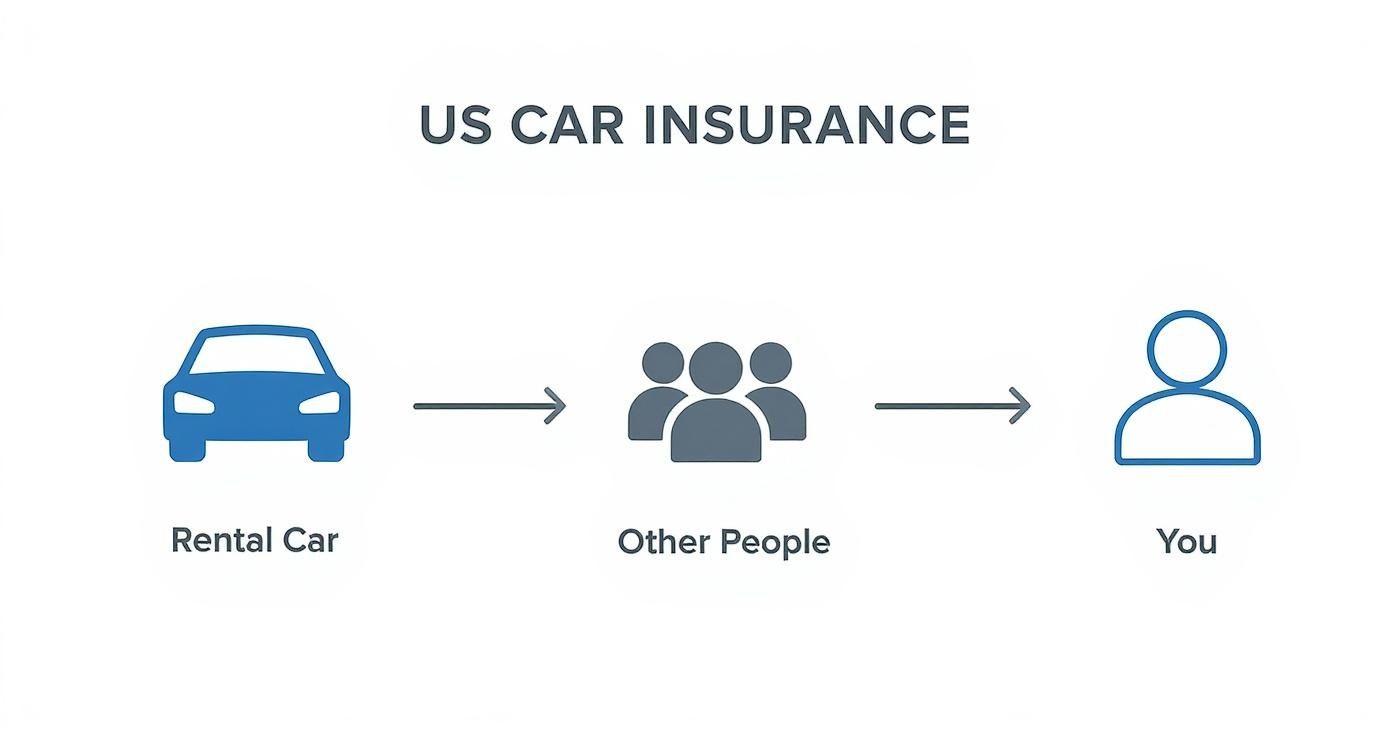
It helps you see the difference between coverage for the car you're driving and liability for other people, which is crucial for understanding where your financial responsibilities are in an accident.
Getting to Grips with US Driving Rules, Tolls, and Road Etiquette
Driving in the USA is a fantastic way to see the country, giving you the freedom to explore on your own schedule. But let's be honest, the experience is a lot more fun when you know the local rules of the road—which can be worlds away from what you’re used to. Think of this as your cheat sheet for navigating American roads like a pro.

First things first, and this one is non-negotiable: Americans drive on the right side of the road. If you’re visiting from a country that drives on the left, this will feel strange at first. My advice? Spend a few minutes in a quiet parking lot just getting the feel of it before you head out into traffic.
Mastering the Basics of American Roads
Beyond driving on the right, you'll run into a few core rules every day. Getting these down is crucial for staying safe and avoiding a ticket.
Turning Right on a Red Light: This is a big one. In most places, you can make a right turn at a red light. You just have to come to a complete stop first and make sure the way is clear of cars and pedestrians. Keep an eye out for signs that say "No Turn on Red," as those intersections are the exception.
School Buses Are a Big Deal: When you see a yellow school bus with its red lights flashing and a stop sign extended, you must stop. It doesn't matter which direction you're headed. The only time you don't have to stop is if you're on the other side of a highway that's physically divided by a median.
Four-Way Stops: At intersections where all four directions have a stop sign, the rule is pretty simple: the first car to arrive gets to go first. If two cars show up at the same time, the driver on the right has the right-of-way.
How the US Toll System Works
Many major highways, especially in states like Florida, are toll roads. In a rental car, you need a plan for this, or you could get hit with some surprisingly high fees from the rental agency.
Most tolling is all-electronic now, so you won’t find a booth to toss coins into. Instead, cameras snap a photo of your license plate, or a little transponder device on your windshield communicates with an overhead scanner.
Rental companies have their own toll programs, which are convenient but often include steep daily service fees on top of the actual toll charges. Always ask about their specific program before driving off to avoid a nasty surprise on your final bill.
In Florida, for example, the local transponder is called SunPass. Many rental cars come with one already inside. Your rental agent should explain how their system works, but be sure to clarify what they charge per day for using the device versus what you'll pay for the tolls themselves.
Road Etiquette and Highway Driving
Sometimes, the unwritten rules are just as important as the official laws. When you’re merging onto a highway, use the on-ramp to get your speed up to match the flow of traffic. You’ll find that drivers already on the highway will often move over to give you space—it's a common courtesy.
Here are a few more tips for a smoother drive:
The Left Lane is for Passing: On multi-lane highways, the far-left lane is for overtaking other cars. Don’t just cruise in the left lane; it’s a surefire way to annoy local drivers and clog up traffic.
Use Your Turn Signals: Signal your plans well before you change lanes or turn. It’s basic, but it helps everyone around you know what you’re about to do.
Keep a Safe Following Distance: The "three-second rule" is a great guideline. Watch the car ahead of you pass a sign or a tree, then count how many seconds it takes for you to reach the same spot. If it's less than three, you're too close.
Especially in a busy city like Miami, the traffic can feel a bit aggressive. The best strategy is to stay calm, remain alert, and give yourself plenty of time to get where you're going. A defensive mindset will make your USA car rental for foreigners experience a whole lot easier.
How Cars4Go Takes the Headache Out of Renting
Let's be honest: figuring out a USA car rental for foreigners can feel overwhelming. There are so many rules and potential pitfalls. But the right rental company can completely change the experience, turning a long list of worries into a set of simple solutions. This is where a company built for international travelers, like Cars4Go, really makes a difference.
Think about it. You’ve just landed after a long flight, you're tired, and you have a question about the rental agreement. If English isn't your first language, this can be stressful. Having a multilingual support team isn't just a nice extra—it’s essential for getting clear, quick answers without anything being lost in translation.
Features That Actually Solve Your Problems
Everyone dreams of that classic American road trip, but long hours behind the wheel and watching the mileage rack up can add a layer of stress you don't need on vacation.
Complimentary Second Driver: Most companies charge an extra $10-$15 per day to add another driver. Getting one for free is a huge perk. It means you can split the driving with your travel partner, stay fresh, and cover more ground safely.
Unlimited Miles in Florida: Nothing kills the fun of a spontaneous detour faster than worrying about mileage limits. With unlimited miles, you can go ahead and explore that hidden beach or take that scenic route without constantly doing math in your head.
A great rental service gives you more than just a set of keys. It provides the freedom and tools you need to enjoy the adventure you came for, without getting bogged down by surprise fees and logistical nightmares.
Practical Add-Ons That Make a Real Difference
Traveling with family or visiting a new country for the first time comes with its own set of challenges. The right extras can save you a ton of time, money, and hassle.
For example, a car seat is required by law for children in the US. Instead of buying one you’ll only use for a week or dragging yours through the airport, getting one included with your rental is a lifesaver. Same goes for a GPS—having one for free means you can navigate unfamiliar roads without draining your phone's battery or expensive mobile data.
These aren't just random perks; they're designed to solve the real-world problems international travelers face. Prices and car availability can swing wildly, especially at major airports. It’s a well-known fact that weekly rental rates fluctuate a lot, though Miami often has more competitive prices than other big cities. That’s why choosing a service with clear, upfront pricing is so important for budgeting your trip effectively. For a deeper dive into these trends, you can find detailed car rental pricing statistics on NerdWallet.com.
Got a Few More Questions?
You've done the research, you've planned your route, but there are always a few lingering questions that pop up right before you travel. It's completely normal. Let's tackle some of the most common "what ifs" that international visitors ask when renting a car in the U.S., so you can grab those keys with total peace of mind.
The U.S. is a massive market for car rentals, accounting for about 36.39% of the industry's global revenue. This is great news for you, as it means fierce competition and a ton of options. But it also means each company has its own set of rules, which is why getting these final details straight is so important. You can dig deeper into the U.S. car rental market on grandviewresearch.com if you're curious.
Can I Use My Debit Card From Back Home?
This is a big one. While a few places might say yes, the reality is that renting a car in the USA as a foreigner with a debit card is a real headache. Nearly every rental agency is set up to work with credit cards, especially for the security deposit.
If you find a rare company that accepts an international debit card, get ready for some hoops to jump through. They’ll likely:
Want to see extra documents, like your return flight confirmation.
Try to run a credit check, which is often impossible if you're not a U.S. resident.
Put a much larger hold on your account—think $500 or more. And unlike a credit card hold, this is actual cash that vanishes from your bank account until you return the car.
My advice? Stick with a credit card in the driver's name. It’s the simplest, fastest, and most universally accepted way to handle the security deposit without tying up your vacation spending money.
Uh Oh, I Got a Ticket. Now What?
Don't panic, but do expect a bill. If you get a traffic or parking ticket, the authorities will mail it directly to the rental company since the car is registered to them.
The company will then figure out who was driving the car on that date (that's you!) and pay the fine for you. The catch? They'll then charge your credit card for the full cost of the fine plus their own "administrative fee." This little extra can be anywhere from $25 to $50 per ticket, quickly turning a minor mistake into a much more expensive one.
Can I Take the Car on a Road Trip to Canada or Mexico?
Thinking of a grand North American tour? Driving to Canada is usually possible, but you absolutely have to clear it with the rental company first. Some have no problem with it, while others might have specific vehicle restrictions or require you to get extra insurance paperwork. Always ask beforehand.
Mexico, however, is a different story. Taking a U.S. rental car across the southern border is almost always a hard no. The insurance and liability laws are incredibly complex, and rental agencies just don't allow it. If you try it, you'll immediately void your rental agreement and all insurance coverage, leaving you in a very risky situation.
What Happens If the Car Breaks Down?
First things first, get yourself to a safe spot. Pull over to the shoulder, get as far from traffic as you can, and flick on your hazard lights. Your safety is the top priority.
Once you're out of harm's way, it's time to call for help. The rental company's roadside assistance number should be on a sticker somewhere inside the car—check the glove box, the sun visor, or the driver's side window. It will also be on your rental agreement. Give them a call, and they'll walk you through the next steps, whether that’s sending a tow truck or a mechanic.
And if you're in an accident involving another vehicle or injuries, always call 911 first. Then, be sure to get an official police report; you'll need it for any insurance claim.
Ready to explore Florida without the headaches? Cars4Go makes it easy with perks like a free second driver, unlimited miles, and multilingual support. Book your car today and hit the road with confidence.
Comments