


rent a car fort lauderdale airport: Your Ultimate Guide to Affordable Rentals
- fantasma70
- Dec 7, 2025
- 16 min read
So, you've just landed at Fort Lauderdale-Hollywood International Airport (FLL). Now what? When it comes to getting your rental car, you've got two main choices. You can hop on a shuttle and head to the giant on-site Rental Car Center (RCC), or you can go with an off-airport service that brings the car right to you. The best route really depends on what you value more: immediate on-site access or a better deal with more personal service.
Your Fort Lauderdale Airport Car Rental Game Plan
Once you've grabbed your bags from the carousel at FLL, the clock starts ticking on your car rental adventure. What you do next can really set the tone for your whole trip.
FLL is a seriously busy place. In the 2023 fiscal year alone, 34.3 million passengers came through its terminals, and the on-site RCC handled about 1.29 million rentals. That’s a ton of people all trying to get on the road. With numbers like that, showing up without a solid plan is a recipe for frustration.
Your decision really comes down to two very different experiences: the traditional, massive on-site facility versus a more modern, off-airport delivery service.
The On-Site Rental Car Center Path
If you go the on-site route, your first stop is the shuttle bus pickup area just outside baggage claim. These free buses run on a constant loop, whisking travelers over to the sprawling Rental Car Center.
Once you’re inside, you’ll see counters for all the big national brands, all conveniently located under one roof. But "convenient" can come with a few trade-offs. You'll often have to:
Wait around for the next shuttle, then wait for it to fill up with other passengers.
Stand in long, slow-moving lines at the rental counter, especially if you land during a busy period.
Hike through a massive parking garage trying to find your specific car.
It’s the classic way to rent a car, and many people are used to it, but the time it takes to actually get behind the wheel can be a real wild card.
The Off-Airport Delivery Advantage
Now, there's another way to do it. Companies like Cars4Go have flipped the script by skipping the RCC altogether. Instead of making you go to the car, they bring the car to you. It's a simple idea designed to cut out the most annoying parts of the rental process.
Here’s what that usually looks like:
You land, grab your bags, and make a quick call or send a text to your rental agent.
You meet them right at a pre-arranged spot at the terminal curbside.
You sign the paperwork, get your keys, and are on your way in just a few minutes.
This approach turns renting a car from a time-consuming chore into a quick, personal handover. Knowing all your options is a game-changer; after all, smart planning can make any trip smoother. In fact, well-researched, comprehensive guides to airport transfers and navigation often highlight these kinds of time-saving tricks.
This diagram helps visualize the two paths you can take after landing at FLL.
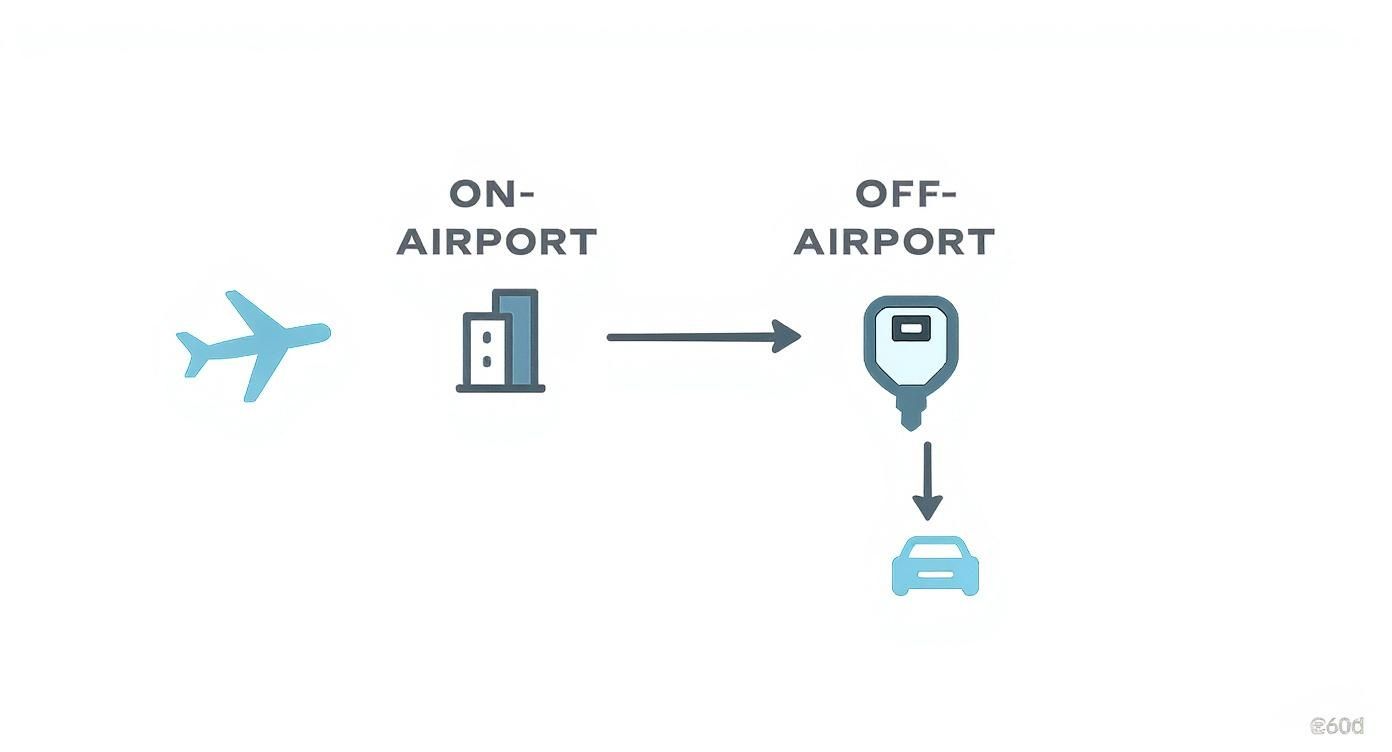
As you can see, while both options get you a set of wheels, the off-airport route is often a much more direct line from the terminal to the open road.
On-Site vs Off-Airport Car Rental at FLL: A Quick Comparison
To make the choice even clearer, let's break down the key differences between renting directly at the FLL Rental Car Center and using an off-airport service with airport delivery.
Feature | On-Site Rental (RCC) | Off-Airport Service (e.g., Cars4Go) |
|---|---|---|
Location | Centralized, multi-brand facility a short shuttle ride from the terminals. | No physical counter at the airport; car is delivered to the terminal. |
Pickup Process | Wait for shuttle, wait in line at the counter, then locate your car in a large garage. | Meet your agent at the curbside, complete paperwork, and drive off. |
Wait Time | Can be long and unpredictable, especially during peak travel seasons. | Typically much shorter—often just a few minutes after you call. |
Cost | Often includes airport-specific taxes and concession fees, which can increase the price. | Generally more competitive pricing by avoiding hefty airport overhead fees. |
Convenience | Familiar process for many, but involves multiple steps and potential delays. | Highly convenient, especially for families with kids or lots of luggage. |
Service | Can feel impersonal due to high volume; service varies by company and staff. | More personalized and direct interaction with a dedicated agent. |
Ultimately, the choice is yours. The RCC offers a one-stop-shop for all major brands, but an off-airport delivery service like Cars4Go is built around getting you on your way with less hassle and often at a better price.
For most people flying into Fort Lauderdale, heading to the on-site Rental Car Center (RCC) is almost a reflex. It's a huge, centralized building that brings all the big-name rental companies together in one place. If you've rented from a major airport before, the setup will feel pretty familiar. But what’s it really like to navigate from the moment your plane touches down?
Navigating the FLL Rental Car Center
Think of the RCC as a massive hub for rental cars, but it’s not actually attached to the terminals. The first step is catching a complimentary shuttle bus. Once you’ve grabbed your bags from baggage claim in any of the four terminals, just look for the "Rental Car Center" signs—they'll point you to the shuttle pickup spots right outside.
The buses run in a constant loop, but during slower times, they often wait to fill up a bit before taking off. The ride itself is quick, only a few minutes. Still, the total time from grabbing your luggage to standing at the rental counter can be a real wild card, depending on how long you wait for the shuttle and how many other people are trying to do the same thing.
Arriving at the Rental Center
After the shuttle drops you off, you’ll walk into a massive building that feels more like a shopping mall than a garage. The ground floor is lined with the rental counters for companies you'd expect—Hertz, Avis, Enterprise, and so on. If you land during a peak time, like a holiday weekend or right after a few big flights have arrived, get ready for a wait.
At peak times, the wait at a rental counter can be one of the most unpredictable parts of your journey. It's not uncommon for travelers to spend 30 minutes or more in line before even speaking to an agent.
Once you finally get through the paperwork, they'll point you toward the multi-level parking garage where the cars are waiting. The agent will usually tell you which floor and row to search for your car class. Then it's up to you to find your vehicle, load up your bags, and drive to the exit booth for one last check of your contract before you’re officially on your way.
The Return Trip Demystified
Bringing the car back is usually simpler, but you still need to budget your time. As you drive toward the airport, keep an eye out for highway signs for "Rental Car Return." They're easy to spot and will guide you straight into the RCC garage.
Just follow the signs for your specific rental company to their designated drop-off lane. An employee will do a quick walk-around to check for damage, note the fuel level and mileage, and print your final receipt.
From there, you just take an elevator or escalator back to the main building to catch a shuttle back to your airline's terminal for your flight home.
Pro Tip: Always give yourself at least 30-45 extra minutes for the return. That buffer covers the drive into the garage, the vehicle check-in, and the shuttle ride back to your terminal, so you aren't sprinting to your gate.
While the RCC is a convenient one-stop-shop, it’s not your only option. Sometimes, looking into different car rental locations can uncover better deals or a more streamlined process that fits your schedule. Knowing how the on-site center works helps you weigh your choices and manage your time better when you land in sunny South Florida.
Understanding Your Fort Lauderdale Car Rental Costs
Let's be honest: the price you see online when you book a rental car is almost never the price you actually pay. Think of it as a starting point, not the final bill. When you rent a car at Fort Lauderdale Airport, a whole slew of mandatory fees, local taxes, and optional add-ons get tacked on, which can seriously inflate your total cost if you aren't ready for them.
Knowing what these charges are before you get to the counter is the secret to avoiding sticker shock. Your goal isn't just to snag a cheap daily rate but to figure out what the entire rental will cost you. This way, you can compare offers apple-to-apples and make a decision that’s actually good for your wallet.
The good news? The base cost for a car rental at FLL is pretty competitive. A recent survey found the average daily rate was just $33 in the fall of 2025, a number that's actually more than 15% lower than the year before. This makes FLL one of the more affordable major airports to rent from, but it’s those extra fees you really have to watch out for.
Decoding the Surcharges and Fees
When you get your rental agreement, you’ll see several line items that might look like gibberish. Here’s a quick breakdown of the most common charges you'll run into when renting a car in Fort Lauderdale.
Airport Concession Recovery Fee: This is the big one. It's a fee the rental companies pass on to you to cover the high cost of operating right at the airport. Expect it to be around 10% of your total rental cost.
Customer Facility Charge (CFC): This is a flat daily fee, usually just a few bucks a day, that goes toward paying for the big, fancy Rental Car Center itself.
Vehicle License Recovery Fee: A small daily charge that helps the company recoup the costs of licensing and registering its massive fleet of cars.
Florida Surcharge: The state of Florida adds a $2 per day surcharge to all car rentals to help fund road and transportation projects.
These fees are pretty much non-negotiable and apply to almost every on-airport rental. It's worth noting that some off-airport companies can offer lower prices specifically because they don't have to pay that hefty Airport Concession Fee. Exploring the best car rental deals in Fort Lauderdale can help you find options that keep these extra costs to a minimum.
Navigating Florida Tolls and SunPass
South Florida is packed with toll roads, and if you’re not careful, they can become a surprisingly expensive part of your trip. Most rental companies will try to sell you their toll package, which usually involves a flat daily fee for "unlimited" toll usage.
It sounds convenient, but it can be a terrible deal. These packages often run from $15 to $25 per day, and they charge you that fee every single day of your rental, whether you drive on a toll road or not. If you have a week-long rental but only hit a toll road on one or two days, you’ve just paid for five or six days of a service you didn't even use.
A much smarter approach is to bring your own SunPass transponder if you have one. While some tolls still take cash, many in South Florida are now all-electronic, making a transponder almost a necessity. Some companies, like Cars4Go, offer more flexible toll solutions that help you avoid getting locked into those high daily fees.
Key Takeaway: Always ask about the toll policy before you drive off the lot. The default rental company package is built for convenience, not savings, and is almost always the most expensive option. Planning routes to avoid tolls or using your own transponder can save you a ton of money.
Understanding Your Insurance Options
Finally, there’s insurance. At the rental counter, you’ll be offered a Collision Damage Waiver (CDW) or a Loss Damage Waiver (LDW). This isn't technically insurance; it's an agreement where the rental company "waives" its right to charge you for any damage to the car. It’s also very expensive.
Before you say yes to this pricey add-on, check the coverage you might already have:
Personal Auto Insurance: Your own car insurance policy often extends to rental cars. It’s a good idea to call your agent before you travel to confirm what’s covered and what your deductible is.
Credit Card Benefits: Many major credit cards offer rental car insurance as a built-in perk. Just be aware that this is usually secondary coverage, meaning it only pays out after your primary auto insurance has been used.
Saying "no" to the CDW can save you $20 to $30 per day, but you need to be absolutely sure you have solid coverage elsewhere. If you rely on your own policies and something happens, you'll be responsible for paying the deductible and dealing with the claims process. It's a classic trade-off: cost versus peace of mind.
Finding Better Value with Off-Airport Rentals
Opting for an off-airport car rental isn't about compromising; it's a savvy travel hack. While the on-site Rental Car Center seems convenient, that prime real estate comes with a hefty price tag that gets passed directly to you. Off-airport companies operate away from the airport's expensive property, letting them dodge the huge concession fees that always inflate your rental bill.
It's a simple but powerful difference. Think of it like buying snacks at a neighborhood grocery store versus the little shop inside a five-star hotel. The products are the same, but one has massive overhead costs built into the price. Those savings often end up right back in your pocket.
When you book directly with a big brand at the Fort Lauderdale Airport, you're paying a premium for their location. An off-airport company, on the other hand, invests in a different kind of convenience—one that’s built around service, not just physical proximity.
Airport Delivery: The Best of Both Worlds
The biggest misconception about renting off-airport is that it's a hassle. Honestly, that's an outdated idea. Modern services have completely flipped the script, creating a model that gives you the cost savings of an off-site location with the ease of an on-site pickup.
Companies like Cars4Go have this down to a science. Instead of you lugging your bags onto a packed shuttle and trekking to a counter, an agent brings the car directly to you at the terminal. That’s it. A process that used to involve multiple steps becomes a single, quick handover. You're often on the road faster than if you'd waited in a long line at the RCC.
This direct-to-you approach is a game-changer for a few types of travelers:
Families with Kids: Juggling strollers, car seats, and tired little ones is tough enough. Getting your car curbside means no shuttles and no navigating massive buildings.
Business Travelers: Time is money, and waiting in line is a waste of it. Direct delivery gets you to your meeting or hotel without the frustrating delay.
Anyone with Mobility Challenges: Skipping the long walks through garages and the hassle of shuttle transfers makes the start of your trip far more comfortable.
More Than Just a Lower Price Tag
While the upfront savings are what get your attention, the real value of a great off-airport rental often comes from more flexible, customer-first policies. These aren't just minor details; they can add up to huge savings and a much less stressful experience.
For instance, most of the big on-site players have rigid credit card policies and charge a pretty penny for adding another driver. Smaller, off-airport companies often build their entire business on offering better, more reasonable terms.
A great rental experience is about more than just the car; it’s about transparent policies and feeling valued as a customer. Off-airport providers often excel by focusing on these details, which the larger companies can sometimes overlook.
So, let's put them side-by-side to see where the real value shines through.
Feature Comparison: Major On-Site Brands vs. Cars4Go
This table breaks down the common differences you'll encounter. It’s not just about the daily rate, but the total cost and convenience of your rental.
Feature | Major On-Site Rental Companies | Cars4Go |
|---|---|---|
Payment Options | Almost always demand a major credit card for the security deposit and have strict, often confusing rules for debit cards. | Happily accepts both credit and debit cards, opening up options for more travelers. |
Second Driver | Nearly always an extra fee, typically adding $10-$15 per day to your final bill. | Includes a second driver for free, a massive savings for couples or friends traveling together. |
Mileage | Policies vary wildly. Some basic or economy rentals come with frustrating mileage caps. | Unlimited mileage is included on all rentals within Florida, so you can explore the state without worry. |
Car Seats | Available for an extra daily fee, which can get very expensive, especially on longer family trips. | Offers car seats to keep your family safe without tacking on unnecessary extra costs. |
As you can see, by bundling these features, an off-airport service like Cars4Go offers a complete package. It helps you avoid the "death by a thousand cuts" feeling from all the little fees that can turn a good deal sour. When you rent a car at Fort Lauderdale Airport, looking just beyond the RCC can land you a rental that’s not only cheaper but also way more convenient and better suited to what you actually need.
Essential Tips for a Smooth Rental Experience

The secret to a great rental experience isn't some complex formula—it's all in the little things you do before you even turn the key. A few minutes of prep can be the difference between a frustrating start to your trip and a smooth, easy getaway.
Whether you're a family juggling strollers and suitcases or an international visitor figuring out new traffic rules, these practical tips will help you sidestep the common headaches. Trust me, a little planning now saves a lot of stress later.
Advice for Family Travelers
Traveling with kids brings its own set of challenges, especially when it comes to space, safety, and sanity. Choosing the right car is about more than just seatbelts; it’s about making sure everyone is comfortable, especially if you're planning a longer drive to Orlando or down to the Keys.
Be realistic about your luggage. That budget-friendly compact car might look good online, but it’s not going to work if you’re playing luggage Tetris with two large suitcases and a stroller. Do yourself a favor and consider a mid-size SUV or minivan. You can check out a range of rental car types suitable for families to find a vehicle that actually fits your crew and their gear.
Here’s the most important tip: if you need a child car seat, pre-book it without fail. Rental locations have a limited number, and just showing up hoping they'll have one is a huge gamble you don't want to take.
Keeping the little ones comfortable is also key. For those longer trips, some simple tips for making car seats more comfortable can be a real lifesaver.
Guidance for International Visitors
If you're flying in from another country, getting your documents in order is the first and most critical step. The good news is that the process to rent a car at Fort Lauderdale Airport is pretty simple as long as you have your paperwork ready.
You will absolutely need these three things:
A Valid Passport: Your main form of photo ID.
Your Home Country's Driver's License: Make sure it's current and not expired.
An International Driving Permit (IDP): While Florida law doesn't always require an IDP if your license is in English, most rental companies either require it or strongly recommend it. It's a universally recognized document that translates your license, making everything smoother.
Before hitting the road, it’s also smart to quickly review local driving laws. In Florida, pay close attention to the "Move Over" law for emergency vehicles and the strict enforcement of speed limits, especially around school zones.
Universal Tips for Every Renter
No matter where you're from, these final checks are your best defense against surprise charges and headaches when you return the car.
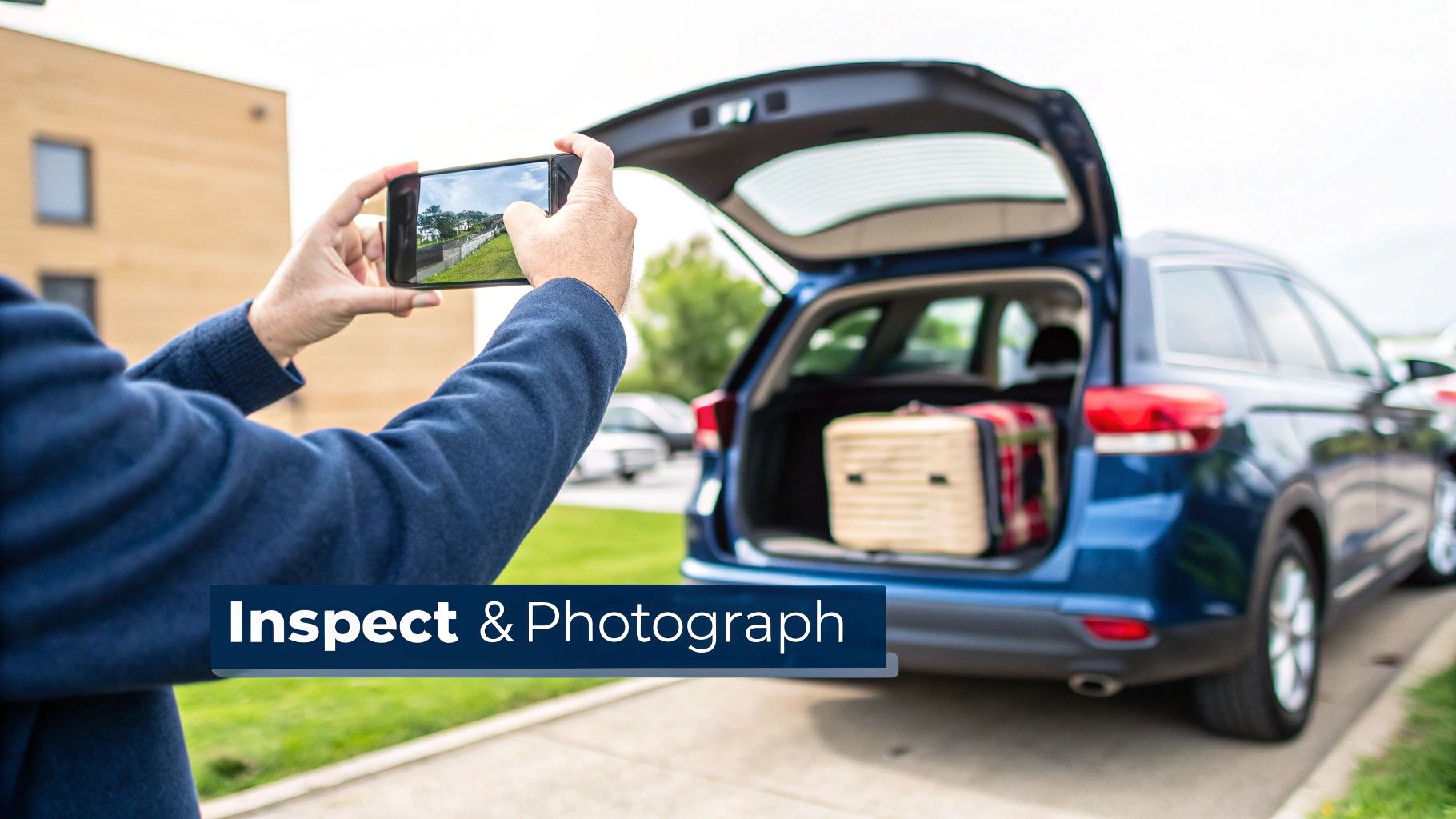
Do a Full Walk-Around and Take Pictures. Before you drive off, inspect the car from top to bottom. Point out every single scratch, dent, and scuff to the agent and make sure it's noted on your rental agreement. Then, pull out your phone and take pictures and a quick video of the car’s condition—inside and out. This creates a timestamped record that proves you didn't cause any pre-existing damage.
Get the Fuel Policy in Writing. Ask the agent to confirm the fuel policy. Is it "full-to-full," meaning you bring it back with a full tank? Or did you prepay for gas? Returning a car with less fuel than required can lead to sky-high refueling charges, sometimes triple what you'd pay at a local gas station.
Know the Grace Period for Returns. Life is unpredictable, and so is traffic. Ask what the grace period is for returning the vehicle. Many companies give you a small window, often just 29 minutes, but being even a little late can mean getting billed for a whole extra day.
It's also worth noting that location can affect price. A quick look at South Florida airports shows that Fort Lauderdale can sometimes have higher daily rates than Miami. For example, one major company was charging around $54.49 per day at FLL while offering the same car for $35.49 in Miami, likely due to differences in local taxes and demand.
Got Questions About Renting a Car at FLL? We’ve Got Answers.
Let's be honest—renting a car should be the easy part of your trip, but sometimes the details can trip you up. To help you breeze through the process, we've rounded up the most common questions travelers ask when they rent a car at Fort Lauderdale Airport and laid out some clear, simple answers.
From knowing exactly what to have in your hand at the counter to timing your return perfectly, consider this your playbook for a smooth rental. Let's clear up the confusion so you can get on with the fun part of your Florida vacation.
What Documents Do I Need to Bring?
Showing up with the right paperwork is the single most important thing you can do to get on the road quickly. If you forget something, the entire process can grind to a halt right there at the counter.
For U.S. and Canadian drivers, it’s pretty straightforward. You’ll just need two things:
A valid, government-issued driver's license from your home state or province.
A major credit or debit card that matches the name on your license.
If you're visiting from another country, you’ll need to come a little more prepared. To avoid any headaches, make sure you have these documents ready to go:
Your valid passport (for identification).
Your driver's license from your home country.
An International Driving Permit (IDP). Think of this as an official translation of your license. While Florida law doesn't always require it if your license is in English, many rental companies do, so it's always safer to have one.
Can I Use a Debit Card Instead of a Credit Card?
This is a huge point of confusion, and the answer really depends on the rental company. The big-name brands you’ll find in the FLL Rental Car Center are notoriously strict. They almost always prefer credit cards because it lets them place a hefty security hold—often $300 or more.
If they do allow debit cards, you’ll likely have to jump through extra hoops, like undergoing a credit check right on the spot or providing proof of a round-trip airline ticket.
Key Insight: This is where off-airport rental services like Cars4Go really shine. They are often far more flexible and welcome debit cards without all the extra hassle, which is a game-changer for travelers who don't use or carry credit cards.
This simple policy difference can save you from a major travel snag. Before you book anywhere, always double-check their payment policy.
How Early Should I Return My Rental Car?
Timing your car return is a balancing act. You want to avoid a frantic rush to the gate, but you also don't want to be stuck at the airport for hours. A good rule of thumb is to work backward from your flight's departure time.
For domestic flights, plan on dropping off your car at least 2 hours before your flight is scheduled to leave.
For international flights, give yourself a bigger buffer and return the car at least 3 hours before departure.
This timeline gives you enough wiggle room for the whole process: driving back, finding a gas station to refuel, going through the vehicle return inspection, and hopping on the shuttle back to your terminal. Underestimating traffic or shuttle wait times is a classic mistake that can put your entire schedule at risk.
What Is the Easiest Way to Handle Florida Tolls?
Florida’s SunPass toll system is super convenient, but it can get expensive in a rental car if you're not paying attention. The default option from most rental agencies is a flat-rate daily toll package, which can cost anywhere from $15 to $25 per day. The catch? You pay that fee for every single day of your rental, even on days you don't go near a toll road.
It’s easy, but it's rarely the cheapest way. A much smarter approach is to find a rental service that only bills you for the tolls you actually use, plus a small administrative fee. Companies like Cars4Go use this "pay-per-use" model, which means you won't be paying for a toll pass on the days you’re just lounging by the pool.
Ready for a rental experience that’s simple, affordable, and flexible? Cars4Go offers airport delivery, accepts debit cards, and includes a second driver and unlimited Florida miles for free. Book your Fort Lauderdale rental today and see the difference.
Comments