


How to Return a Rental Car and Avoid Fees
- fantasma70
- Nov 1, 2025
- 11 min read
A smooth rental car return doesn't start when you pull into the lot—it starts before you even get behind the wheel for that final drive. A few simple checks are your best defense against surprise fees and a stressful drop-off experience. Think of it as taking control of the last leg of your journey.
What to Do Before You Drive Back
Don't wait until you're five minutes away from the Cars4Go drop-off to start thinking about the return process. Taking a little time an hour or so before you leave your hotel or final stop can make all the difference and save you a real headache.
Review Your Rental Agreement
First things first: pull up your rental agreement. Whether it's a paper copy in the glovebox or an email on your phone, this document has all the rules you need to follow.
Return Time and Date: Check the exact time the car is due. I've seen people get hit with an entire extra day's rental fee for being just 30 minutes late.
Fuel Policy: Is it a "Full to Full" policy? If so, you'll need to top off the tank right before you drop it off. Otherwise, you’ll pay Cars4Go’s inflated per-gallon rate, which is always more expensive. Plan to hit a gas station near the return location.
Location: Always double-check the return address. This is a big one at major airports with multiple rental hubs or if you arranged for a one-way rental.
Conduct a Personal Inspection
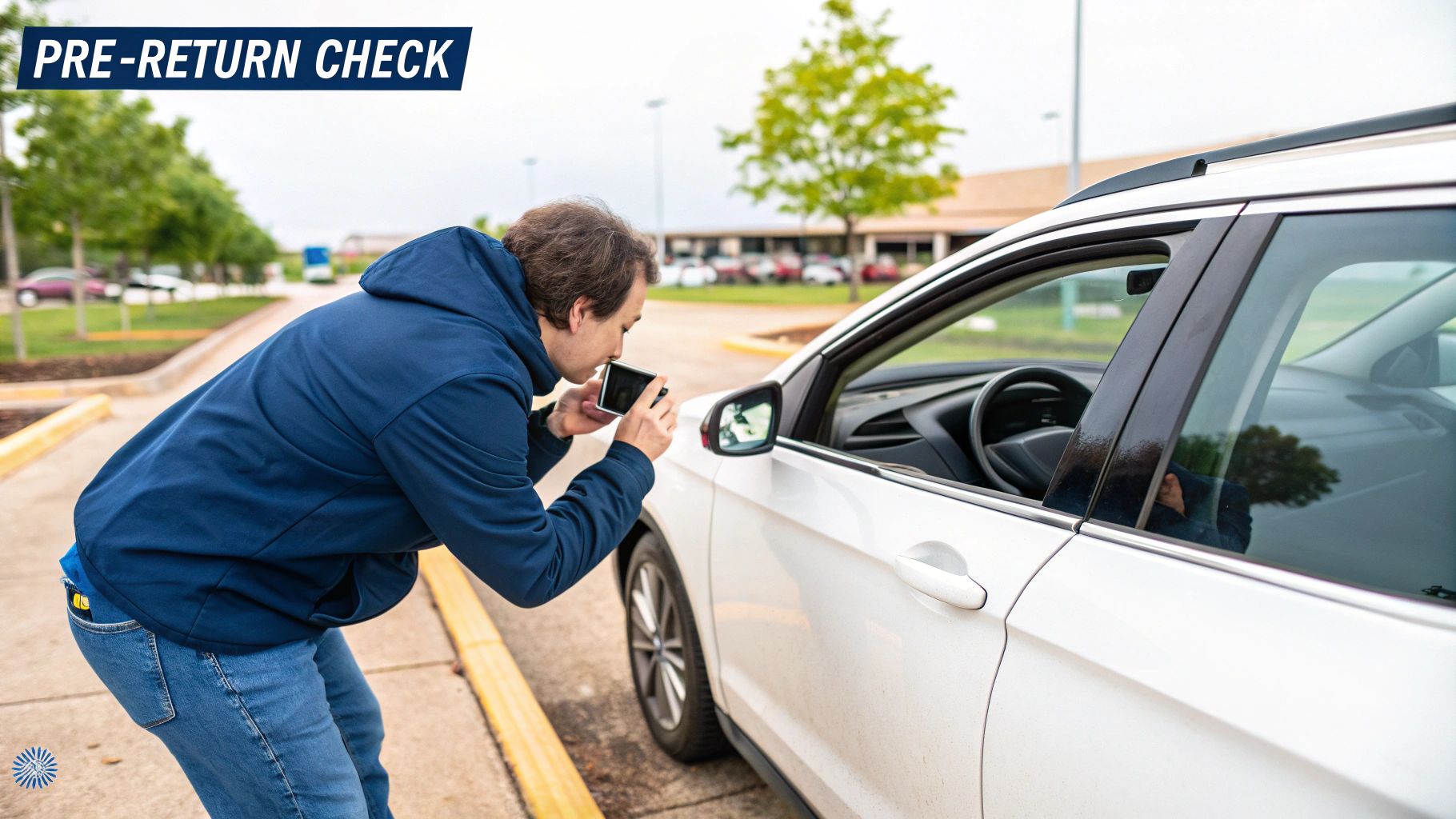
Before you head out, give the car one final look-over, inside and out. This is your last chance to document its condition before you hand back the keys.
Your phone is your best tool for a smooth return. Time-stamped photos of the car's condition, fuel gauge, and odometer create a personal record that can protect you from disputes over damage or mileage.
Take a few clear photos of all four sides of the car, the roof, and the interior. Don't forget to snap a picture of the dashboard showing the final mileage and the full fuel gauge. This visual proof is your best friend if any questions pop up later. For more great advice, you can always find helpful travel insights on the official Cars4Go travel blog.
Lastly, do a full sweep for your stuff. Check the glove compartment, under the seats, in the trunk, and all the little door pockets. It's also a good idea to remove any obvious trash. A quick tidy-up can help you avoid potential cleaning fees. For a little guidance, check out these top car cleaning tips to leave the car looking great.
Navigating the Vehicle Drop-Off
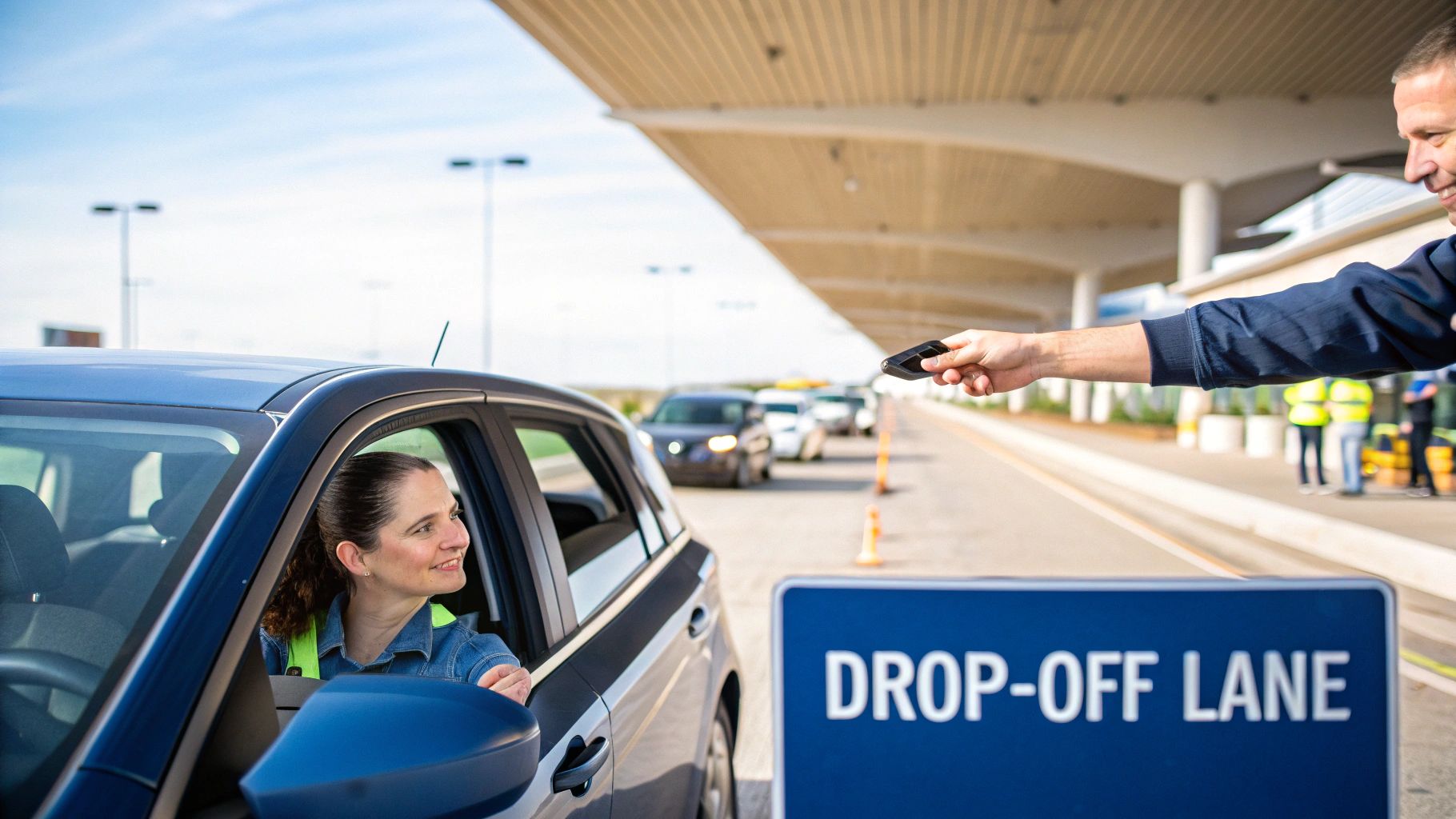
Pulling into a busy rental return lot, especially at an airport, can feel like chaos. But a little prep makes all the difference. As you get close, keep your eyes peeled for signs directing you to the specific Cars4Go drop-off lanes. They’re often in a completely different spot than where you picked the car up, so don't just go on memory.
Once you’re in the right lane, an agent will probably come up to your window with a handheld device to start the check-in process. They'll show you where to park. Don't just hop out and run for your flight—stick with the car until the agent starts their inspection.
What the Return Agent Checks
That final walk-around is pretty quick, but it's thorough. The agent isn't just looking for a smashed bumper; they're documenting the car's final condition to close out your rental.
Here's what they're looking for:
Exterior Condition: They’ll scan the entire car—body, wheels, even the glass—for any new scratches, dings, or scuffs that weren't noted when you drove off the lot.
Fuel Level: First thing they'll do is check the gas gauge. It needs to match the policy you agreed to, which is usually "Full to Full."
Mileage: They'll record the final odometer reading. This officially ends your rental period and calculates any mileage-related costs.
This inspection is your last opportunity to discuss the car’s condition with someone in person. If the agent points out a new scratch, this is when you pull out the photos you took before you left the lot. A little planning goes a long way, and knowing all the Cars4Go rental car locations can help you map your route and give yourself plenty of time.
Be present and engaged during the check-in. This is your chance to ask questions or point to your own documentation if there's a disagreement. A prepared and confident renter is far less likely to get hit with surprise fees.
It’s interesting how many people add an unnecessary step here. A recent J.D. Power study revealed that 80% of customers go to the main rental counter first, even though driving straight to the return lot saves about eight minutes. It’s likely an old habit, but it shows that a lot of us still prefer that traditional checkout experience. You can see more about what drives renter satisfaction in their full rental car satisfaction findings.
Securing Your Final Receipt to Avoid Hidden Fees
Don't make the rookie mistake of thinking you're done the second you hand over the keys. The rental return process isn't truly over until you have a closed, finalized receipt in your hands (or in your inbox). Without it, you’re basically leaving a blank check for surprise charges to hit your credit card weeks down the road.
Always, and I mean always, wait for the agent to finish their inspection and print out that final bill. This little piece of paper is your golden ticket—it's the official proof that you held up your end of the bargain and your account with Cars4Go is settled. Driving off the lot without it is a gamble you don’t want to take.
What to Look For on Your Final Bill
Once you get that receipt, take a moment. I know you're probably in a rush to catch a flight, but a quick 60-second review right there at the counter can save you a world of hurt later. This is your last, best chance to catch and dispute any funky charges with a real person standing right in front of you.
Here's my checklist of things to scan for immediately:
Fuel Surcharges: The most common offender. Did they hit you with a refueling fee even though you brought it back full? This is where that photo you took of the full gas gauge becomes your best friend.
Late Return Fees: Check the return time printed on the receipt. Does it accurately reflect when you pulled into the lot? Even a few minutes can trigger an annoying fee.
Surprise Cleaning Fees: These can be subjective. If you left a few crumbs, that’s normal wear and tear. But if they slap on a $150 detailing fee, you should definitely ask for a justification.
New Damage Charges: This is a big one. If you see a new charge for a scratch or dent, you need to address it on the spot, especially if you have your "before" photos from pickup.
Never leave the rental counter without a receipt showing a zero balance. This document is your ultimate shield against after-the-fact charges. If an agent says, "We'll email it to you later," politely insist on getting a printed copy or seeing the email come through before you go.
If you spot something that doesn't look right, bring it up calmly but firmly. For example, you could say, "I'm looking at a fuel charge here, but I have a photo from five minutes ago showing the tank is full. Can we get that taken off?"
A little bit of polite persistence here will save you from the agony of chasing down refunds over the phone later. Getting that clean, final receipt is the last step to a stress-free rental return.
To make sure you're getting the best value from the start, check out our latest Cars4Go rental car deals before you book your next trip.
Common Rental Car Return Fees and How to Avoid Them
I've seen just about every extra fee a rental company can come up with. Most of them are completely avoidable if you know what to look for. Here’s a quick rundown of the most frequent charges and how to sidestep them.
Fee Type | Common Reason for Charge | How to Avoid It |
|---|---|---|
Refueling Fee | Returning the car with less gas than you started with. | Fill up the tank at a gas station within 5-10 miles of the airport. Keep the receipt and take a time-stamped photo of the fuel gauge and odometer. |
Late Return Penalty | Dropping off the car after the agreed-upon return time, even by a few minutes. | Plan ahead. Allow extra time for traffic and the return process itself. If you know you'll be late, call the rental company to see if you can extend the rental. |
Excessive Cleaning Fee | Leaving the car excessively dirty (e.g., heavy sand, stained upholstery, strong odors). | Do a quick clean-out before you return. Throw away trash, shake out the floor mats, and wipe up any spills. A 5-minute tidying session can save you $100+. |
Undocumented Damage | The company finds a new scratch, dent, or ding that wasn't on the initial condition report. | Take detailed photos and video of the car's interior and exterior before you drive off the lot. Do the same thing right when you return it. |
Toll & Ticket Fees | Unpaid tolls or parking/speeding tickets incurred during your rental period, plus a hefty administrative fee from the rental company for each one. | Use your own toll transponder if possible, or pay tolls with cash. Drive responsibly and pay any tickets you receive immediately. |
Ultimately, a successful return comes down to being diligent. A few minutes of documentation and review is a small price to pay for peace of mind and a clean final bill.
Handling After-Hours and Contactless Returns
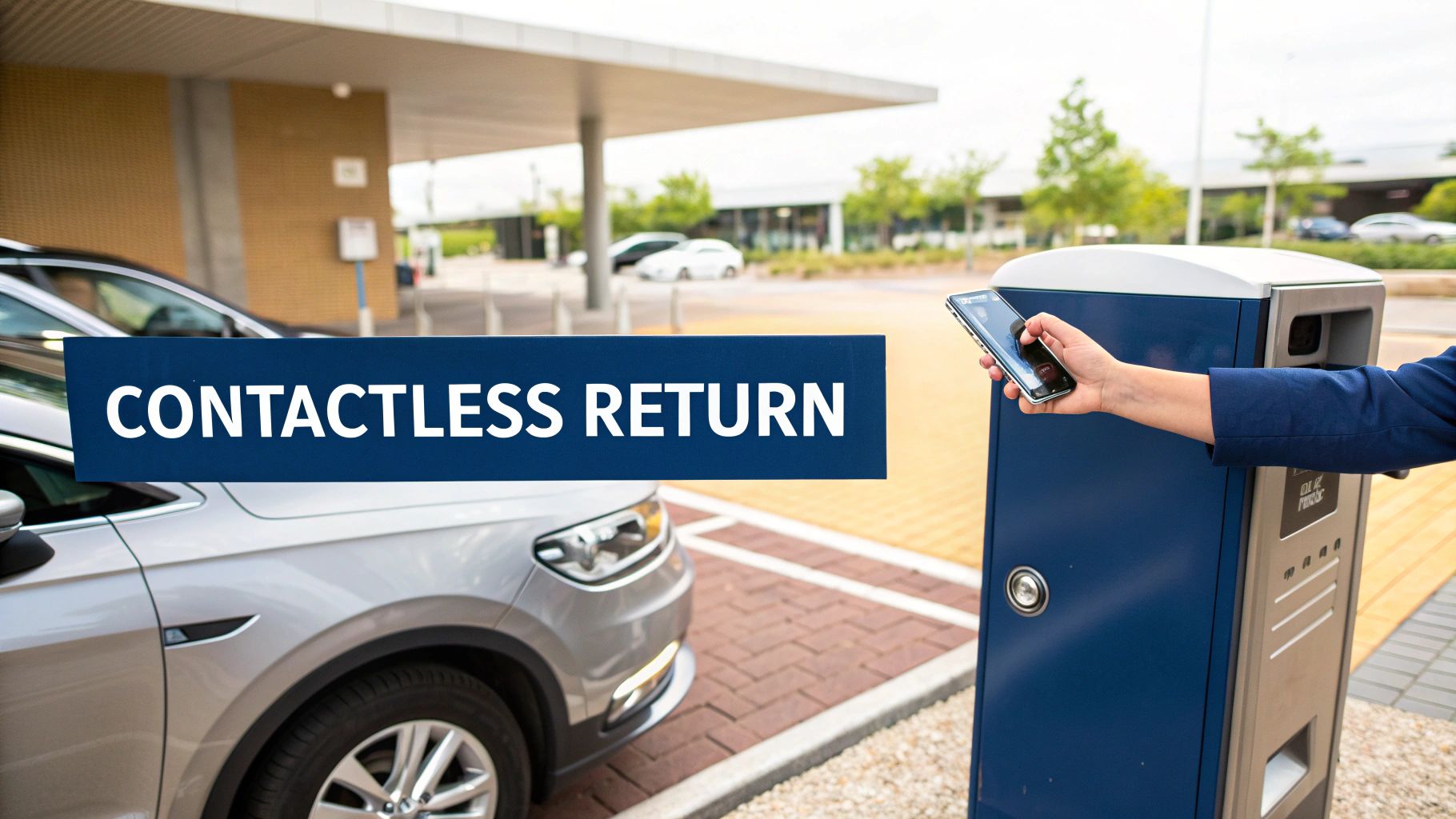
Dropping off your car when the office is closed can feel a little strange, but it's a super convenient option that most Cars4Go locations offer. The process is pretty simple once you know what to look for.
First, you'll need to find the designated parking area for after-hours returns. It's usually well-lit and clearly marked with signs. Once you've parked, look for the secure key drop box, which is almost always located right near the main entrance to the rental office.
The crucial part here is that no one is there to check the car in with you. This means you are responsible for documenting the car's condition yourself, and it's something you definitely don't want to skip.
Your Personal Proof of Return Checklist
Your smartphone is your best friend in this situation. Taking a few specific photos creates a time-stamped record that can save you from a major headache if any questions about fuel or damage pop up later.
Dashboard Photo: Get a clear, well-lit picture showing the final mileage on the odometer and the fuel gauge sitting on full.
Complete Walk-Around: Take photos of all four sides of the car, plus the front and back. Try to do this where there's enough light to clearly show its condition.
Interior Sweep: Snap a quick picture of the clean interior to prove you left it free of trash and didn't forget any personal items.
A contactless return doesn't mean an unverified one. Think of these photos as your digital receipt. They're your proof that you held up your end of the rental agreement and your best defense against unexpected charges.
Contactless options like key drop-offs became really popular after 2020 as companies worked to reduce face-to-face contact. It’s one of those changes that just stuck, making after-hours returns a standard, reliable practice across the industry. For more on this, you can read about how industry trends are shaping car rental practices.
What to Do When You Find Damage
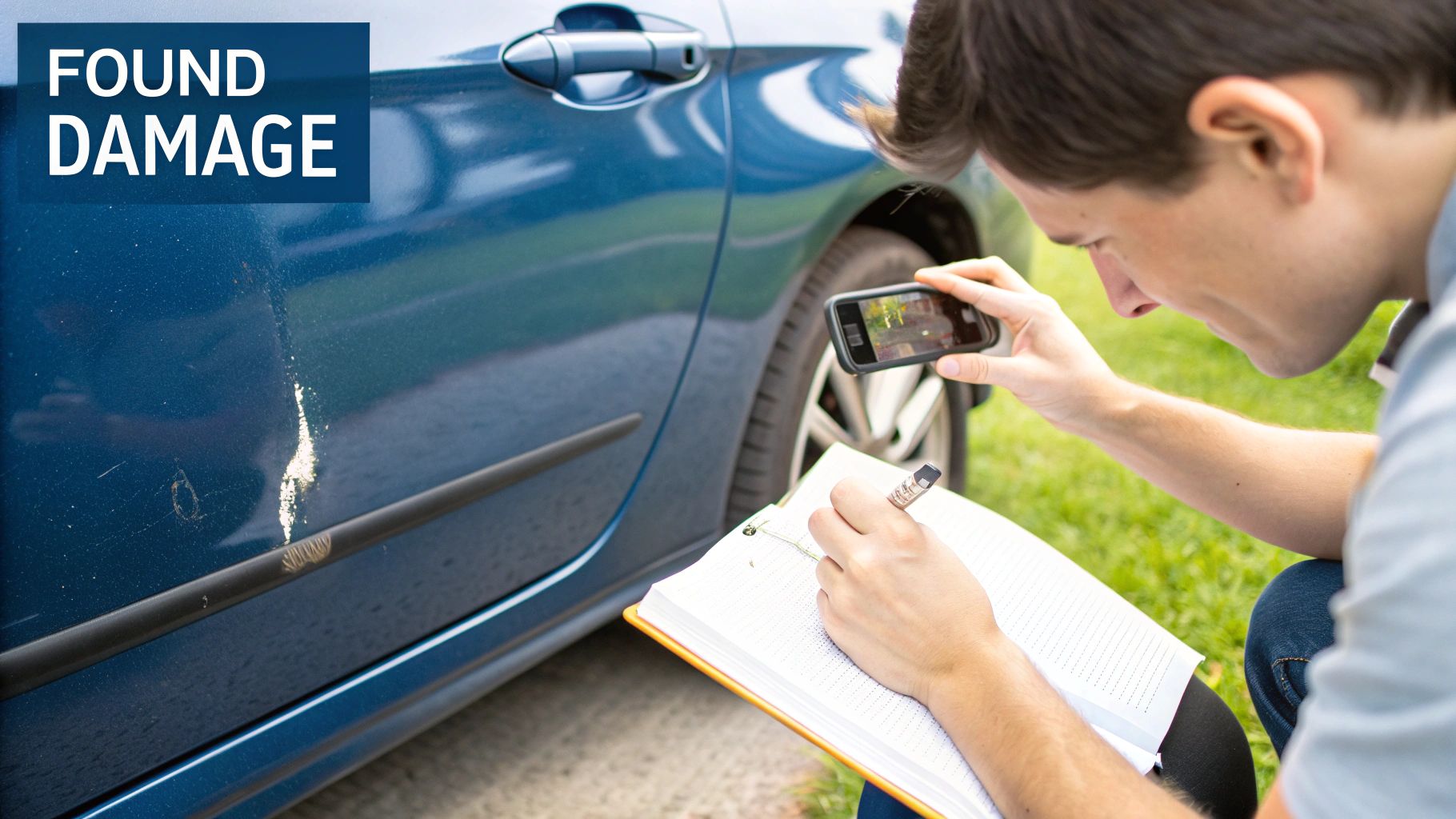
It’s that gut-wrenching moment: you spot a new scratch, ding, or dent on your rental. Your first instinct might be to panic, but what you do next can make all the difference in how this plays out.
The absolute worst thing you can do is ignore it and hope for the best. With modern inspection systems, it's almost a guarantee they'll spot the damage. Taking a proactive approach is always the smarter, and usually cheaper, path.
Your Immediate Action Plan
As soon as you notice the damage, pull out your phone and become a detective.
Take plenty of clear, well-lit photos from every conceivable angle.
Get close-ups of the scratch or dent itself.
Take wider shots to show where the damage is on the car.
Make sure your photos are timestamped if possible.
This isn't about admitting fault; it's about creating an honest and accurate record of what the damage looks like right now.
With your photo evidence in hand, your next call should be to Cars4Go. Reporting it immediately shows you're being responsible. They'll tell you exactly what you need to do, which might include filling out an incident report. If another car or person was involved, you'll also need to file a police report and get a copy for your records and for Cars4Go.
Your rental agreement is your best friend here. It spells out the official procedure for reporting damage. Following it to the letter and keeping the lines of communication open is your best bet for a fair resolution.
The global car rental market is massive—expected to hit over USD 223 billion by 2027. To manage a fleet that big, companies are laser-focused on tracking and billing for every bit of damage. Your own documentation is your primary tool to ensure you're only responsible for what actually happened on your watch. You can discover more insights about car rental trends to see why this has become such a critical part of the business.
Answering Your Top Rental Return Questions
Even the most seasoned travelers have questions when it comes to dropping off a rental car. A few last-minute unknowns can easily add stress to the end of your trip. Let's walk through some of the most common situations you might run into.
What If I’m Running Late?
We’ve all been there—traffic hits, a meeting runs long, and suddenly you’re racing against the clock. So, what happens if you don't make it back on time?
Most rental agencies, including Cars4Go, have a small grace period. You can usually get away with being up to 29 minutes late without a penalty. But once that window closes, the fees start stacking up. You could be charged for an extra hour or, in many cases, an entire extra day, often at a steep, standard rate that’s much higher than what you originally booked.
The second you know you're going to be late, pick up the phone and call the drop-off location. A little heads-up can go a long way, and while it's not a guarantee, it's your best shot at avoiding a surprise charge.
How Clean Does the Car Need to Be?
You don't need to return the car looking like it just rolled off the showroom floor. A little road dust from your travels is perfectly fine and completely expected.
What you do need to do is a basic clean-up. Make sure you've removed all your personal items, trash, empty coffee cups, and food wrappers. If you've been to the beach, do your best to get rid of excessive sand.
Think of it this way: return it in a state you’d be happy to receive it in. If the car is so messy it needs a special deep-clean or stain removal, you're almost certain to get hit with a hefty cleaning fee on your final invoice.
Can My Friend or Partner Return the Car for Me?
This is a big one, and the answer is almost always no. For security and liability reasons, the person who signed the rental agreement—the primary driver—has to be the one to return the vehicle and close out the contract.
The only time this isn't the case is if your friend or partner was officially listed as an "additional driver" on the rental agreement from the very beginning. If they weren't, don't send them to drop off the car. The rental location will likely refuse to accept it, leaving you in a tricky and expensive situation.
Ready to book your next trip without the hassle? Cars4Go Rent A Car offers transparent pricing, convenient delivery, and a fleet of quality vehicles for your Miami adventure. Book your car today!
Comments