


How to Prepare for International Travel A Practical Guide
- fantasma70
- Oct 19, 2025
- 18 min read
Getting ready for a big trip abroad really comes down to a few key things: sorting out your paperwork, getting your money right, and planning the logistics. If you tackle the big stuff like passport renewals and visa applications early, you'll save yourself a world of last-minute stress.
Your Pre-Travel Countdown Starts Now
The thought of an international trip is thrilling, but the to-do list can feel like a monster. Let's move past the basic checklists and get into the practical, real-world steps that seasoned travelers swear by. We'll start with the most important things you need to do right now, long before you even think about packing a bag.
It’s no secret that global travel is booming. The first half of 2025 alone saw a 5% jump in international tourism, with about 690 million people traveling abroad. That’s a huge increase from the year before. This trend just proves how crucial it is to get prepared, from double-checking entry rules to looking up health advisories. You can dive deeper into these numbers in UNTWO's official report.
A great trip isn't just about what's in your suitcase. It's about the groundwork you lay weeks or even months ahead of time. The whole point is to solve problems before they have a chance to pop up.
Here’s a quick-start checklist to get the ball rolling. Think of these as the absolute first things to tackle to build a solid foundation for your trip.
International Travel Quick Start Checklist
Action Item | Recommended Timeline | Why It Matters |
|---|---|---|
Passport & Visa Check | 6-9 months before travel | Passports can take months to renew. Visas can be complex. This is the #1 trip-killer if left too late. |
Set a Realistic Budget | 4-6 months before travel | Knowing your numbers for flights, stays, and fun helps you save effectively and book without stress. |
Book Major Transportation | 3-5 months before travel | Flights and rental cars are cheapest when booked in advance, especially during peak travel seasons. |
Research Health & Safety | 2-3 months before travel | Some destinations require specific vaccinations that need to be administered weeks before you leave. |
Once these big-ticket items are sorted, everything else feels much more manageable.
First Steps for a Stress-Free Journey
Think of your trip prep on a timeline. Some things, like checking your passport’s expiration date, need your attention months in advance. Getting these non-negotiables out of the way first is the single best thing you can do to quiet that pre-travel anxiety.
This first phase is all about setting yourself up for success. Here’s where to focus your energy initially:
Your Document Deep-Dive: The golden rule? Your passport should be valid for at least six months after your planned return date. No exceptions. At the same time, investigate the visa requirements for your destination—don't just assume you don't need one.
Draft a Working Budget: You don't need a perfect spreadsheet yet, but you do need a ballpark figure. Tally up the major expenses like flights, accommodation, and must-do activities. This will give you a savings target and a clear idea of what your trip will really cost.
Map Out Your Movements: Start browsing for flights and figure out how you’ll get around once you land. If your itinerary involves a lot of driving, looking into different car rental locations early is a smart move. You'll often find better prices and more vehicle options when you book ahead.
Check on Health and Safety: Head to the CDC or your country's travel advisory website. Do you need any specific vaccinations? Are there any health notices for the region you're visiting? It's better to know now.
Nailing these fundamentals early makes everything else—from packing to planning your daily itinerary—so much simpler. You'll be able to enjoy the countdown to your trip without any of those nagging "did I forget something?" worries.
Navigating Passports, Visas, and Entry Rules
Think of your documents as the keys to your trip. Getting them in order isn’t just a box to check—it’s the absolute foundation of any international travel. I’ve seen too many people get tripped up by small details that end up derailing their entire vacation before it even starts.
The most common snag? The six-month validity rule. It’s a classic rookie mistake. Many countries won't let you in unless your passport is valid for at least six months after you plan to leave their country. Imagine showing up at the airport, bags packed for a dream trip, only to be told you can't board because your passport expires in five months. It happens all the time.
Check Your Passport First
So, before you even think about booking a flight, go find your passport. Right now. Look at the expiration date. If you're anywhere near that six-month window, you need to start the renewal process immediately. Don't wait. Standard processing can drag on for months, so give yourself plenty of breathing room.
If you do get caught in a time crunch, most governments offer expedited services for an extra fee, but even those can take weeks. Make sure your passport is good to go, and if it's not, you might need to learn how to renew your Nigerian passport online or whatever the process is for your home country.
This infographic breaks down the essential document checks, from your passport’s validity to the visa application itself.
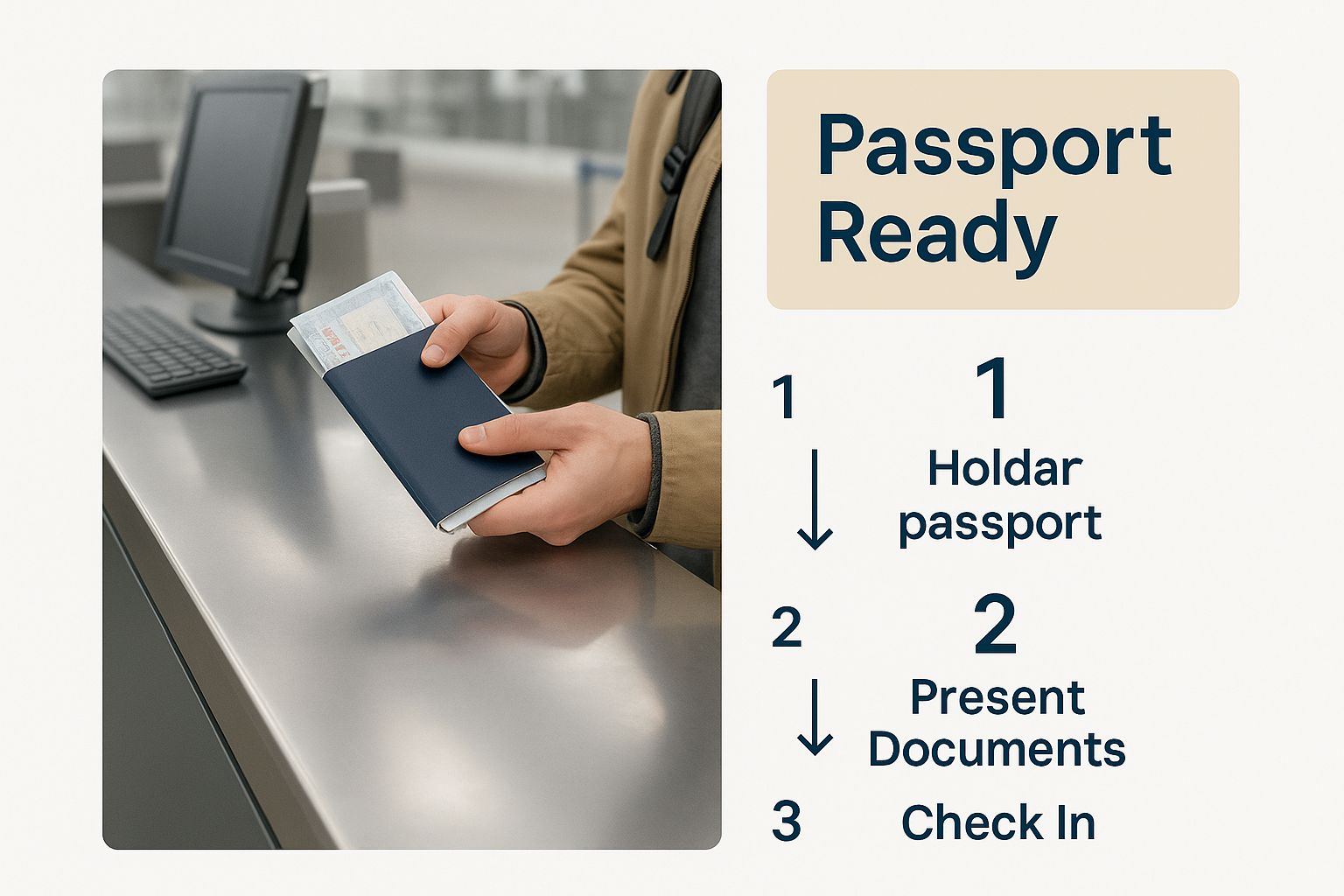
As you can see, everything else—visas, entry permits, you name it—is built on the foundation of a valid passport.
Demystifying Visas and Travel Authorizations
Once your passport is squared away, it’s time to figure out if you need a visa. A visa is simply official permission from a foreign government to enter their country. The rules can be wildly different depending on your citizenship and where you're headed. Never, ever rely on what a friend told you from their trip three years ago. These rules change constantly.
Your one and only source of truth should be the official embassy or consulate website for the country you’re visiting. Some places offer a visa on arrival, which is easy enough. Others demand a complicated application that you have to submit months in advance.
Key Takeaway: Never assume you don’t need a visa. A five-minute check on an official government website can save you from the nightmare of being turned away at the border. Build this step into your initial planning.
For many trips, especially to Western countries, you might not need a full-blown visa but will need an Electronic Travel Authorization (ETA). Think of it as a pre-screening.
ESTA for the United States: If you're from a visa-waiver country, you absolutely must apply for an Electronic System for Travel Authorization (ESTA) online before you fly.
eTA for Canada: Canada has a similar system called the Electronic Travel Authorization (eTA) that’s linked directly to your passport.
EES & ETIAS for Europe: The European Union is rolling out new entry systems, so it’s critical to check the latest requirements before you go.
These authorizations are usually cheap and quick to get online, but they are not optional. If you forget, the airline will deny you boarding. It’s as simple as that.
Assembling All Your Paperwork
Beyond passports and visas, some countries have other specific entry requirements you can't afford to ignore. Getting all your ducks in a row before you leave will make your arrival so much smoother.
For instance, U.S. visa processing times can now stretch for several months in some places, and having the wrong paperwork is a real risk for denial. Forgetting to apply for your ESTA or not having a ticket booked for your flight home can stop your trip cold.
Keep these other potential documents on your radar:
Proof of Onward Travel: Many immigration officers want to see proof that you don't plan on staying forever. A printed confirmation of your flight out of the country is usually all you need.
International Driving Permit (IDP): Planning to rent a car? You'll likely need an IDP. It's an official translation of your driver's license that’s recognized in many countries.
Proof of Accommodation: Some border agents might ask for confirmation of where you're staying. It’s a good idea to have the address and booking confirmation for your first few nights handy.
Vaccination Certificates: Depending on your destination and recent travel history, you may need to show proof of certain vaccinations, like for Yellow Fever.
By methodically working through this list, you’ll build a travel-ready file that eliminates some of the most stressful (and avoidable) travel blunders.
Managing Your Money Abroad Without Stress
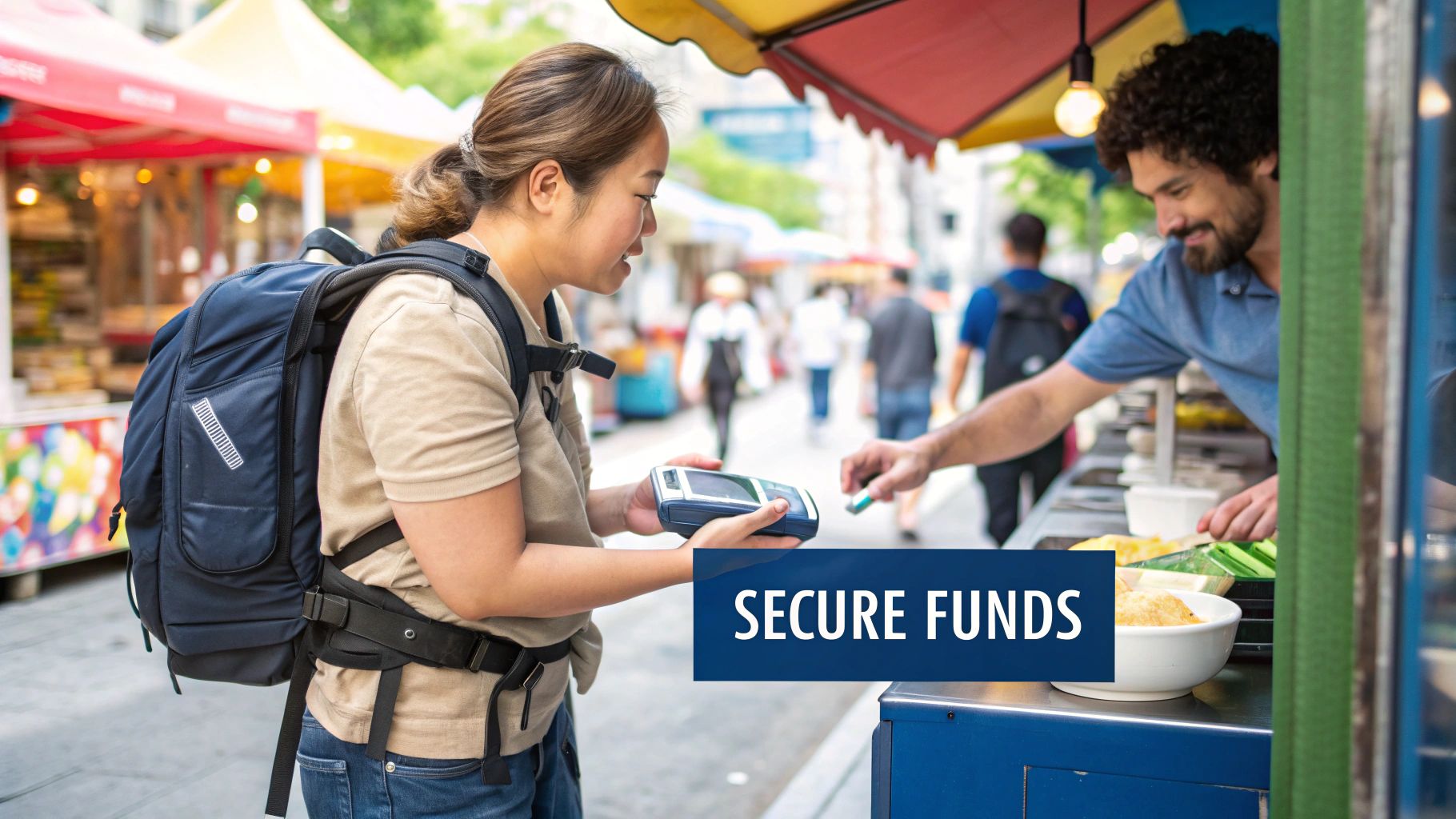
Let's talk about money. Nothing puts a damper on an amazing trip quite like a frozen bank account or discovering you've been paying outrageous fees on every single purchase. Getting your finances in order before you go is a huge part of knowing how to prepare for international travel and can save you from some serious headaches.
The very first thing you should do is make a quick phone call. Before you even pack your bags, you have to notify your bank and credit card companies about your travel dates and destinations. This simple heads-up keeps their fraud detection systems from flagging your legitimate purchases in a new country, which could otherwise get your accounts locked.
Just imagine trying to pay for that perfect dinner in Rome only to have your card declined. A five-minute call can prevent that entire stressful and awkward ordeal.
Credit Cards Versus Debit Cards
When you're overseas, not all plastic is created equal. Using the right card for the right job is the secret to managing your money like a pro.
Credit Cards for Purchases: For most of your day-to-day spending—hotels, meals, souvenirs—your go-to should be a credit card with no foreign transaction fees. These sneaky fees can tack on an extra 2-3% to every purchase, and that adds up fast.
Debit Cards for Cash: Save your debit card for one primary purpose: withdrawing local currency from ATMs. You'll almost always get a better exchange rate from a bank's ATM than you will from those currency exchange kiosks, especially the ones you see in airports.
I always recommend carrying at least two different cards, ideally a Visa and a Mastercard from separate banks. It’s a simple backup plan that can be a lifesaver if one card is lost, stolen, or just not accepted somewhere.
Pro Tip: When a card reader or ATM gives you the option to pay in your home currency or the local one, always, always choose the local currency. The "convenient" conversion rate they offer is a trap and is almost guaranteed to be worse than what your own bank will give you.
Creating a Realistic Travel Budget
With global tourism booming, a solid budget is more critical than ever. In fact, international visitor spending is projected to hit a record-breaking $2.1 trillion in 2025. To keep your own spending in check, you need to do a little homework on the typical costs for food, transport, and activities where you're headed.
A good budget goes way beyond just flights and hotels. Make sure you factor in:
Daily Transportation: This covers everything from subway fares and bus passes to the occasional taxi ride. If you plan to drive, looking into great car rental deals ahead of time can lock in a predictable cost.
Food and Drink: Research what a typical meal costs. Are you planning on dining out three times a day, or will you have a kitchen to cook some of your own meals? Don’t forget to budget for coffee, snacks, and evening drinks.
Activities and Entrance Fees: Make a list of the museums, tours, and attractions you absolutely want to see and look up their ticket prices online.
A "Just-in-Case" Fund: This is non-negotiable. Always build in a buffer of about 10-15% of your total budget for the unexpected—whether it's a must-have souvenir or an unforeseen travel glitch.
Securing Your Funds and Getting Cash
Having a little bit of local currency in your pocket the moment you land is incredibly helpful for those first small purchases, like a taxi from the airport or a bottle of water. You can usually order some from your bank before you leave. Just try to avoid exchanging large sums at airport kiosks, as their rates are notoriously bad.
Once you’re there, the best way to get more cash is simply by using an ATM from a reputable, major bank.
For safety, never keep all your cash and cards in the same place. Split them up between your wallet, a hidden money belt, and maybe a secure pocket in your daypack. I also make it a habit to leave a backup card locked in the hotel safe. That way, if your wallet ever gets lost or stolen, you're not left completely stranded. When you get back home with leftover bills, a good guide can show you how to exchange foreign currency without losing too much value.
Packing Smart for a Better Travel Experience
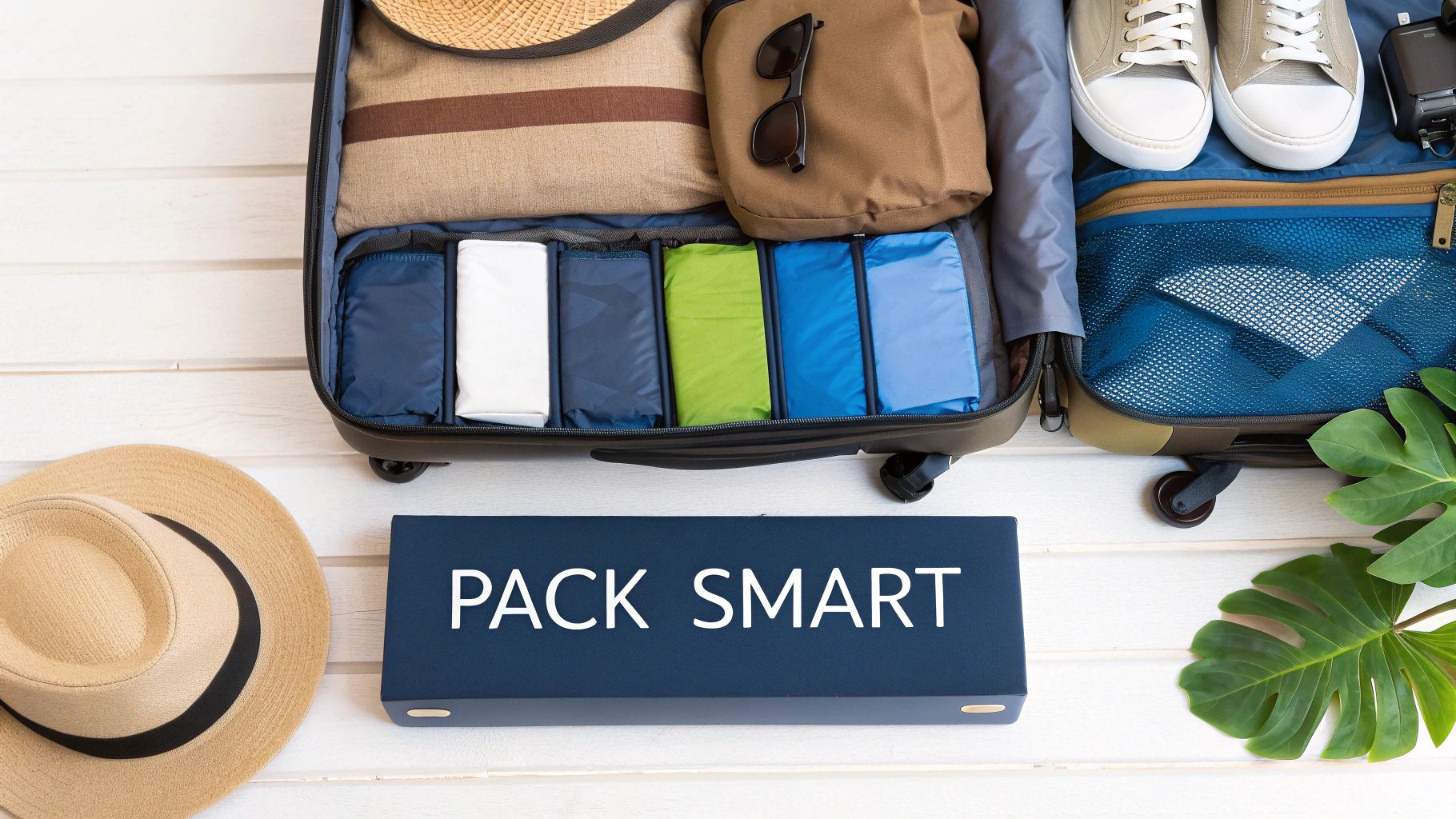
Let’s be honest, packing can make or break a trip. Over the years, I've learned that it's less about cramming everything you own into a bag and more about being clever. The real goal is to have exactly what you need, without hauling around a bunch of "what-if" items that weigh you down.
Your first big call is the luggage itself. Are you a carry-on purist or a checked-bag loyalist? For shorter trips, going carry-on only is a game-changer. You'll breeze past the baggage claim carousel and never have to worry about the airline losing your stuff. But for longer adventures or trips that require specific gear (think ski boots or diving fins), checking a bag is pretty much a necessity.
Either way, I swear by packing cubes. Seriously, they're non-negotiable. They compress your clothes and bring a beautiful sense of order to the chaos. You can have a cube for shirts, another for pants, and one for socks and underwear. It turns your suitcase into a tidy, portable dresser.
Building a Versatile Travel Wardrobe
The secret to a light bag isn't magic; it's a versatile wardrobe. The trick is to bring pieces that all work together. I stick to a neutral color palette for big items like pants and jackets, then add pops of color with scarves, hats, or a fun shirt.
Always, and I mean always, check the weather forecast for your destination right before you zip up your suitcase. A week in Paris in October could be crisp and sunny or just plain wet and cold. Layers are your best friend. Look for fabrics that don't wrinkle easily and dry fast, like merino wool or certain synthetic blends.
Think about what you'll actually be doing. Hiking through a national park and dining at a Michelin-star restaurant require very different outfits. And remember, you can almost always find a place to do laundry. A quick wash can easily cut the amount of clothing you need to pack in half.
A classic traveler’s tip that holds up: lay out everything you think you need, then put half of it back. It sounds brutal, but you'll thank yourself later when you're not dragging a heavy bag up a flight of stairs.
Mastering Airline Luggage Rules
Nothing sours the start of a vacation like an unexpected baggage fee at the airport. Airlines have very specific rules, so a quick check of their website before you pack is crucial.
Weight Limits: These are all over the map. International flights often give you a generous 50 lbs / 23 kg for a checked bag, but budget airlines can be incredibly strict. A cheap portable luggage scale has saved me from overweight fees more times than I can count.
Size Restrictions: Your carry-on needs to fit. Period. Look up the exact dimensions on your airline's website to make sure your bag qualifies.
The Liquids Rule: This one trips people up all the time. For carry-on luggage, any liquids, gels, or creams must be in containers of 3.4 ounces (100 milliliters) or less. All of those little bottles have to fit inside a single, clear, quart-sized plastic bag.
The Essential Non-Clothing Items
Once the clothes are sorted, a few other essentials need to make it into your bag. These are the items you absolutely don't want to leave home without.
Universal Travel Adapter: This is a must. Outlets are different all over the world, and this little gadget ensures you can charge your electronics wherever you land.
Portable Power Bank: Your phone is your lifeline on the road—it’s your map, translator, and camera. A good power bank means you won't be hunting for an outlet halfway through your day.
Compact First-Aid Kit: You don’t need a full paramedic bag, just a small kit with the basics: band-aids, pain relievers, antiseptic wipes, and any personal medications you rely on.
Reusable Water Bottle: Staying hydrated is so important when you travel. Carrying your own bottle is good for the planet and will save you a surprising amount of money.
What Not to Pack
Knowing what to leave behind is just as important as knowing what to bring. A lighter bag makes for a happier traveler.
Don't waste space on things you can easily buy there, like standard shampoo or soap. Leave the hairdryer at home; pretty much every hotel or rental will have one. And that heavy book you've been meaning to read? Swap it for an e-reader to save a ton of space and weight.
The more you travel, the better you'll get at distinguishing a "need" from a "nice-to-have." Plus, leaving extra room means you're prepared for any gear you might need if you've checked out our guide to different types of rental cars and have a road trip in your future.
Staying Healthy, Safe, and Connected
Nothing grounds a trip faster than getting sick or losing your connection to the world. A little bit of smart prep here is non-negotiable—it’s what lets you truly relax and enjoy the adventure, knowing you’re covered for whatever comes your way.
Let's start with travel insurance. Think of this as your absolute safety net. Your regular health insurance plan almost certainly won't cover you abroad, and a medical emergency can turn into a financial nightmare in a hurry. It’s an essential, not an optional extra.
A good policy does more than just cover doctor visits. It should also protect you against trip cancellations, lost baggage, and major travel delays. The peace of mind alone is worth the investment.
Your Health and Medical Prep
First thing's first: find out what health precautions you need to take for your destination. The Centers for Disease Control and Prevention (CDC) website is the gold standard for this. You can search by country to see if any vaccinations are required or just strongly recommended.
Don't put this off! Some vaccines need to be given weeks ahead of your trip to become fully effective. It's always a good idea to chat with your doctor or a travel clinic about your plans to get advice tailored to you.
Next, put together a small medical kit. You're not packing for a field hospital, just covering the basics so you don't have to hunt down a pharmacy in a new city at 10 PM.
Your Personal Meds: Bring enough of any prescription medication to last the entire trip, plus a few extra days' worth just in case of delays. Always keep them in their original labeled bottles.
Pain and Fever Relief: A small bottle of ibuprofen or acetaminophen is a must-have for headaches and minor pains.
Stomach Tamers: Traveling can do a number on your stomach. Pack some antacids and an anti-diarrhea medication.
Basic First-Aid: A few band-aids, antiseptic wipes, and blister plasters can be real trip-savers.
Staying Connected Without a Massive Bill
Your phone is your lifeline on the road—it’s your map, your translator, and your camera. But using it abroad without a plan can lead to some truly shocking phone bills. Let’s look at your best options.
Roaming with your home carrier is definitely the easiest path, but it's often the most expensive. Many companies offer international day passes, which are fine for a weekend getaway but get costly fast on a longer trip.
For any trip over a few days, a local SIM card is usually a much better deal. You can often grab one right at the airport when you arrive. This gets you a local number and much, much cheaper data. The only catch is you need an unlocked phone to pop it into.
The most flexible modern solution is the eSIM. An eSIM is a digital SIM that you download straight to your phone. You can set it up before you even leave home and activate a local data plan the second you land, all without fumbling with a tiny piece of plastic.
The right choice really comes down to your phone, how long you'll be gone, and what you need.
Staying Connected Comparison: Local SIM vs. eSIM vs. Roaming
Trying to decide how to use your phone abroad can be confusing. Here’s a simple breakdown of the three main options to help you figure out what makes the most sense for your travel style.
Connectivity Option | Best For | Average Cost | Key Consideration |
|---|---|---|---|
International Roaming | Short trips (1-3 days) and travelers who prioritize convenience above all else. | High (often $10-$15 per day) | Easiest setup, but costs can skyrocket on longer trips. Check your carrier's specific rates. |
Local SIM Card | Trips longer than a week where you need a local phone number and affordable data. | Low to Moderate (varies by country) | Requires an unlocked phone and you'll have a temporary new phone number. |
eSIM | Tech-savvy travelers of any trip length who want flexible data plans without a physical SIM. | Low to Moderate (pay-as-you-go) | Your phone must be eSIM-compatible. It’s a great way to have data while keeping your home number. |
Ultimately, choosing the right plan for your phone—whether it's an eSIM from a provider like Airalo or a local card—gives you one less thing to worry about. Once you’ve sorted out your health and connectivity, you’re free to just soak in the experience, knowing you’re ready for anything.
A Few Final Questions Before You Go
Even the most seasoned travelers have those last-minute questions that pop up right before a big trip. Getting these details ironed out is the final step in feeling completely prepared and confident. Let's walk through some of the most common queries I hear from people heading overseas.
Think of this as your final pre-flight check. We'll clear up any lingering uncertainties so you can focus on the adventure ahead, knowing you've covered all your bases.
How Far in Advance Should I Really Start Planning?
For most international trips, I tell people to start thinking about things three to six months before they want to leave. That might sound like a lot, but it gives you a comfortable cushion for the slow-moving parts of travel planning.
Things like renewing a passport or applying for a visa can take way longer than you'd expect. Booking flights and hotels three or four months out also tends to be the sweet spot for finding good deals before prices start to climb. This timeframe also gives you a chance to actually enjoy the research phase—looking up your destination, scheduling any needed vaccinations, and shopping for travel gear without being in a last-minute panic.
If you’re planning something more complex, like a multi-country tour or traveling during a major holiday, I'd even push that timeline back to six to nine months. The more moving parts, the more time you'll want.
What’s the Best Way to Handle Money and Currency?
My go-to strategy for money abroad is to have a mix of options. Never, ever rely on just one method—it’s just asking for trouble.
First, your most important pre-trip task: call your bank and credit card companies. Let them know your travel dates. This simple step prevents their automated fraud alerts from locking your cards the first time you try to buy a coffee in Paris. Try to use a credit card with no foreign transaction fees for bigger expenses like hotels or nice dinners. Those little fees, often around 3%, can add up to a nasty surprise on your statement.
For cash, forget the currency exchange kiosks at the airport—their rates are almost always terrible. The smartest move is to withdraw local currency from a legitimate bank ATM once you land. You’ll get a much better exchange rate. I do recommend having a little bit of local cash on you for your arrival, maybe $50 to $100 worth, just for a taxi or a bottle of water. You can usually order this from your own bank a week or two before you leave.
Crucial Tip: When you use a credit card abroad, the machine will often ask if you want to be charged in your home currency or the local currency. Always choose the local currency. It might seem helpful, but that "service" is called dynamic currency conversion, and it's designed to give you a much worse exchange rate.
Is Travel Insurance Really Necessary?
Yes. I can't say this enough: traveling internationally without insurance is a huge, unnecessary risk. Just think of it as a non-negotiable cost of your trip, like your flight.
Here's why: your regular health insurance probably offers little to no coverage outside your home country. A simple accident or a sudden illness can lead to absolutely staggering medical bills. A good travel insurance policy is designed to handle exactly that.
But it's not just about medical emergencies. A solid policy also covers all the other things that can go wrong:
Trip Cancellation: If you have to cancel for a covered reason, you'll get your non-refundable deposits back.
Lost Luggage: The airline lost your bag? Insurance can help you replace your essential items.
Major Delays: Some plans will even reimburse you for meals and a hotel room if you get stuck somewhere overnight.
Honestly, the peace of mind alone is worth the price.
How Can I Stay Safe in a Country I’ve Never Visited?
Staying safe in a new place is all about doing a little homework beforehand and then staying aware once you're there.
Before you even pack your bags, spend some time reading up on your destination. What are the local customs? Are there any common scams that target tourists? Your government's official travel advisory website is a fantastic, no-nonsense resource for this.
Once you have a feel for the place, put these simple safety habits into practice:
Share Your Itinerary: Leave a copy of your flight details, hotel info, and general plan with a friend or family member back home. Just a quick email will do.
Register Your Trip: Many countries have a program for citizens traveling abroad (like the U.S. Smart Traveler Enrollment Program). It helps your embassy find you in a real emergency.
Try to Blend In: You don't have to be a local, but avoiding looking like a lost, flashy tourist can make a big difference. Dress appropriately for the culture and be discreet with expensive cameras or phones.
Secure Your Valuables: Your passport, spare cash, and extra credit cards belong in the hotel safe. Just carry what you need for the day, and maybe consider an anti-theft bag or a simple money belt.
Trust Your Gut: This is the golden rule of travel. If a situation feels weird or a person seems sketchy, it probably is. Just walk away. Don't worry about being polite—your safety comes first.
And one last thing: make digital and physical copies of your passport, visa, and any other important documents. Keep the copies separate from the originals. If your passport gets lost or stolen, having that backup will be a lifesaver.
Now that you're prepared for your adventure, the only thing left is to figure out how you'll explore. For a seamless and stress-free travel experience in Miami and beyond, Cars4Go Rent A Car offers a wide range of vehicles to fit your needs, with convenient delivery and transparent pricing. Book your perfect rental car today and get ready to hit the road.
Comments