


How Does Turo Car Rental Work A Simple Guide
- fantasma70
- Oct 16, 2025
- 13 min read
Ever heard of Airbnb? Turo works on the exact same idea, just with cars. Instead of renting a generic sedan from a big company like Hertz, you’re renting a specific, unique car directly from its owner.
What Turo Is and Why It's a Game-Changer
Picture your last trip to a rental car counter. You probably stood in line, got whatever model they had available in your class, and drove off in a perfectly fine but completely forgettable vehicle.
Turo completely flips that script. It’s a car-sharing marketplace where local car owners (called “hosts”) list their personal vehicles for people like you (“guests”) to rent. You’re not just renting a car; you’re borrowing someone’s actual car, often from right in your own community.
The Magic Is in the Choice
This peer-to-peer approach unlocks a world of variety you just can't find at a traditional agency. We’re talking about everything from a practical Honda Civic for running errands to a head-turning Porsche for a special weekend. You get to pick the exact car you want to drive.
This screenshot from Turo's homepage says it all, showcasing the incredible diversity of cars you can find.

Right away, you see specific models and daily prices, a far cry from the generic "mid-size sedan or similar" option you get elsewhere.
A Model Built for Modern Travel
This community-based system really shined during the pandemic. While traditional rental companies were selling off their fleets and creating massive shortages, Turo’s network of individual hosts stepped up to fill the void.
The results were staggering. In 2021, Turo pulled in $469 million in revenue, which was a massive 213% jump from the year before. This explosive growth proved that connecting people directly is more than just a novelty; it’s a powerful and resilient way to travel. You can dig deeper into Turo’s business model and growth story on Sacra.com.
Turo vs Traditional Car Rental at a Glance
So, what are the real-world differences between booking with a Turo host and walking up to a rental counter? Here’s a quick breakdown.
Feature | Turo (Peer-to-Peer) | Traditional Rental Agency |
|---|---|---|
Vehicle Selection | Huge variety of specific makes and models, from economy cars to exotics. | Limited to standard fleet categories (e.g., "compact," "SUV"). |
Booking Process | App-based, direct communication with the car owner. | Online booking or in-person at a counter. Less personal interaction. |
Price | Often more competitive, especially for unique or luxury vehicles. | Standardized pricing, can have high fees and taxes. |
Pickup Experience | Flexible options like delivery, contactless check-in, or meeting the owner. | Typically requires a trip to a specific rental lot, often at an airport. |
Personalization | High. You choose the exact car and can often arrange extras with the host. | Low. You get what's available in your booked category. |
Ultimately, Turo gives you more control and a much more personal experience, while traditional agencies offer a more standardized, though sometimes less flexible, service.
Finding and Booking Your Perfect Car
Alright, now that you've got the basics of Turo down, it’s time for the fun part: finding the perfect car for your trip. The Turo app is basically a giant, searchable garage packed with thousands of unique vehicles. Your job is to tell it what you want, and that starts with getting your account set up.
Before you can book anything, you'll need to create a profile and get approved to drive. It’s a quick, one-time thing. You’ll just need to provide your driver’s license info and a payment method. Turo does a quick background check to make sure you're eligible, and once you get the green light, you're good to go.
Using Filters to Find Exactly What You Want
This is where Turo really shines. Forget being stuck with "compact or similar." The platform's search filters let you get incredibly specific, making it easy to find a car that’s just right.
Dates and Location: First things first—tell Turo where you'll be and the exact dates you need the car.
Vehicle Type: Craving a convertible for a sunny coastal drive? Or maybe an SUV for a mountain adventure? You can filter by everything from sedans and trucks to vans and even exotic cars.
Price Range: Set a daily budget so you only see cars you can comfortably afford. No sticker shock here.
Special Features: This is where it gets really good. Need all-wheel drive for a ski trip? A bike rack? A pet-friendly ride? Yep, there are filters for those too.
If you're not sure which type of vehicle is right for your trip, our guide on different car types available for rent can help you weigh your options.
This infographic breaks down some key booking stats across major cities, giving you a quick look at what's happening on the platform.
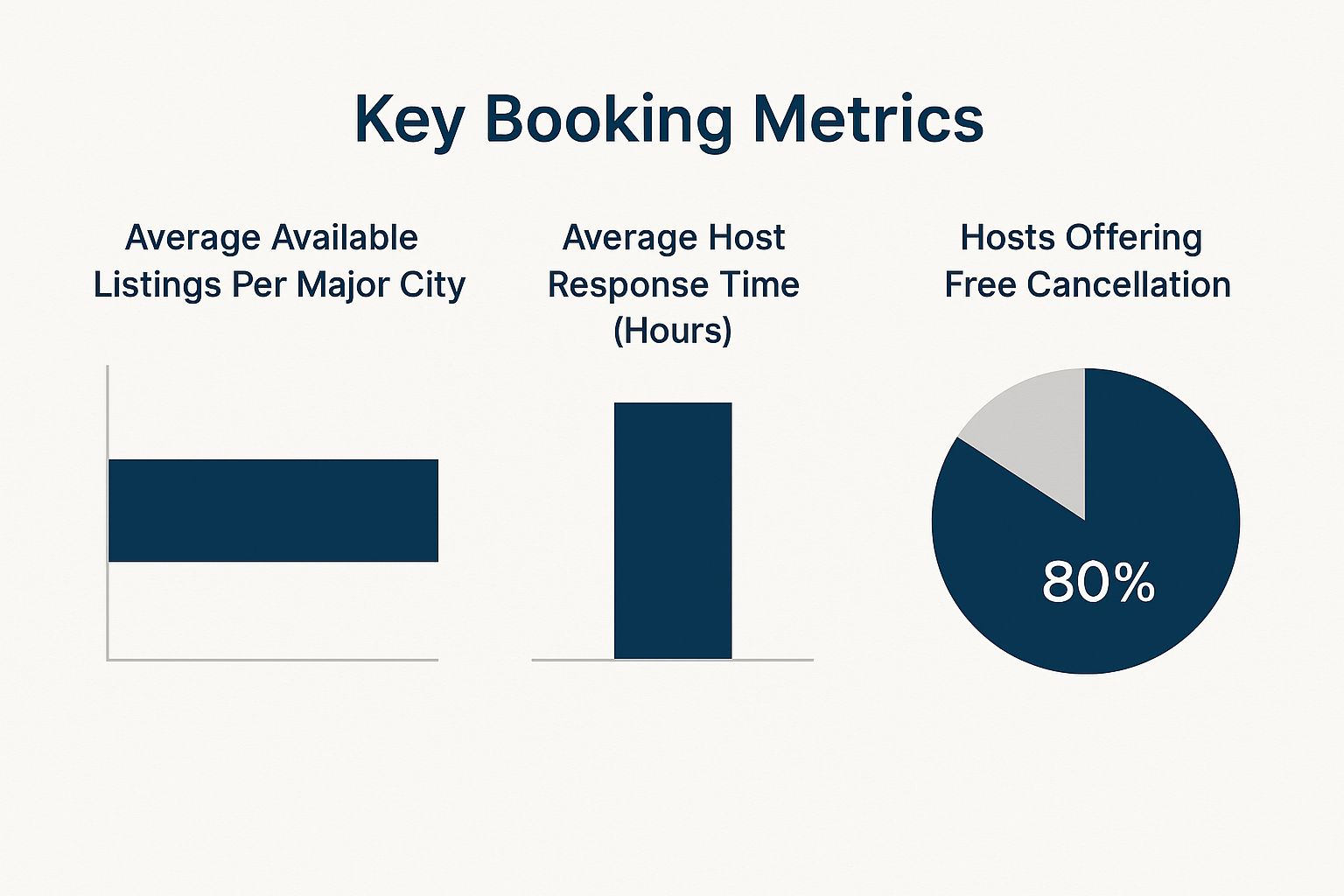
As you can see, there are plenty of cars available, and most hosts have traveler-friendly cancellation policies, which takes some of the stress out of booking.
How to Evaluate a Listing Like a Pro
Finding a car is one thing, but choosing the right one takes a bit of know-how. The real secret is in the reviews and listing details. Always take a moment to look at the host’s rating and read through what past renters have said.
A host with tons of great reviews and a fast response time is usually a solid choice. Turo even gives top-rated hosts an "All-Star Host" badge, which is a pretty reliable indicator that you're in good hands.
Also, don't forget to dig into the trip details. Check the included mileage allowance to make sure it covers your travel plans. You'll also want to look for any extra fees for things like delivery or cleaning. Spending a few extra minutes on the fine print can save you from any nasty surprises and help ensure your trip goes off without a hitch.
Understanding Turo Insurance and Protection Plans
Let’s be honest, insurance can feel like trying to read a foreign language. But when it comes to renting a car on Turo, it's something you really need to get right. The good news is that Turo makes it pretty simple by offering protection plans right at checkout. Think of them as different levels of a safety net for your trip.
Each plan offers a different amount of coverage, and it's all funded by Turo's cut of each rental. The platform takes a percentage of the total trip price—usually somewhere between 15% and 45%—which helps cover their operating costs and these protection plans.
This setup means every trip has at least some baseline protection, but you get to decide just how big you want your safety net to be.
Breaking Down the Turo Protection Plans
When you go to book a car, Turo will show you a few different protection plan options. They'll range from a bare-bones minimum plan to a more comprehensive premium one. The real difference between them boils down to two key things:
Liability Coverage: This is what pays for damage to other people's property or for their injuries if you're at fault in an accident. All Turo plans meet the state's minimum requirements, but the better plans give you much higher limits.
Out-of-Pocket Maximum: This is the absolute most you'd have to pay out of your own pocket if the Turo car gets damaged. A cheaper plan means a higher potential bill if something goes wrong, while a premium plan can drop that number down to zero.
Picking a plan is all about finding the right balance between what you're willing to spend on the rental and how much risk you're comfortable with.
Your out-of-pocket maximum is basically your deductible. It’s the part of the repair bill you have to cover before the protection plan steps in to handle the rest.
To make it crystal clear, here’s a look at how the options typically stack up.
Protection Plan Tier | Guest Pays (Deductible) | Liability Coverage |
|---|---|---|
Minimum Plan | Up to $3,000 | State minimum |
Standard Plan | Up to $500 | $750,000 |
Premier Plan | $0 | $750,000 |
As you can see, going with the Premier plan means you won't have to pay anything for physical damage to the rental car. For a lot of people, that complete peace of mind is well worth it.
How Turo Plans Work with Your Personal Insurance
Here’s where things often get confusing: how do Turo’s plans work with your personal car insurance? Because Turo is a "peer-to-peer car-sharing" service and not a traditional rental agency, many personal auto policies and credit card insurance perks do not cover Turo rentals.
It is absolutely crucial to call your insurance agent and ask them directly before your trip. Never just assume you're covered. If your policy doesn't cover car-sharing, then the Turo protection plan is your only source of coverage. It’s also a good idea to understand the common reasons why insurance claims might be refused by any provider, just to be an informed consumer.
At the end of the day, choosing one of Turo's protection plans is the most direct and reliable way to make sure you’re properly covered when you get behind the wheel.
Getting and Returning Your Turo Car
The time has finally come to grab the keys and start your adventure. A smooth pickup really sets the tone for the entire trip, so it pays to know what to expect. Unlike a traditional rental agency, how you get the car depends entirely on what your host offers, which often means more flexibility for you.

You’ll usually have a few options. Some hosts prefer to meet you in person for a quick walkthrough, while others offer a completely contactless experience. This might mean getting the keys from a secure lockbox or even unlocking the car with your phone using the Turo Go feature. It's all about what works best for you and the host.
Don't Skip the Pre-Trip Photos
Before you even think about hitting the road, there's one step that is absolutely non-negotiable: the pre-trip inspection. This isn’t just a formality; it’s your single best protection as a renter. The Turo app makes it easy by prompting you to take photos of the car’s condition before your trip officially starts.
Think of it like being a detective for five minutes. You’re creating a visual record of the car exactly as you found it. Be methodical about it.
Outside the Car: Do a full walk-around and snap photos of every side. If you see any scratches, dings, or scuffs, get a close-up shot. No detail is too small.
Inside the Car: Take a clear picture of the dashboard showing the starting mileage and the fuel gauge. It's also a good idea to get a few shots of the seats and carpets to document how clean they are.
Wheels and Tires: A quick photo of each wheel can save you from a debate about curb rash later.
This quick process is your proof. The photos are all timestamped within the app, creating an undeniable record of the car's condition when you took possession. It’s the easiest way to ensure you won't be on the hook for any pre-existing damage.
Wrapping Up Your Trip
Returning the car is just as simple. Your main job is to follow the host’s rules for fuel and cleaning, which you can find right in the car's listing. Most hosts have a "full-to-full" policy, so you’ll just need to top off the tank before you bring it back.
When you're done, you'll do another quick photo inspection. Just like at the start, you'll snap pictures of the car's final condition, mileage, and fuel level. This officially closes out your rental and protects you once again.
After that, you just drop the car at the agreed-upon location, and you're all set. If you're renting in a major city, it can be useful to see what car rental locations are available to get a sense of common pickup and drop-off spots. Following these simple steps ensures everything is transparent and leaves both you and the host with a great experience.
Your Responsibilities as a Turo Renter
Think of renting on Turo less like a transaction with a big company and more like borrowing a car from a friend. That community vibe is built on mutual respect, so understanding your side of the deal is what makes for a great, hassle-free trip.
It really boils down to one simple idea: bring the car back in the same shape you got it. This covers the basics like the fuel level and general cleanliness, ensuring the next person who rents it has a fantastic experience, just like you did.
Following the Rules of the Road and the Host
Every host has their own ground rules for their car, and you'll find these spelled out right in the vehicle's listing before you even think about booking. They’re usually just common-sense requests.
Mileage Limits: Always check the daily mileage allowance. If you think you might go over, be aware that you'll be charged a per-mile fee. It's best to plan your travel with this in mind.
Smoking and Pets: A no-smoking rule is pretty much standard across the board. If you’re bringing a furry friend along, make sure to filter your search for "pet-friendly" cars to sidestep any surprise cleaning fees.
Cleanliness: No one expects you to return the car professionally detailed, but bringing it back reasonably clean is part of the deal. Major messes will likely result in a cleaning fee from the host.
Beyond the host's rules, you’re also on the hook for any traffic tickets or tolls you rack up. Those charges will find their way back to you through the Turo app.
Remember, the whole Turo system is built on trust. When you treat the host's car with care, you're not just earning a good review for yourself—you're helping make the entire car-sharing community stronger.
Handling Unexpected Events
Life happens, and even the best-laid plans can go sideways. The good news is that Turo has your back for most common road hiccups. Every single trip includes 24/7 roadside assistance for things like a flat tire, getting locked out, or needing a jump start. You can get help right from the app.
Need the car a bit longer? You can request to extend your trip through the app, too. As long as you communicate clearly with the host, it's often a smooth process to get it approved. And while Turo’s protection plans are there for the big stuff, it’s smart to know what to do after a car accident for your own peace of mind. Being prepared for the unexpected is the best way to feel confident and in control during your trip.
How to Be a 5-Star Turo Guest
On Turo, your reputation as a guest is everything. Think of it as your passport to the best cars and the most accommodating hosts on the platform. Earning that coveted 5-star rating isn't about jumping through hoops; it really just comes down to being a good, communicative, and respectful renter.

The whole system works because of a simple handshake agreement between hosts and guests. The host provides a great car, and the guest takes care of it. When that happens, everyone wins.
Communication and Punctuality Are Key
Nothing makes a host happier than a guest who communicates clearly and quickly. A fast reply to a message, a quick confirmation of pickup details, or just asking a question if you're unsure—these small things build a ton of trust.
Being on time is just as important. Your host has a schedule, and showing up when you say you will for both pickup and drop-off is a huge sign of respect. If you’re running a few minutes late (it happens!), just send a quick text. That simple courtesy can make all the difference.
A great guest experience is a partnership. Hosts provide a clean, reliable car, and guests return it on time and in good condition. This simple exchange is what keeps the Turo community thriving.
Treat the Car with Respect
It’s easy to forget, but you’re driving someone’s personal car, not a generic rental from a giant lot. Because of that, a little consideration goes a long, long way.
Follow Host Rules: Every host sets their own rules for things like smoking, pets, or mileage limits. Make sure you read and respect them.
Return It Clean: You don't need to pay for a full detail, but a quick once-over to remove trash, wipe up spills, and get rid of excessive dirt is expected.
Refuel as Agreed: The most common policy is "full-to-full." Just make sure to top off the tank before you bring it back to avoid any extra fees.
When your trip is over, leaving a thoughtful review is the final step. It helps other renters know what to expect and gives your host great feedback. If you want some tips on what to include, take a look at our guide on writing effective rental car reviews. A good rating helps you, your host, and the whole Turo community.
Got Questions? We've Got Answers.
Even with the basics covered, you probably still have a few things you're wondering about. Let's tackle some of the most common questions new Turo renters ask so you can book your first trip with total confidence.
How Old Do I Have to Be to Rent a Car on Turo?
Good news for younger drivers. While most traditional rental agencies require you to be 25, Turo is a lot more flexible. In the United States, you can typically rent a car on Turo as long as you're at least 21 years old.
Keep in mind, though, that some hosts might set a higher age limit for their specific cars—think high-end sports cars or luxury models. Also, if you're under 25, you'll almost always see a Young Driver Fee added at checkout. It's an automatic charge that covers the higher insurance risk.
Can My Friend or Partner Drive the Car Too?
Absolutely, but you have to do it by the book. To add a second driver, they'll need to create their own Turo account and get approved to drive first. It’s a quick process for them.
Once their account is approved, you can easily add them to your booked trip right from the Turo app.
DON'T SKIP THIS: Never, ever let someone drive the car if they aren't officially approved and listed on the trip. If you do, your protection plan is completely voided. That means if an accident happens, you're on the hook for everything.
What If I Get Into an Accident?
First thing's first: make sure everyone is safe. If you can, move the car to a secure spot off the road and call the police or emergency services if needed.
Once the immediate situation is handled, report the accident in the Turo app right away. Turo has 24/7 support to walk you through the next steps. Your job is to document everything—take tons of photos of the damage to all vehicles, get contact and insurance info from the other driver, and make sure a police report is filed. The more documentation you have, the smoother the claims process will be.
Can I Take a Turo Car Across the Border?
Thinking of a road trip to Mexico or Canada? Hold on a minute. As a general rule, driving a Turo car across an international border is a big no-no.
The vast majority of Turo cars must stay within the country where the rental started. So, a car you pick up in San Diego can't be driven into Mexico. There are some exceptions for crossing between the U.S. and Canada, but you need to get explicit permission from the host beforehand and follow Turo's specific cross-border rules. Always check with your host before you even think about planning an international route.
Ready for a seamless rental experience without the hidden fees and airport lines? Cars4Go Rent A Car offers door-to-door delivery, transparent pricing, and a wide selection of vehicles perfect for your Miami adventure. Book your car today!
Comments