


Flat Tire on Rental Car: What to Do and Who Pays
- fantasma70
- Feb 1
- 12 min read
When you hear that dreaded thump-thump-thump of a flat tire, especially in a rental car, your very first instinct needs to be about safety. Forget the tire, forget the rental company for a second—just get yourself and the car out of harm's way.
Your safety is the absolute priority.
Your Miami Trip Just Hit a Snag? Here’s What to Do First
Picture this: you're cruising down Ocean Drive, soaking in the Miami vibes, and then the car starts feeling... weird. The steering gets sluggish, and you hear that unmistakable rhythmic thumping. Yep, that's a flat tire.
It’s a frustrating surprise, no doubt, but what you do in the next 60 seconds is what really matters, particularly on Miami's hectic roads. The key is not to panic or slam on the brakes. Instead, get a firm grip on the steering wheel, take your foot off the gas, and start looking for a safe place to pull over. Your mission is to get completely out of the flow of traffic as smoothly as you can.
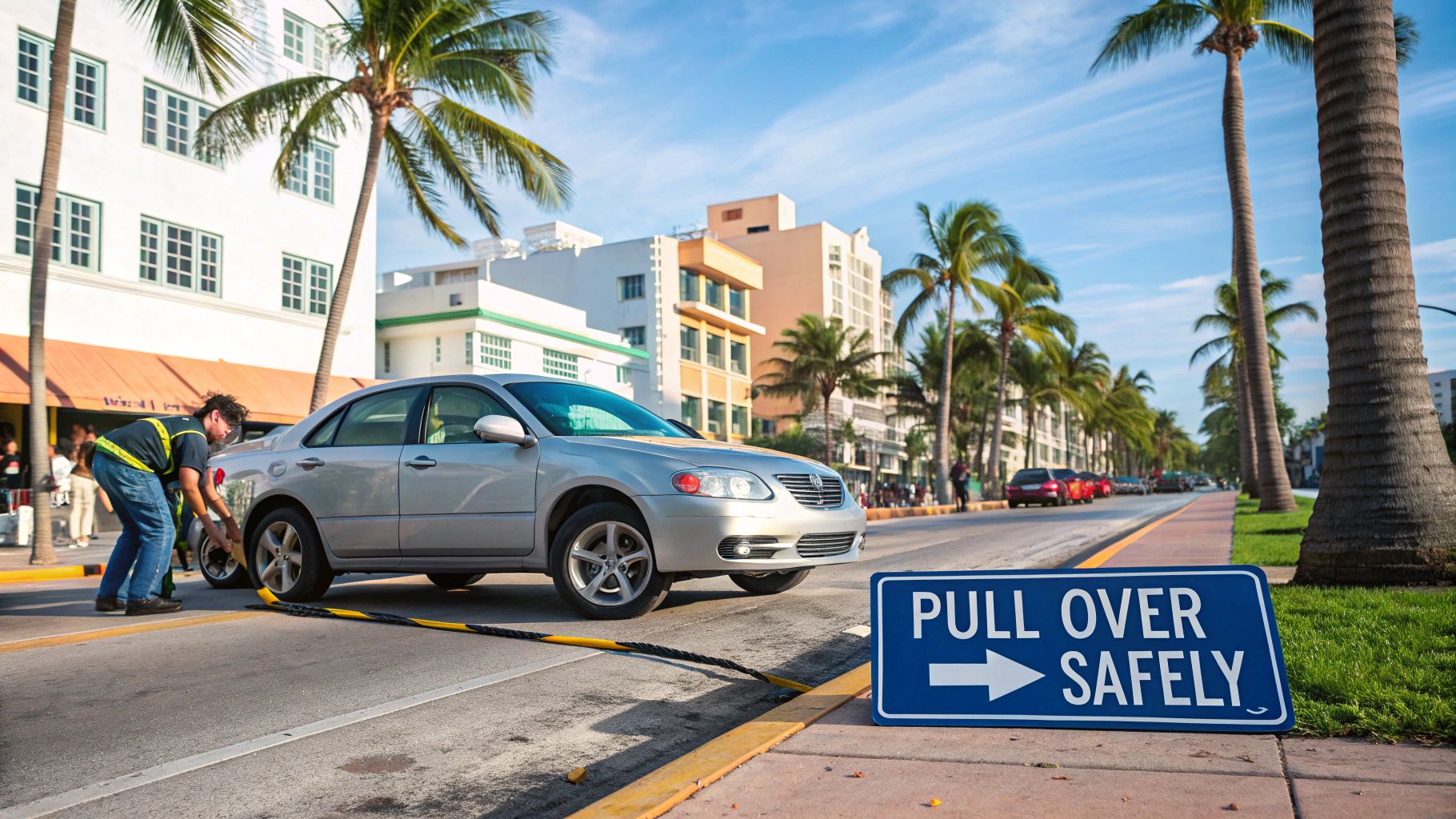
This isn’t just about preventing a collision. It’s about creating a safe workspace for whoever is coming to help you. A narrow shoulder on the I-95 or a busy causeway is not the spot you want to be. Aim for a parking lot, a quiet side street, or at the very least, a wide, well-lit shoulder.
Don't Ignore the Warning Signs
A flat tire isn't always a dramatic blowout. Often, it's a slow leak that makes the car start pulling to one side. The second you feel something is off, it’s time to act. Many modern rentals have a Tire Pressure Monitoring System (TPMS) light on the dash—if that little light comes on, pay attention to it. It’s there for a reason.
A flat tire can absolutely turn a dream vacation into a stressful ordeal if you let it. The trick is to stay calm, get to a safe spot, and then follow the right steps. This mindset turns a potential crisis into little more than a manageable detour in your day.
Once you’re safely off the road, shift the car into park and pull the emergency brake. This is a non-negotiable step to keep the car from rolling, even on what looks like flat ground. While your problem is a flat, these initial safety moves are universal for almost any roadside issue. The general principles for handling a broken down car are a good thing to know for any driver.
A Quick Safety Run-Down
The moment you realize you have a flat, your mind can race. This quick checklist breaks down the immediate, critical actions into simple steps.
Immediate Safety Checklist for a Rental Car Flat Tire
Action Step | Why It Matters in a Busy City |
|---|---|
Turn on Hazard Lights | Instantly signals to other drivers—especially fast-moving ones on Miami highways—that you have a problem. |
Ease Off the Accelerator | Prevents loss of control. Sudden braking can cause the car to swerve, which is extra dangerous in tight traffic. |
Grip Steering Wheel Firmly | A flat tire can pull the car sharply to one side. A firm grip helps you maintain a straight path while you slow down. |
Find a Safe Pullover Spot | Looks for a parking lot or wide shoulder. This gets you away from traffic and gives you (or help) a safe area to work. |
Engage Park & Emergency Brake | Secures the vehicle completely, preventing it from rolling into traffic, even on a slight incline. |
Following these steps methodically will keep you safe and set the stage for a smooth resolution.
You're Not Alone—This Happens a Lot
Dealing with a flat tire on a rental car feels like uniquely bad luck, but it’s more common than you’d think. In fact, one study found that 21% of renters have run into this exact problem, making it the most frequent issue they face.
It just goes to show that even perfectly maintained rental cars can fall victim to road debris or one of Miami's notorious potholes. By knowing these first critical steps, you’re already ahead of the game.
Getting in Touch with the Rental Company
Alright, you're safely pulled over, and the hazard lights are on. Now it's time to get some help. Grab your rental agreement—this is your lifeline right now.
Don't just dial the main reservations number. Look specifically for the roadside assistance hotline. You can usually find it on a sticker in the glove box, on the driver's side door frame, or printed right on the folder your rental paperwork came in. Calling that direct line is the fastest way to get the right people on the case.
Think about it: you're a family visiting Miami, already late for a dinner reservation in South Beach, and suddenly thump-thump-thump. The kids are getting fussy, and your stress level is through the roof. The clearer you can be on the phone, the quicker help will get to you.
What to Have Ready When You Call
To make this go as smoothly as possible, get a few things together before you dial. The person on the other end needs specific details to send help to the right spot, so being prepared can turn a chaotic call into a quick, professional fix.
Make sure you have this info handy:
Your Rental Agreement Number: This is how they’ll pull up your file, your car's details, and what coverage you have.
Your Exact Location: "Side of the highway" isn't enough. Use your phone’s map to find a cross-street, a mile marker, or a big landmark. GPS coordinates are even better.
A Clear Description: Just say, "I have a flat tire on the front passenger side." Let them know if it was a sudden blowout or a slow leak you noticed.
The Car's Details: Have the make, model, and color ready. They have it on record, but confirming it prevents any mix-ups.
Having these details ready is like having the right tools for the job. It helps the dispatcher get you sorted out fast. If you're not from around here, it's also smart to see if there are any Cars4Go car rental locations nearby, as that might be an option for a vehicle swap.
Pro Tip: Clear communication is everything in a roadside emergency. When you give precise information, you take the guesswork out of it for the dispatcher. This dramatically speeds things up and turns a potential vacation-ruiner into just a minor hiccup.
Once you’re on the line, the agent will walk you through what happens next. They might send out their own service truck, call a local Miami tow company for you, or even talk you through changing to the spare if you're comfortable and feel safe doing it.
Pay close attention to what they say. Before you hang up, always ask for an estimated arrival time and get a reference number for your call. You’ll be glad you have that information later.
Understanding Insurance Coverage and Potential Costs
Once you’re safely off the road, the next question that hits everyone is always the same: Who’s paying for this? A flat tire in a rental can feel like a financial trap, but knowing where you stand with your coverage is the best way to sidestep any nasty surprises.
The final bill isn't just for a new tire. It often bundles in the service call, labor costs, and sometimes even administrative fees from the rental company. What you're actually responsible for comes down to the coverage you have, which usually comes from one of a few places.
What Does Your Rental Agreement Actually Say?
The first place to look is the rental agreement you signed. Most rental companies, including Cars4Go, will offer you some sort of damage waiver or protection plan when you pick up the car.
A Loss Damage Waiver (LDW) or Collision Damage Waiver (CDW) is designed to cover damage to the rental vehicle itself. In most cases, this includes tires that fall victim to a road hazard—think nails, glass, or those unavoidable Miami potholes.
Still, you have to read the fine print. Some of the more basic plans specifically exclude tires and glass, so it's worth double-checking. If you accepted the waiver, the cost of the flat tire is most likely covered, maybe minus a small deductible. If you declined it, it's time to check your other options.
Your Personal Insurance and Credit Card Benefits
A lot of people think their personal auto insurance will automatically handle a flat on a rental. While your policy likely extends liability coverage to a rental, the physical damage to the car—including the tires—is only covered if you have comprehensive and collision on your personal policy.
Don't forget about the most powerful tool in your wallet: your credit card. Many travel rewards cards offer rental car insurance as a perk, but you need to know which kind you have:
Primary Coverage: This is the gold standard. The credit card’s insurance pays out first, meaning you don't have to involve your personal auto insurer or pay your own deductible.
Secondary Coverage: This is more common. It only covers costs after your personal auto insurance has paid its share. You'll have to file a claim with your insurer and pay your deductible first.
A quick call to your credit card issuer before you even leave for your trip can save you a massive headache down the road.
Unexpected charges for a flat tire can put a real dent in your travel budget. The best defense is being proactive. Know what your rental waiver, personal insurance, and credit card cover before you even get the keys.
This flowchart shows the simple steps for getting in touch with your rental company for help.
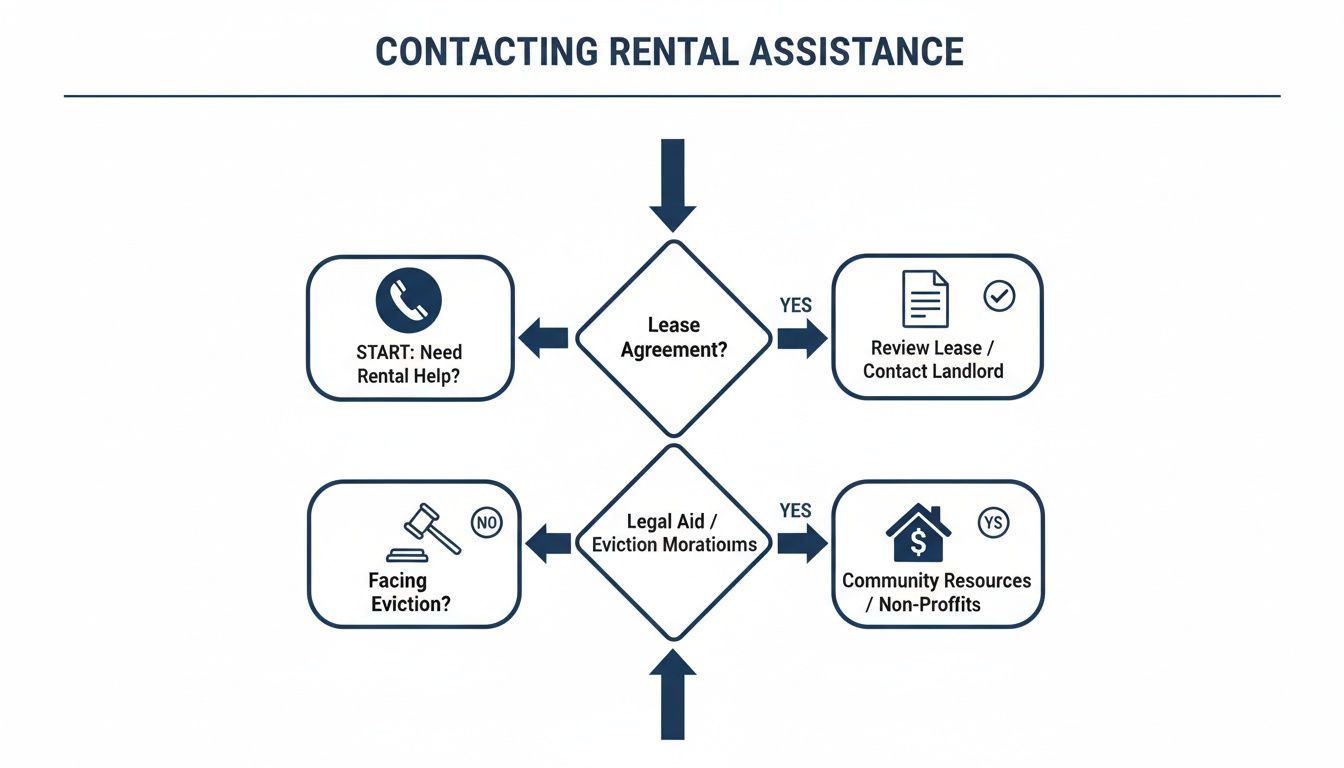
It really simplifies the process, making sure you check your rental agreement for the right number to call to get a quick response.
Unfortunately, surprise bills for a flat tire on a rental aren't just a myth. Travelers have shared stories of being charged €185.92 for a minor puncture in Italy or even €305 on a Spanish rental. While Cars4Go prides itself on transparency, these real-world examples show why it pays to be prepared, especially when a recent study found that 21% of renters get a flat.
You can read the full discussion on rental car charges to see more traveler experiences.
Documenting the Incident to Protect Yourself
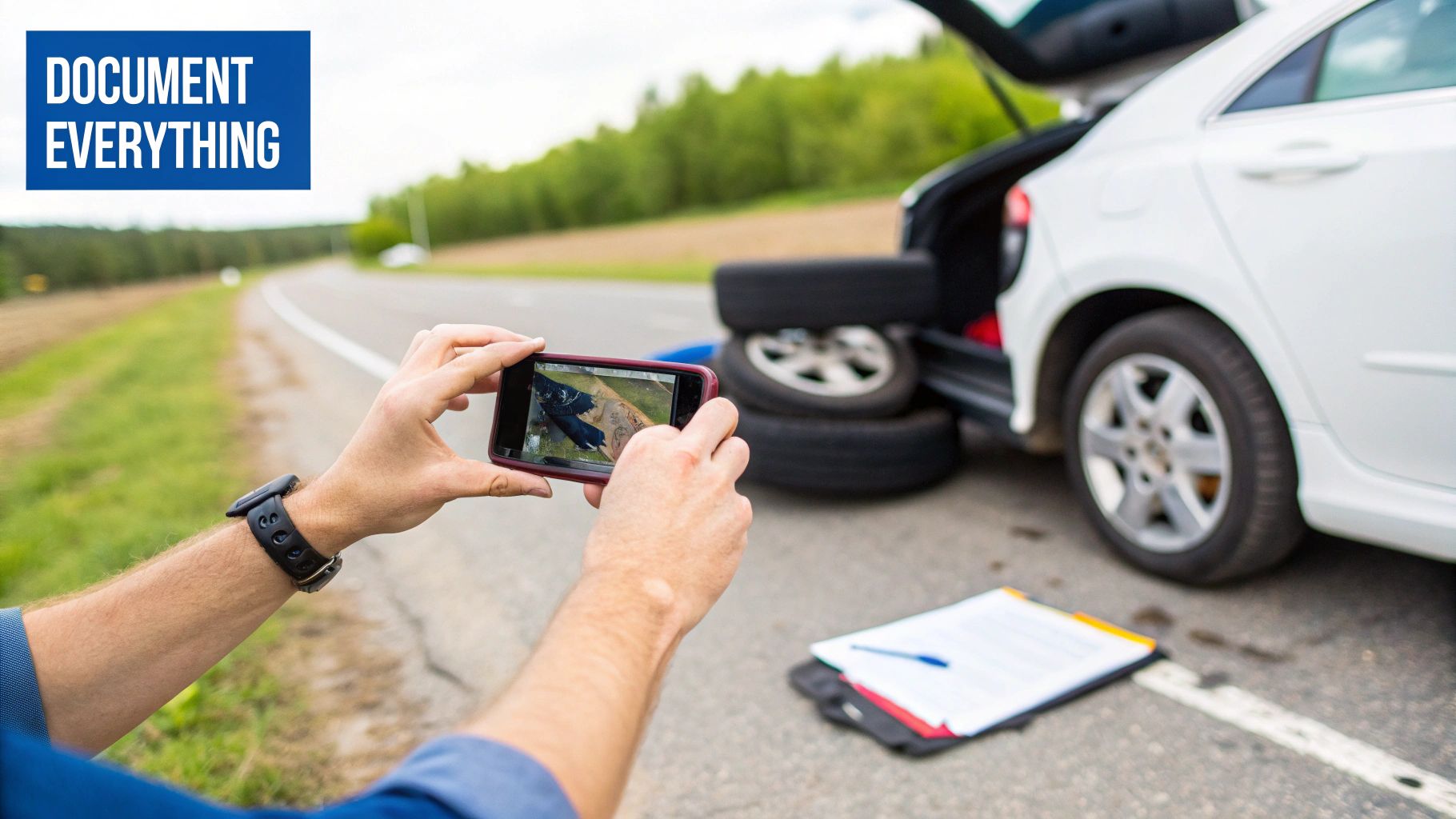
Once you're safely off the road, the very next thing you need to do is switch into investigator mode. I know, it's the last thing you want to do when you're stressed and stuck, but trust me on this: taking a few minutes to document everything is your best shield against surprise charges later.
Think of it this way—you're creating a clear, factual story of what happened. Your phone is your most important tool right now.
Building Your Evidence File
When it comes to rental car disputes, photos are undeniable proof. They can shut down a "he said, she said" argument before it even starts. Your goal is to tell the whole story with pictures.
Here’s a quick checklist of shots to get:
The Damaged Tire: Get up close. Show the nail, the gash in the sidewall, or whatever caused the flat. Multiple angles are always better.
The Cause (If Visible): If you hit a monster pothole or ran over some debris in the road, snap a quick, safe picture of the culprit. This can be crucial in proving it wasn't your fault.
The Scene: Take a wider shot of the car pulled over. This shows you acted responsibly and got to a safe location.
The Odometer: A quick photo of the dashboard captures the exact mileage, creating a timestamp for when the incident happened.
A good photo tells the story for you. When you're dealing with a rental agency or an insurance company, clear pictures from different angles are worth their weight in gold. They remove all doubt about what actually happened.
Don't Forget the Details
Photos are great, but you need to pair them with written notes. Your memory of the details will fade fast, so write things down while they're fresh.
Open the notes app on your phone and log the following:
Time and Date: The exact time the tire went flat.
Precise Location: Be specific. Note the highway, exit number, nearest cross street, or mile marker. "I-95 North near the Miami Gardens Dr exit" is much better than "on the highway."
Roadside Assistance Details: Get the name of the technician and their company.
Reference Numbers: This is a big one. Always ask for a case or incident number from both Cars4Go and the roadside assistance dispatcher. Write it down immediately.
Taking these simple steps creates a solid, indisputable record. It protects you from misunderstandings and helps ensure the whole process is handled fairly and without any frustrating back-and-forth.
Tire Repair vs. Replacement: What Happens Next?
Once roadside assistance arrives, the first thing they'll do is take a look at the tire. The damage dictates everything. A simple nail in the tread is a vastly different problem than a gash in the sidewall, and their diagnosis will determine if you’re looking at a quick patch or a full-blown replacement.
The best-case scenario? A clean puncture right in the tire's tread—that thick, grooved part that hits the pavement. If a nail or screw is the obvious culprit, the technician can often plug it right there on the spot. It’s a temporary fix, but it's more than enough to get you safely off the roadside and on your way to a proper tire shop.
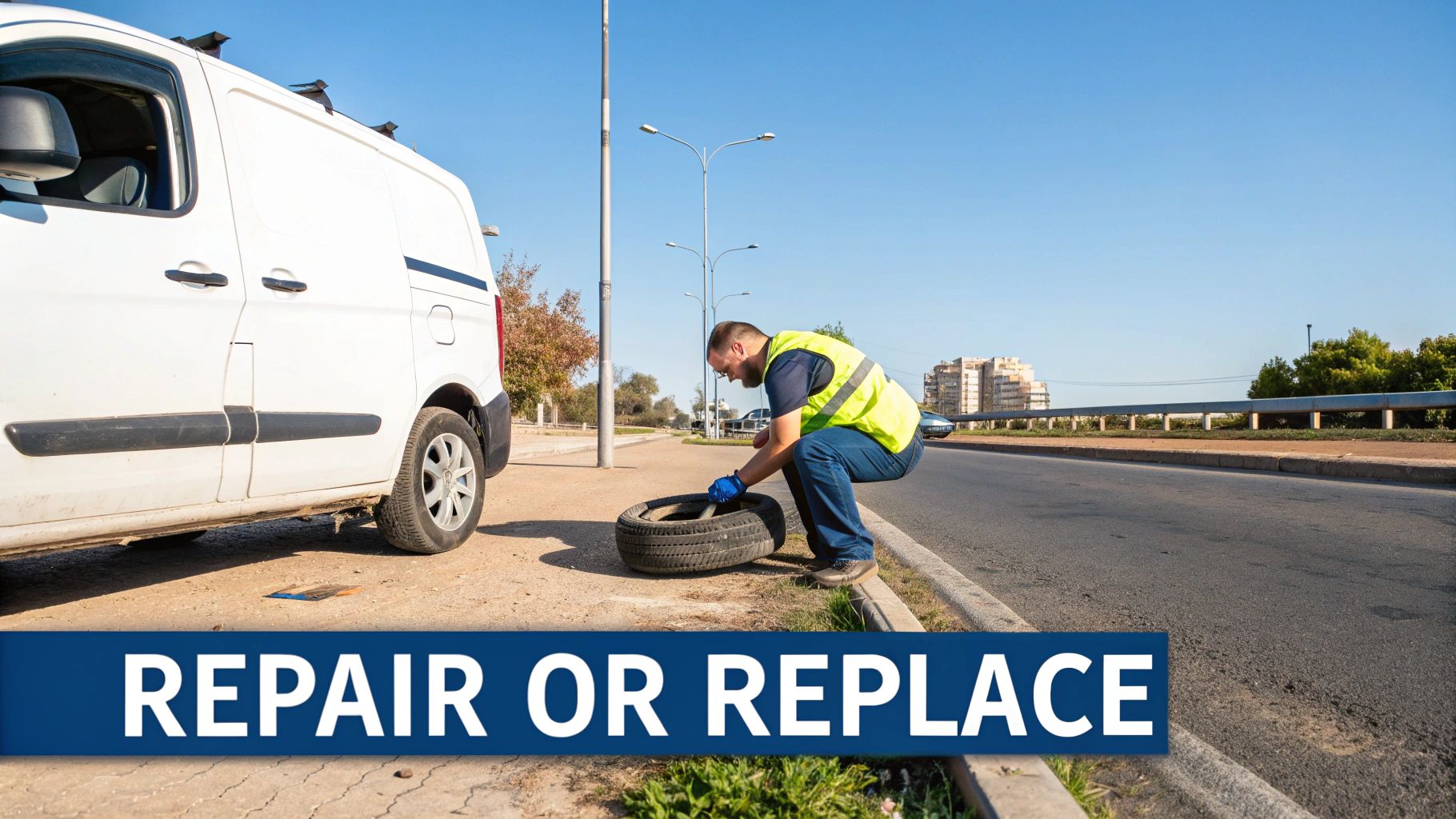
But if the damage is on the sidewall, that’s a different story. Any puncture there compromises the tire's entire structure, making it unsafe to repair. In that situation, a replacement is the only option. The technician will put on the spare "donut" tire—just remember, those are only meant for short distances and slow speeds.
A Quick Word on Run-Flat Tires
Many newer cars in rental fleets, especially the premium ones, come with run-flat tires. Honestly, they can be a lifesaver. These tires are built with reinforced sidewalls that can support the car's weight even with zero air pressure. This means you can keep driving for a limited distance, usually up to 50 miles at a reduced speed.
Think about it: instead of being stranded on the shoulder of I-95 during Miami rush hour, you can actually drive yourself to the nearest service center. For business travelers with a meeting to catch or families trying to get to the beach, that’s a massive relief.
This technology is becoming more common as the luxury rental market grows. In fact, the global run-flat tire market was valued at USD 5.26 billion in 2024, and a big part of that is rental companies wanting to give customers a better, safer experience. When you browse the different car types available for your rental, you'll likely see many sedans and SUVs equipped with them.
Following Cars4Go's Lead
No matter what, your next steps will be guided by Cars4Go. Rental companies have very specific rules for repairs and replacements, and you need to follow them to the letter. This is key to making sure your damage waiver or other coverage applies.
They'll almost certainly direct you to one of their approved service centers to get a new tire. When you're on the phone with them, they might point you to a specific shop or give you a few options. If you're given a choice, it helps to know how to find trusted auto repair services in the area.
Ultimately, Cars4Go makes the final decision. To keep their fleet safe and consistent, they will almost always choose to replace the damaged tire with a brand new one that matches the others. Knowing this ahead of time helps manage expectations and makes the whole process smoother, getting you back to enjoying your Miami trip that much faster.
Got Questions About a Flat Tire in a Rental? We've Got Answers.
Even when you think you've got it all figured out, a flat tire always throws a wrench in the plans. A few questions are bound to pop up. Knowing the answers before you're stuck on the side of the road can save you a ton of stress and help you make the right call. Let's tackle the most common ones we hear from renters.
So, Can I Just Change the Tire Myself?
Most rental cars have a spare tire and a jack in the trunk, but that doesn't mean you should be the one to use them. Your first move should always be to call the roadside assistance number. Honestly, trying to change a tire on the shoulder of a busy Miami highway is a recipe for disaster, especially with a car you're not used to.
Let the pros handle it. They can do it safely and get you back on your way much faster.
Now, if you’re somewhere safe—say, a brightly lit hotel parking lot—and you know your way around a lug wrench, you could do it. Just make sure to call the rental company first. You need to follow their rules and make sure the whole thing is on record.
What if I Get a Flat After Hours?
Car trouble doesn't care about business hours, and luckily, neither does your rental company. Major rental companies provide 24/7 roadside assistance.
Look for a toll-free number in your rental agreement or on a sticker inside the car—usually on the driver's side window or tucked in the glove compartment. Whether you're catching a red-eye from MIA or driving back late from a night out, help is just a phone call away.
Peace of mind is knowing that professional help is available around the clock. Your vacation doesn't stop at 5 p.m., and neither should your support system when things go wrong.
Is This Flat Tire Covered by My Rental Insurance?
This is the million-dollar question, isn't it? The answer really comes down to what coverage you chose when you booked the car.
Basic liability coverage almost never covers damage to the rental car itself, and that includes the tires.
A Loss Damage Waiver (LDW) or Collision Damage Waiver (CDW) bought directly from the rental company is your best bet. It usually covers damage from common road hazards.
Your personal car insurance or a premium credit card might also offer coverage, but you have to check the fine print. Don't just assume you're covered.
The best advice? Figure this out before your trip even starts. Knowing exactly what's included in your policy is the only way to sidestep a nasty surprise on your final bill. For more deep dives into travel prep, you can always check out our other blog posts to stay ahead of the game.
Am I Going to Get a Bill for a New Tire?
Whether you'll have to pay for a new tire depends on two things: what caused the flat and what your insurance says. If you ran over a nail or some other piece of road debris, your damage waiver should cover the cost of a replacement.
But if the damage looks like it came from carelessness—like smacking a curb—you could be on the hook for the bill. This is exactly why taking photos of the scene is so crucial. A little bit of proof can go a long way in protecting you from unfair charges and making sure everything gets resolved smoothly.
At Cars4Go Rent A Car, our goal is to provide clear, hassle-free rentals that make your Miami trip memorable for all the right reasons. From our convenient door-to-door airport delivery to our straightforward pricing, we're here to help you drive with confidence. Book your perfect Miami rental car today!
Comments