


Finding the Best Car Seats for Toddlers
- fantasma70
- Oct 10, 2025
- 14 min read
When you're searching for the best car seats for toddlers, you’re really looking for the one that fits three things perfectly: your child, your car, and your family's lifestyle. The "best" seat isn't about a brand name; it's the one you can install correctly and use properly every single time you get in the car.
Choosing Your Toddler’s Safest Car Seat
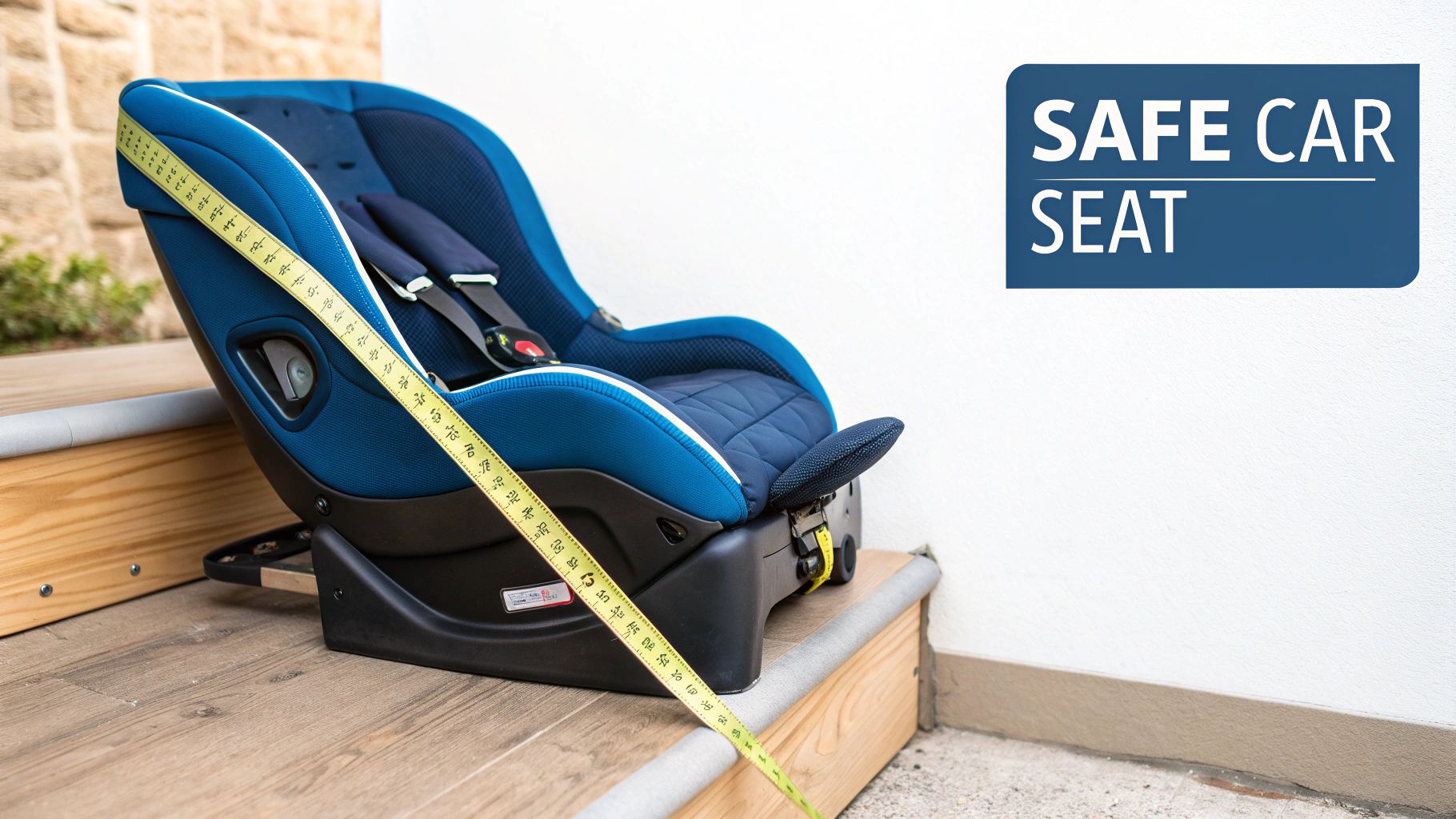
Let's be honest, picking a car seat can feel overwhelming, but it's one of the most critical safety decisions you'll make. The numbers don't lie: using a car seat the right way reduces the risk of fatal injury by a massive 54% for toddlers in passenger cars. That single statistic highlights just how vital this piece of gear is.
Ultimately, your decision will come down to your child's size, your vehicle's setup (does it have a LATCH system?), and how you'll be using the seat day in and day out.
Key Decision Factors for Toddler Car Seats
Before you get lost comparing different models, it helps to know what features actually matter. Think of these as your non-negotiables for keeping your little one safe and making your life easier.
Factor | Why It Matters | What to Look For |
|---|---|---|
Harness System | The 5-point harness is the gold standard. It’s designed to spread the force of a crash across the strongest parts of your toddler's body. | A no-rethread harness is a game-changer. It lets you adjust the shoulder strap height without taking the whole seat apart. |
Safety Certifications | Every seat sold in the U.S. has to meet federal safety standards (FMVSS 213), but many brands go above and beyond that baseline. | Look for seats with added side-impact protection, steel-reinforced frames, and energy-absorbing foam. |
Installation Method | A car seat is only as safe as its installation. An incorrectly installed seat offers dangerously little protection. | Features like LATCH connectors, built-in seatbelt lock-offs, and bubble level indicators make getting a tight, secure fit much simpler. |
Getting a handle on these basics gives you a solid foundation for weighing your options. The real goal is finding a seat that not only gets top marks in safety tests but also doesn't make you want to pull your hair out every time you install it.
The safest car seat is the one that is used correctly 100% of the time. A high-end seat installed improperly is less safe than a basic seat installed perfectly.
Of course, keeping your toddler safe extends beyond the car. Parents are always looking for ways to create a secure environment, whether at home or on the move. That's why you might also find these broader toddler safety guidelines helpful for a more complete approach to childproofing your world.
So, What Kind of Toddler Car Seat Do You Actually Need?
Walking down the car seat aisle can feel like learning a new language. You'll hear terms like "convertible" and "all-in-one" thrown around, and it’s easy to get them mixed up. Let's break down what they really mean so you can figure out what’s best for your kid and your wallet.
For most people moving on from that little infant carrier, the convertible car seat is the next logical step. The name says it all: it "converts" from rear-facing for younger toddlers to forward-facing once they're big enough. This is a huge deal, since safety experts agree that keeping kids rear-facing for as long as possible is the safest way for them to ride.
A good convertible seat is a solid investment. It can often handle a tiny 5-pound newborn and keep them safely rear-facing up to 40 or even 50 pounds. Once they outgrow that, you just turn it around, and it'll work as a forward-facing seat up to 65 pounds or more. For most families, this one seat will last for years.
All-in-One vs. Combination Seats: What's the Difference?
Once you get past the standard convertible, you’ll see two other popular options: the all-in-one and the combination seat. An all-in-one car seat is designed to be the one and only seat you ever buy. It starts as a rear-facing seat, becomes a forward-facing seat, and then turns into a high-back (and sometimes backless) booster.
On the other hand, a combination seat is for kids who are a bit older. It only works as a forward-facing seat with a 5-point harness, and later it converts into a booster seat. You can't use this one for rear-facing, so it’s really meant for toddlers who have hit the maximum height or weight limits for riding backward.
Think about where your child is right now. If they're still small enough to be rear-facing, a convertible or all-in-one seat gives you the most bang for your buck and keeps them in the safest position longer. But if you have an older toddler who’s ready to face forward, a combination seat is a more direct route to their booster seat years.
To make it even clearer, here’s a simple look at who each seat is really for.
Car Seat Type | Best For Toddlers Who Are… | How It Works | The Long-Term View |
|---|---|---|---|
Convertible | Moving up from an infant carrier but still need to be rear-facing. | Starts rear-facing, then flips around to become a forward-facing seat with a harness. | A fantastic multi-year investment. It lets you max out that super-safe rear-facing stage. |
All-in-One | Just starting out, or for parents who want to make a single purchase. | Does it all: rear-facing, forward-facing with a harness, and then a booster seat. | Has the longest lifespan, potentially from birth to age 10. The trade-off? They can be a bit bulky. |
Combination | Older toddlers who have outgrown rear-facing and are ready to face forward. | Starts as a forward-facing harness seat, then converts to a booster for the seatbelt. | A great forward-looking buy for preschoolers. It bridges the gap perfectly between a harness and just a seatbelt. |
Picking the right category is half the battle. While they’re all safety certified, matching the seat to your child's current size and what they’ll need next year makes life so much easier. And remember, when you travel with Cars4Go, you can leave your bulky seat at home. We provide complimentary car seats to make your family trip that much simpler.
Comparing Critical Car Seat Safety Features
Once you've decided on the right type of car seat, it’s time to dig into the nitty-gritty: the specific safety features that make one model stand out from another. This isn’t about falling for clever marketing—it's about understanding how things like installation systems and structural materials actually work to keep your toddler safe on the road.
A big question for many parents is whether to use the car’s seatbelt or the LATCH (Lower Anchors and Tethers for Children) system. Both are perfectly safe when used correctly, but they get you to a secure installation in different ways. LATCH was created to make installation simpler, which is a huge deal when you realize most car seat injuries are tied to an improper setup.
Ultimately, a rock-solid fit is the goal. Some parents feel more confident with the click-and-tighten of the LATCH system, while others prefer the traditional seatbelt method. There’s no wrong answer, just the one that works best for your car and gives you peace of mind.
What’s on the Inside Counts: Frame and Foam
Beyond how you install it, the core construction of a car seat is what does the heavy lifting in a crash. The best car seats for toddlers are built around a steel-reinforced frame, which creates a rigid skeleton. This prevents the seat from twisting under pressure and absorbs impact forces much better than a basic plastic shell.
Just as critical is the material used to cushion your child. You’ll hear a lot about energy-absorbing foam (often called EPP or EPS foam). This isn't just for comfort; it's strategically placed in the head and torso areas to compress during a crash. This action slows your child's momentum more gradually, drastically reducing the forces on their little body.
A car seat’s true value is revealed in its ability to manage crash energy. The steel frame provides the strength to maintain its shape, while the specialized foam acts like a built-in shock absorber, soaking up dangerous forces before they can reach your child.
This chart gives you a quick visual breakdown of how these key safety features can really elevate a car seat's performance.

As you can see, seats with these advanced components aren't just marginally better—they offer a major leap in protection by improving stability and cutting down on those critical impact forces.
Modern Safety Tech: A Quick Look
The constant improvement in car seat safety isn't an accident. It's the direct result of decades of research and laws designed to protect our youngest passengers. Ever since Tennessee passed the first child restraint law in 1978, all 50 states have followed suit. This has led to a jaw-dropping 73% drop in car crash fatalities for children ages 1–3 since 1975. You can get more details on the regulations from the NHTSA's official site.
Today’s manufacturers have taken those standards and run with them, creating some amazing proprietary tech. Here are a few to look for:
Side-Impact Protection Pods: These are external cushions or pods on the sides of the seat. Their job is to absorb the first blow in a side collision, adding an extra buffer.
Anti-Rebound Bars: You’ll find these on rear-facing seats. It’s a steel bar that presses against the vehicle's back seat, stopping the car seat from rebounding (or bouncing back) in a frontal crash.
Load Legs: This is a support that extends from the base of the car seat to the floor of your car. It almost completely stops the seat from rotating forward, which significantly minimizes the forces on your child's head and neck.
These aren't just bells and whistles; they are real, tangible upgrades. As you compare models, keeping an eye out for these advanced systems can give you a welcome extra layer of security. To see how different seats compare, check out our [latest car seat review round-up](https://www.cars4go.com/review.php).
Mastering Car Seat Installation
Let's be honest: even the most expensive, feature-loaded car seat is useless if it's not installed correctly. Getting that rock-solid fit is the single most important thing you can do for your toddler's safety, but it's also where most of us accidentally go wrong. This guide is here to give you the confidence to get it right, every single time.
The statistics can be a bit jarring. In the United States, more than half of all car seats are installed or used improperly, which drastically reduces their ability to protect a child in a crash. Some studies from organizations like Safe Kids Worldwide have found that over 90% of parents made at least one critical error when setting up an infant seat.
That’s not meant to scare you. It’s just to show that learning a few key techniques really can make all the difference. Once you master them, you can rest easy knowing you're getting the full protective value out of your car seat.
The Foundation of a Secure Fit
Your journey to a perfect installation starts with two essential documents: your car seat manual and your vehicle’s owner's manual. Seriously, don't skip this. They are your definitive guides, explaining exactly how to use the LATCH system or the seatbelt in your specific car. Never guess—always look it up.
Next up is the recline angle. Most convertible seats have a built-in level indicator, like a bubble or a line, to show you the right angle for both rear-facing and forward-facing setups. If the angle is off, it can affect your child’s airway when rear-facing or reduce protection in a collision.
Your goal is to make the car seat feel like it's part of the vehicle itself. A loose seat can't do its job of absorbing impact forces, which means your child's body will.
The One-Inch Test and Common Pitfalls
Once you've threaded the LATCH strap or seatbelt through the correct path and pulled it tight, it's time for the "one-inch test." This is your final, non-negotiable check.
Grip the Seat: Grab the car seat down at the belt path—that’s where the seatbelt or LATCH strap actually goes through the seat.
Tug Firmly: Using your non-dominant hand, give it a good tug side-to-side and front-to-back.
Check for Movement: The seat should not move more than one inch in any direction.
If it wiggles more than an inch, it’s too loose. You'll need to re-tighten it. A good trick is to put your knee in the seat and use your body weight to press down while you pull the strap tight. That extra leverage usually does the trick.
Besides a loose installation, keep an eye out for these other common mistakes:
Twisted Straps: Make sure the LATCH or seatbelt straps are completely flat. A single twist can weaken the webbing and prevent it from locking properly in an emergency.
Loose Harness: The harness straps on your toddler should be snug against their body. You shouldn't be able to pinch a horizontal fold of webbing at their collarbone—this is often called the "pinch test."
Incorrect Harness Height: For rear-facing, the shoulder straps need to come from a slot that is at or just *below* your toddler’s shoulders. For forward-facing, they must be at or just *above* their shoulders.
By focusing on these few critical details, you can be confident that your little one's car seat is installed for maximum safety, every trip, every time.
Finding the Right Fit for Your Family
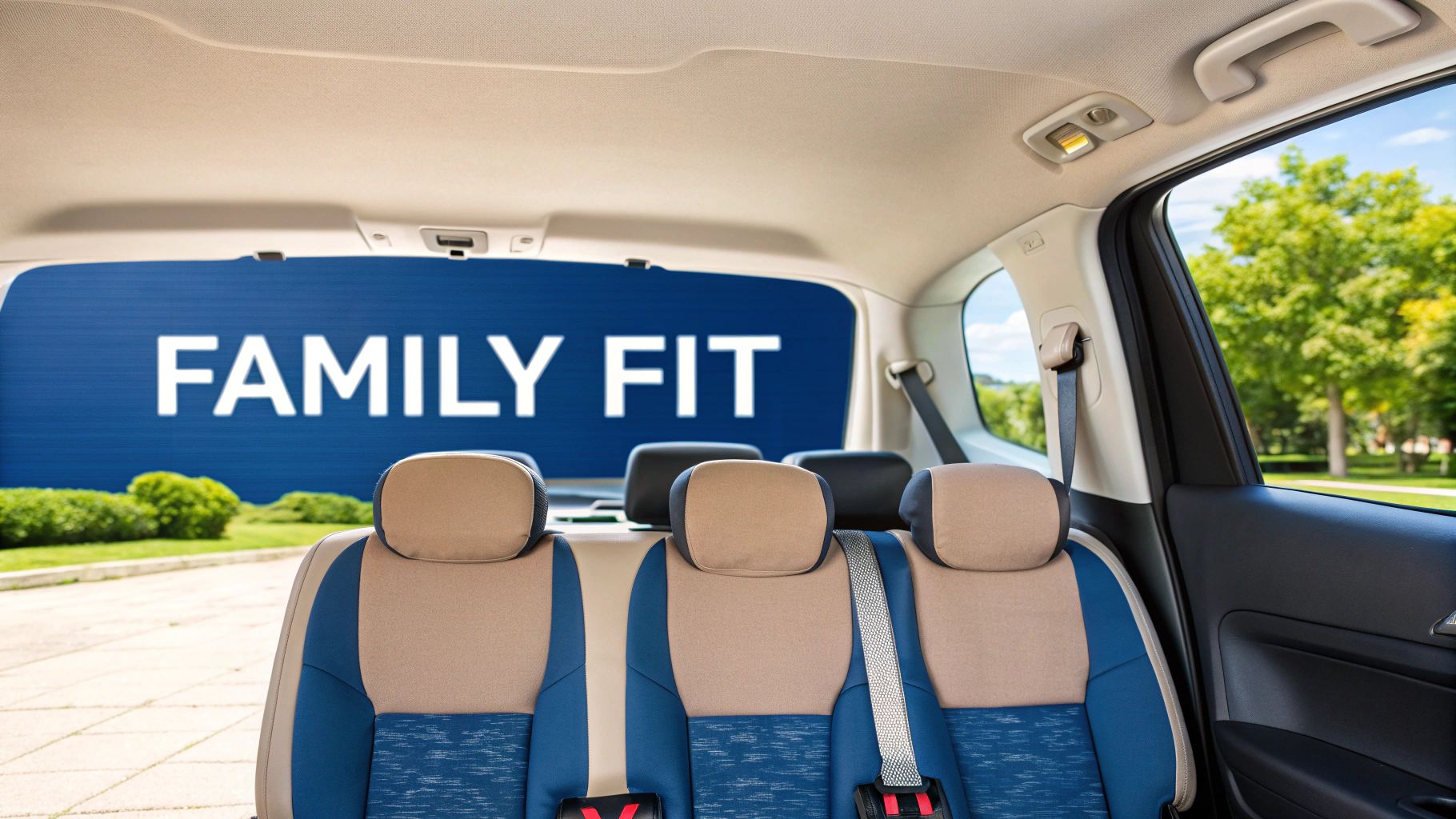
The best car seat for your toddler isn't just the one with the highest safety ratings. It’s the one that actually works for your family’s real, day-to-day life. A top-of-the-line seat that’s a nightmare to install in your car or too bulky for your lifestyle can become more of a problem than a solution. This is where we go beyond the spec sheets and talk about what really matters.
Think about your daily routine. Are you constantly moving the car seat between two different vehicles? Or are you trying to squeeze it into the back of a small sedan next to another child? Answering these practical questions is the key to finding a seat that’s not just safe, but genuinely user-friendly.
The Frequent Traveler
For the family that's always on the move, a clunky, 50-pound car seat just isn't going to work. Your priorities are completely different. You need something lightweight, easy to install using just a seatbelt, and, crucially, FAA-approved if you plan on flying.
Look for models specifically marketed for travel. These seats are often a lifesaver, weighing under 15 pounds with slim designs that make getting through airport security so much easier. A simple, intuitive belt path is also a must for quick installations in rental cars or a taxi.
A dedicated travel car seat can be a game-changer. It eliminates the need to lug your heavy, everyday seat through the airport, reducing stress and ensuring your child is safe no matter where you land.
Of course, when you book with Cars4Go, we provide complimentary car seats with your rental, so you can leave yours at home entirely.
The Growing Family and Compact Car Challenge
What happens when you're trying to fit three kids across the back seat or are just working with limited space? This is an incredibly common puzzle for parents, as many of today’s car seats are surprisingly wide. In this situation, the seat's width is the single most important measurement.
Your search should focus on "slim-fit" or "narrow-profile" car seats. Some brands have engineered brilliant models that are 17 inches wide or less, specifically designed to fit three-across in most mid-size cars. They provide all the necessary safety features without the extra bulk.
Before you buy anything, grab a tape measure and find out the exact width of your car’s back seat. Knowing your numbers will help you find the right combination of seats. You can also explore different car types perfect for families to see which vehicles offer the most flexible setup for multiple car seats.
Matching a Seat to Your Lifestyle
At the end of the day, the best car seats for toddlers solve your specific problems. Let’s break down how different features cater to these two common scenarios.
Lifestyle Consideration | Key Feature to Prioritize | Why It's a Priority | Real-World Example |
|---|---|---|---|
Frequent Air Travel | Lightweight & FAA-Approved | Essential for navigating airports and ensuring compliance with airline rules. A heavy seat is a travel nightmare. | A family flying to Miami for vacation needs a seat that’s easy to carry through the terminal and install in their rental car. |
Three Kids in a Sedan | Narrow Width (Under 17.5") | Maximizes limited backseat space, allowing for a safe three-across installation without sacrificing protection. | Parents of three young children need to fit two toddler seats and a booster in the back of their Honda Accord. |
By focusing on how you actually live, you can choose a car seat that delivers top-tier safety while fitting seamlessly into your family's routine.
Your Final Car Seat Purchase Checklist
Choosing a car seat is a huge decision. It’s about more than just stellar safety ratings or fancy features; it’s about what fits your child, your car, and your life. Think of this checklist as a final walkthrough to help you sort through the options and make a confident choice that keeps your little one safe.
My goal isn't to crown one single car seat as "the best." Instead, it's to help you find the best one for your family. Because at the end of the day, the safest car seat is the one you can install and use correctly every single time you get in the car. No exceptions.
The Non-Negotiable Checks
Before you pull out your credit card, run through these essential points. Getting these right is the foundation of a safe and secure fit for your toddler.
Verify Height and Weight Limits: This is your first and most important check. Pull out the numbers from your last pediatrician visit and compare them to the seat’s limits. This info is always on a sticker on the seat itself and in the manual. Make sure your child is comfortably within the range for their stage, whether rear-facing or forward-facing.
Confirm the Vehicle Fit: A car seat is only as good as its installation. Does it actually fit in your back seat? If you drive a smaller car or need to squeeze in multiple seats, this is critical. A top-rated seat that you can’t install correctly is the wrong seat.
Assess Your Installation Confidence: Be honest with yourself. Are you comfortable with the installation method? Whether it’s LATCH or a seatbelt path, you need to be able to get a tight fit every time without a huge struggle. A seat that’s a nightmare to install is one you’re more likely to install incorrectly.
The gold standard for a safe installation is less than one inch of movement at the belt path. If you pull on the seat where the belt goes through and it wiggles more than that, it's not tight enough. If you can't get it that secure, it's not the right seat for your car.
Personalizing Your Final Decision
Once you’ve confirmed the basics are covered, it's time to think about the little things that make a big difference in your day-to-day life. This is how you go from a good choice to the perfect one.
Consider Your Lifestyle: Are you constantly swapping the seat between cars? A lightweight, simple-to-install model will be your best friend. Trying to fit three kids across the back? You’ll need to focus on slim-profile seats.
Review Ease-of-Use Features: Think about the daily grind. A no-rethread harness is a game-changer when your kid has a sudden growth spurt. Machine-washable fabrics will save your sanity after the inevitable snack disaster. These small details add up and can make your life a lot easier.
Picking the right car seat is really a process of elimination. Start with the non-negotiables to create a shortlist of safe, compatible options. From there, you can filter based on what makes sense for your family's routine. This step-by-step approach ensures your child gets the best possible protection on every ride.
Your Top Toddler Car Seat Questions Answered
It's completely normal to have a million questions when you're dealing with toddler car seats. Even after you've picked one out, new concerns can pop up. We've been there! Here are some straightforward answers to the questions we hear most often from parents just like you.
When Is It Time to Switch to Forward-Facing?
This is the big one, and the answer is simple: keep your toddler rear-facing for as long as you possibly can. Don't rush it. The only time you should make the switch is when they've hit the absolute maximum height or weight limit for the rear-facing position, as stated by the car seat manufacturer.
It's tempting to turn them around when their legs look a bit scrunched, but that's actually okay and doesn't pose a safety risk. A rear-facing seat gives the best protection for their little head, neck, and spine in a crash. Age isn't the key factor here; it's all about their size.
Every single major vehicle safety organization agrees: rear-facing is the safest way for toddlers to ride. Sticking with it until they max out the seat's limits is the best thing you can do for their safety.
Are Expensive Car Seats Always Safer?
Not really. Here’s the deal: every single car seat sold in the U.S. has to pass the same tough federal safety standards. A higher price usually means you're paying for things like nicer fabrics, extra cushy padding, or handy features like a no-rethread harness.
While those perks are great for convenience, they don't mean the seat is fundamentally safer in an accident. The "best" car seat is one that fits your child, fits your car, and is used correctly every single time. If you want to dive deeper into specific models, check out our other car seat safety articles.
How Can I Be Sure the Seat Is Installed Tightly?
A properly installed car seat shouldn't budge. It should feel like it’s part of the car itself. To be sure, use the "one-inch test."
Grab the car seat at the belt path (that's where the seatbelt or LATCH strap threads through) and give it a good tug side-to-side and front-to-back. If it moves more than one inch in any direction, it's not tight enough. You'll need to put more of your weight into it while tightening the straps to get it snug. Always have your car seat and vehicle manuals handy for specific instructions.
Planning a trip to Miami with the little ones? Cars4Go makes it easy. We include toddler car seats for free with every rental, so you can pack lighter and have peace of mind knowing your child is safe. Book your family-friendly ride today at https://www.cars4go.com.
Comments