


Demystifying the Car Rental Deposit A Renter's Guide
- fantasma70
- Dec 8, 2025
- 12 min read
Think of a car rental deposit as a temporary security blanket for the rental company. It’s not a fee they keep. It's more like the hold a hotel puts on your card for incidentals—it’s just a safety net to cover unexpected costs like damage, traffic fines, or forgetting to refuel.
The money isn't taken from your account; it’s simply frozen for a short time. Once you bring the car back in one piece, the hold is released, and your funds are freed up.
What a Car Rental Deposit Actually Is
Let's say you were lending your own car to a distant cousin. You're happy to help, but you'd probably want some assurance, right? What if they get a parking ticket or spill a soda all over the seats? A car rental deposit is the same idea, just on a business scale. It's a temporary, refundable guarantee.
This isn't a charge you pay and never see again. Think of it as a financial handshake. It protects the rental company from the common little things that can go wrong while their car is in your hands.
Holds vs. Charges: What’s the Difference?
This is where most of the confusion comes from, but it's actually pretty simple. Knowing the difference between a hold (also called a pre-authorization) and a charge will save you a lot of stress.
A Hold: This is like putting a "reserved" sticky note on a portion of your credit limit or bank balance. The money never actually leaves your account. It's just set aside so you can't spend it, and the rental company has verified the funds are there just in case.
A Charge: This is the real deal—money is transferred from your account to theirs. This happens when you pay for the rental itself or if they need to deduct something from your deposit for a specific reason.
The car rental deposit is a hold, not a charge. Those funds are just earmarked as a promise and are fully intended to be returned to you once you bring the car back safely.
Why Do Rental Companies Even Need a Deposit?
Rental agencies are managing a fleet of cars, which are pretty valuable assets. The deposit is their main tool for managing the risk that comes with letting strangers drive off in them. Without it, they'd be taking a huge financial gamble with every rental.
The deposit is there to cover a few specific situations:
Dings and Scratches: From a rogue shopping cart to a minor parking mishap.
Traffic Tickets: Speeding fines or parking violations that show up after you've left.
Refueling: If you return the car with less gas than you started with.
Late Returns: Bringing the vehicle back later than the agreed-upon time.
Major Messes: If the car needs a deep clean beyond the standard vacuum and wipe-down.
At the end of the day, the deposit encourages a little shared responsibility. It gives you a good reason to treat the car like it’s your own, ensuring it's in great shape for the next person who needs it.
How Much to Expect for a Car Rental Deposit
Ever wonder how rental companies come up with that deposit amount? It’s not just a random number they pull out of a hat. Think of it as their financial safety net, carefully calculated based on a few key details about your rental.
Understanding what goes into this calculation helps you budget properly and avoid any sticker shock when you get to the counter.
Key Factors That Determine Your Deposit
Three main things will swing your deposit amount one way or another: the car you choose, where you pick it up, and the card you use to pay.
Vehicle Class: This is the big one. A zippy little economy car comes with a much smaller deposit than a premium SUV or a sleek luxury sedan. The more valuable the car, the more the company needs to hold as security. Check out our various vehicle types to see how your choice can affect the deposit.
Rental Location: You might notice that deposits can differ between a downtown office, an airport branch, or a smaller neighborhood location. Busy airports or popular tourist spots sometimes have slightly different policies to account for higher traffic and operational needs.
Payment Method: How you pay makes a huge difference. Using a credit card is the industry standard and almost always gets you a lower deposit. If you opt for a debit card, rental companies often see it as a higher risk, which usually means they’ll place a much larger hold on your funds.
Typical Deposit Amounts Across the Industry
So, what's a typical number? In 2025, you can generally expect a security deposit to fall somewhere between $200 and $500. Some companies might ask for as little as $200 for a basic car, but others could hold $300 to $500, especially if you're paying with a debit card.
The deposit is there to cover the "what-ifs"—potential damages, surprise traffic tickets, or bringing the car back with an empty tank.
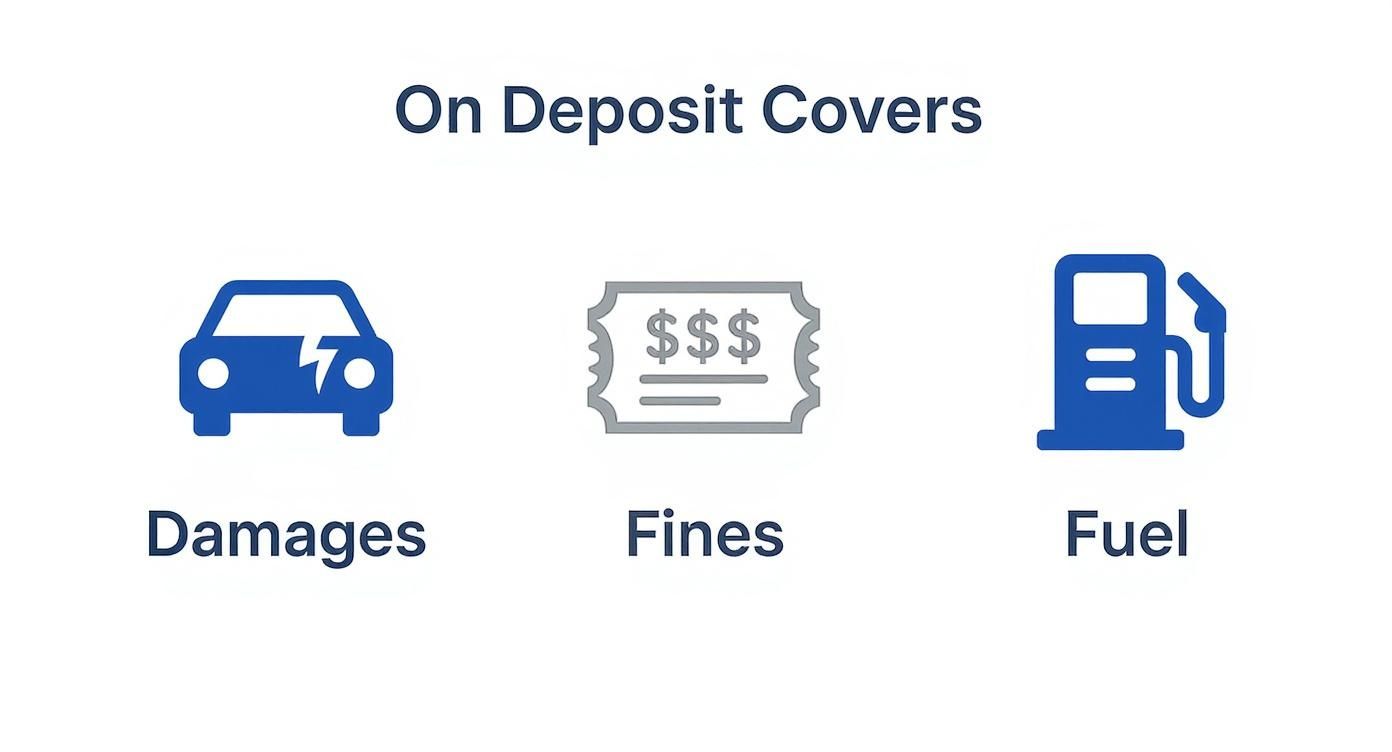
This just shows how the deposit acts as a safeguard for the rental agency against common extra costs that can pop up.
Typical Car Rental Deposit Amounts by Company and Card Type
To give you a clearer picture, we've put together a quick comparison of what you might expect from some of the major players in the industry. Notice the significant jump in deposit amounts when using a debit card.
Rental Company | Typical Credit Card Deposit | Typical Debit Card Deposit | Key Factors |
|---|---|---|---|
Enterprise | $200 - $400 | $400 - $800 | Varies by location and vehicle class. |
Hertz | $200 - $500 | $500+ | Stricter debit card policies, often requires credit checks. |
Avis/Budget | $250 - $350 | Up to $500 | Depends on car type and if you prepay. |
Sixt | $300+ | Often not accepted for premium cars | Higher for luxury/specialty vehicles. |
Cars4Go | $250 - $500 | $250 - $500 | We accept both debit and credit with no hidden fees. |
As you can see, the card you present at the counter plays a huge role in how much money is held.
Key Takeaway: A higher-value car or using a debit card will almost always lead to a higher security deposit. To keep the hold as low as possible, stick with an economy vehicle and use a major credit card.
Getting Your Deposit Back: The Refund Process Explained

The moment you hand back the keys, the clock starts ticking on your security deposit refund. It feels like it should be instant, but there are a few important steps that happen behind the counter before that money is back in your account. Knowing how it all works can save you a lot of worry.
It all begins with the vehicle inspection. When you drop off the car, a rental agent gives it a thorough once-over. They’re looking for any new dings or scratches, checking the fuel gauge, and noting the final mileage. This is their chance to make sure the car came back in the same shape it left.
The Inspection and Final Bill
This post-rental check-up is the most critical part of getting your full deposit back. If the car looks good and you’ve stuck to the rental agreement (like bringing it back with a full tank), the agent will finalize your contract. That's the green light for their system to release the hold on your deposit.
But what if they find something? This is when you might see deductions.
Fuel Charges: Forgot to top up the tank? They’ll do it for you, but the cost—usually at a higher-than-pump price—will come out of your deposit.
Minor Damage: A new scratch or a small dent will be noted, and an estimated repair cost will be deducted.
Extra Fees: Late returns, extra cleaning for a messy car, or other penalties can also be taken from the deposit.
Even losing a key can lead to a deduction. It helps to have a rough idea of the cost of a replacement car key so you’re not caught off guard.
How Long Does It Really Take?
Once the rental company releases the hold, it’s out of their hands and up to the banks. This is where most of the confusion and frustration comes from. The rental agent might process the release instantly, but your credit card company or bank needs time to catch up.
This delay between the rental company and your bank is the main reason you don't see the money right away. Even after they’ve done their part, you should expect the hold to vanish from your account within 5 to 10 business days.
This is just standard banking procedure, and unfortunately, the rental company can't speed it up.
High deposits are common, especially in the United States, where they typically range from $200 to $500. For instance, in 2022, Hertz required a minimum deposit of $200 for credit card rentals and up to $500 if you used a debit card. That's a big chunk of a travel budget to have tied up, which makes getting a speedy refund all the more important.
Actionable Ways to Lower Your Rental Deposit
You have more control over your car rental deposit than you might think. A few smart moves before you even step up to the counter can seriously shrink the hold on your card, freeing up cash for the actual fun parts of your trip.
The simplest, most effective trick in the book? Use a credit card. Rental companies see them as a safer bet than debit cards, which almost always means you’ll face a smaller security deposit. This one choice can easily save you from a hold that’s hundreds of dollars higher.
Leverage Insurance and Loyalty Programs
Another great strategy is to buy the rental company's own insurance. When you add a Collision Damage Waiver (CDW) or Loss Damage Waiver (LDW) to your booking, you’re taking a huge amount of financial risk off the company’s plate. As a thank you, they’ll often lower the deposit—sometimes, they'll even waive it completely.
By purchasing additional coverage, you’re essentially telling the rental company, "Don't worry, I've got this covered." This confidence often translates into a much smaller, or even zero, car rental deposit.
Don't forget about loyalty programs, either. If you rent cars often, signing up is a no-brainer. Members frequently get perks like reduced deposits, which is the company's way of rewarding you for coming back.
How the Industry Is Changing
Top rental companies are always looking for an edge, and that often means making things easier for customers. We're seeing a shift toward more traveler-friendly deposit rules. For instance, in April 2025, SelfDrive Mobility rolled out zero-deposit rentals in several international markets, aiming to remove a major hurdle for renters. This move is part of a bigger industry trend that puts customer convenience front and center. You can find more details on innovations in car rental policies.
By using a credit card, buying the right insurance, and joining a loyalty program, you can be proactive about keeping your upfront costs down. For more great ways to save, take a look at the latest car rental deals from Cars4Go, where we focus on clear policies and fantastic value.
A Simple Checklist for a Smooth Deposit Experience

Dealing with a car rental deposit really doesn't need to be a headache. With a bit of prep work, you can sidestep the usual hang-ups and make sure everything goes off without a hitch.
I've broken down the whole process into three simple stages: what to do before you go, what to handle at the pickup counter, and how to wrap things up when you return the car. Following these steps is the best way to protect your money and make sure your trip is memorable for all the right reasons.
Before You Leave Home
A little homework before you even pack your bags can save you a world of trouble later. Getting these few things sorted out will set you up for a totally stress-free pickup.
Check Your Card's Limit: Before you hit "book," take a quick look at your credit card's available balance. You need enough room to cover both the rental cost and the full security deposit hold. A declined card at the counter is a surefire way to start a trip on the wrong foot.
Read the Fine Print: I know, nobody likes it, but you have to dive into the terms and conditions. Find the section on the car rental deposit and pay close attention to the exact amount, the refund timeline, and what kinds of things could cause you to lose part of it.
Confirm the Location Policy: Deposit rules aren't always the same everywhere. If you’re looking at different Cars4Go rental locations, comparing their specific deposit policies might just help you make your final decision.
At the Pickup Counter
Okay, this is where you need to pay the most attention. What you do right here will directly affect whether you get your full deposit back. Don't rush this part.
Take your time at the counter and with the vehicle inspection. A few extra minutes of diligence here can save you from being blamed for pre-existing damage later.
Inspect the Vehicle Thoroughly: Do a full walk-around. Look for any and all scratches, dings, or scuffs, both inside and out. Check the windshield for tiny chips and make sure you test the lights and wipers.
Document Everything: Whip out your phone and take clear photos and videos of the car's condition. Get close-ups of any damage you find. Most importantly, make sure the rental agent notes every single imperfection on your checkout form before you sign anything.
When You Return the Car
You're on the home stretch! Finishing the process correctly ensures there are no loose ends that could hold up your refund.
Refuel the Car: If your rental agreement is "full-to-full," find a gas station near the drop-off location and top off the tank right before you head in. Always keep the receipt as proof.
Get a Final, Closed-Out Receipt: Whatever you do, don't just drop the keys and run. Ask an agent to do a final inspection with you present and give you a receipt confirming the rental is closed with no new charges. This piece of paper is your proof.
Monitor Your Account: Keep an eye on your credit card statement for the next 5-10 business days. If you don't see the hold released in that window, call the rental company first. If that doesn't work, it's time to get your bank involved.
How We Handle Deposits at Cars4Go
Here at Cars4Go, we think the whole deposit process should be simple and crystal clear. Nobody likes showing up at the rental counter expecting one thing and getting hit with a surprise. We’ve designed our policies to be fair and transparent so you know exactly what to expect from the start.
Our biggest promise? No hidden fees. The deposit amount you see when you book your car online is the exact same amount you’ll see when you pick it up. We tell you the total hold right away, letting you plan your travel budget without any last-minute stress.
Our Simple and Fair Deposit Policy
We want everyone to have access to a great rental car, which is why we happily accept both credit and debit cards for the security deposit. A lot of rental companies will place a much larger hold on your account if you use a debit card, but we take a more balanced approach. We get that not everyone prefers using a credit card, and our policy reflects that reality.
Here’s what that looks like in practice:
Upfront Communication: We show you the deposit amount clearly while you're booking.
Flexible Payments: Use a major credit or debit card—whatever works for you.
Rate Guarantee: The price you lock in online is the price you pay at the counter.
It’s all about making sure your financial planning isn't thrown off course, so you can just focus on enjoying your trip.
Support When You Need It
We know questions can pop up, and we’re always here to help. Our customer support team is easy to reach if you want to chat about deposits or anything else.
Your peace of mind is our top priority. You can call us or send a message on WhatsApp for quick, clear answers about your deposit, rental agreement, or anything else on your mind.
Having that direct line to us is just one way we make sure your experience is a great one. From the moment you book to the second you hand back the keys, we want you to feel supported and looked after.
Common Questions About Car Rental Deposits
Renting a car is usually straightforward, but the deposit can sometimes throw people for a loop. It's totally normal to have questions. Getting a handle on these common concerns ahead of time is the secret to walking up to that rental counter with complete confidence.
Let's walk through the most common "what-ifs" so you know exactly what to expect.
What Happens if I Don’t Have Enough Credit?
This is a classic snag that can stop a trip in its tracks. If your credit card doesn't have enough available credit to cover the rental plus the security deposit hold, the rental company simply can't hand over the keys. The deposit isn't optional; it's a required part of the deal.
That's why it's so important to check your available credit before you show up. While some companies might let you use a debit card as a backup, be prepared for a much larger deposit amount and extra hoops to jump through, like showing proof of a return flight.
Key Takeaway: Before you leave for the rental location, do a quick check to make sure your credit limit can comfortably handle the full rental cost and the deposit hold. This one small step can save you a massive headache at the pickup counter.
Can a Family Member Pay the Deposit for Me?
In almost all cases, the answer is a firm no. The deposit has to be paid with a credit or debit card that belongs to the person who is renting and driving the car.
The name on the credit card, the driver's license, and the rental agreement must be an exact match. This isn't just a picky rule; it's a standard security and liability measure across the industry. If you're adding another driver, they might also need to show their own card, so it's best to check the specific policy beforehand.
What if My Deposit Refund Is Late?
It's been over two weeks and your deposit is still missing? Don't panic. If your refund hasn't appeared within 10-15 business days, the first thing to do is call the car rental company. Just ask them to confirm that they've released the authorization hold on their end.
It's a good idea to ask for a transaction or release code. Once they confirm it's been sent back, your next call should be to your bank or credit card company. Give them the details, and they can track down the funds and tell you what's causing the delay.
At Cars4Go, our goal is to be completely transparent so your rental experience is nothing but smooth sailing. Book your next Miami adventure with us today and see what it's like to rent with straightforward policies and zero surprises.
Comments