


Car Rental Places That Accept Debit Cards Your Complete Guide
- fantasma70
- Jan 10
- 12 min read
Yes, you absolutely can rent a car with a debit card. Most major rental companies now accept them, but it’s not always as simple as using a credit card. Expect a few extra hurdles like potential credit checks, larger security deposits, and stricter ID requirements.
Companies like Enterprise, Hertz, and Avis have all gotten on board, but their rules can vary quite a bit.
Why Using a Debit Card for a Car Rental Can Be Tricky
Renting a car should be simple, but the moment you present a debit card, things can get complicated. It helps to understand the "why" behind the rental counter's hesitation, which really just comes down to one thing: risk.
For a rental company, a credit card is their safety net. It lets them put a temporary hold on a line of credit, not your actual cash. This makes it much easier for them to cover any surprise costs that might pop up after you've dropped off the car.
Think about things like:
Unpaid tolls or tickets that show up weeks later
Damage to the car they find during inspection
Extra charges for returning the car late or with an empty gas tank
Trying to collect on these charges from a debit card is a much bigger headache for them, since they'd need to pull money directly from your bank account.
The Good News: Things Are Changing
Thankfully, the industry has started to catch up with how people actually pay for things today. More and more customers want to use their debit cards, and that pressure has pushed everyone—from the big international players to local specialists like Cars4Go in Miami—to create clear, fair policies for debit card users. You have more options now than ever before.
What was once a rare exception is now pretty common. Over the last decade, most major U.S. brands have formalized their debit card rental policies. This includes companies like Avis, Budget, Enterprise, Hertz, Alamo, and Dollar.
The catch? These policies often come with strings attached, like needing to be a certain age or showing proof of a return flight. While they'll usually work with you, be ready for extra steps like showing two forms of ID or agreeing to a soft credit check. If you're curious about the specifics, you can learn more about how most major rental companies handle debit card payments and what to expect.
The Bottom Line: Rental companies see debit cards as a higher risk. If you understand that they’re just trying to protect themselves, you can anticipate their requests—like a bigger deposit or extra ID—and show up prepared for a smooth, hassle-free rental.
What You'll Actually Need to Rent with a Debit Card
Want to make sure you drive off the lot without a hitch? The secret is showing up prepared. Rental companies that take debit cards have a specific checklist, and it’s all about confirming who you are and that you’re financially reliable. Once you understand what they're looking for, the whole process becomes a lot less intimidating.
This guide breaks down the typical decision tree they use. It’s a good visual for seeing why a debit card rental has a few more hoops to jump through than using a credit card.
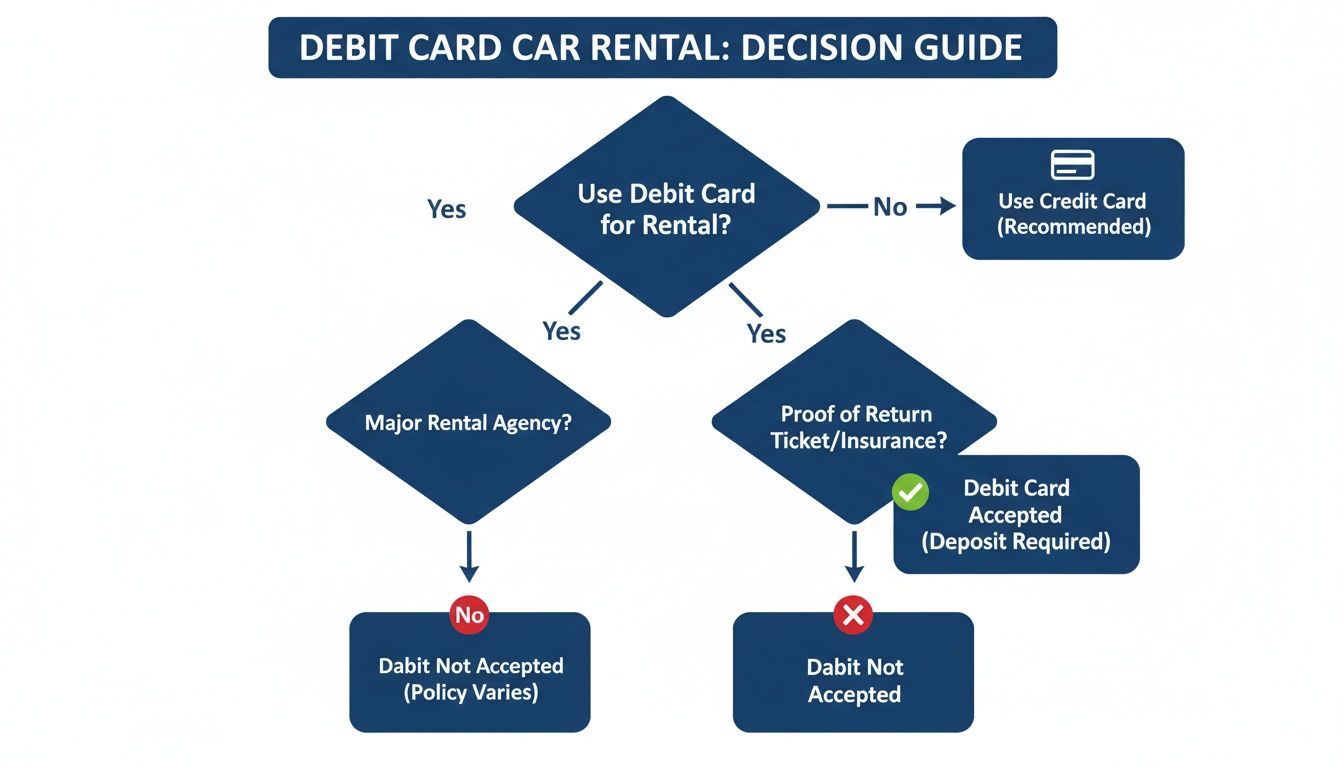
Let's get into the specifics of what you should have in your hand when you walk up to that counter.
Your Essential Document Checklist
First and foremost, your valid driver's license. This is the one thing you absolutely can't forget. Make sure it isn't expired and is in good shape—a badly cracked license or a faded photo can cause problems. Crucially, the name on your license must match the name on your debit card. No exceptions.
Because you’re not using a credit card, the rental agency will be extra thorough in confirming you are who you say you are. This is where you run into more rigorous identity verification processes. Be ready for them to ask for a second form of identification.
Here’s what they typically look for:
A recent utility bill (gas, electric, etc.) showing your name and current address.
Your passport or a military ID.
A recent pay stub, as long as it has your name and address on it.
My advice? Bring more than you think you’ll need. It’s far better to have an extra utility bill in your bag than to get turned away because you didn’t have one.
The Airport-Specific Rule: Proof of Return Travel
Renting from an airport? This one trips people up all the time. You will almost certainly need to show proof of a round-trip travel itinerary.
The rental company needs assurance that you plan on bringing their car back. A confirmed return flight, train ticket, or cruise booking that matches up with your rental period gives them that confidence. Have a printout of your confirmation email ready, or be prepared to pull it up on your phone.
Pro Tip: Don't just plan on telling the agent your flight number. They need to see the actual ticketed itinerary with your name, travel dates, and confirmation details on it.
Age and Card Requirements
Another big difference with debit cards is the age requirement. Most companies insist you be at least 25 years old. Some might let a 21-year-old rent with a credit card (usually for a hefty "young driver" fee), but they're much stricter when a debit card is involved.
The card itself also matters. It must be a debit card with a Visa, Mastercard, or Discover logo, and it has to be tied to a traditional checking account. Prepaid debit cards or gift cards are almost universally rejected. If you’re looking for a company with clear, upfront policies, the guidelines for https://www.cars4go.com/car_customers.php are a good example of how to make these rules easy to follow.
Decoding Debit Card Security Deposits and Holds
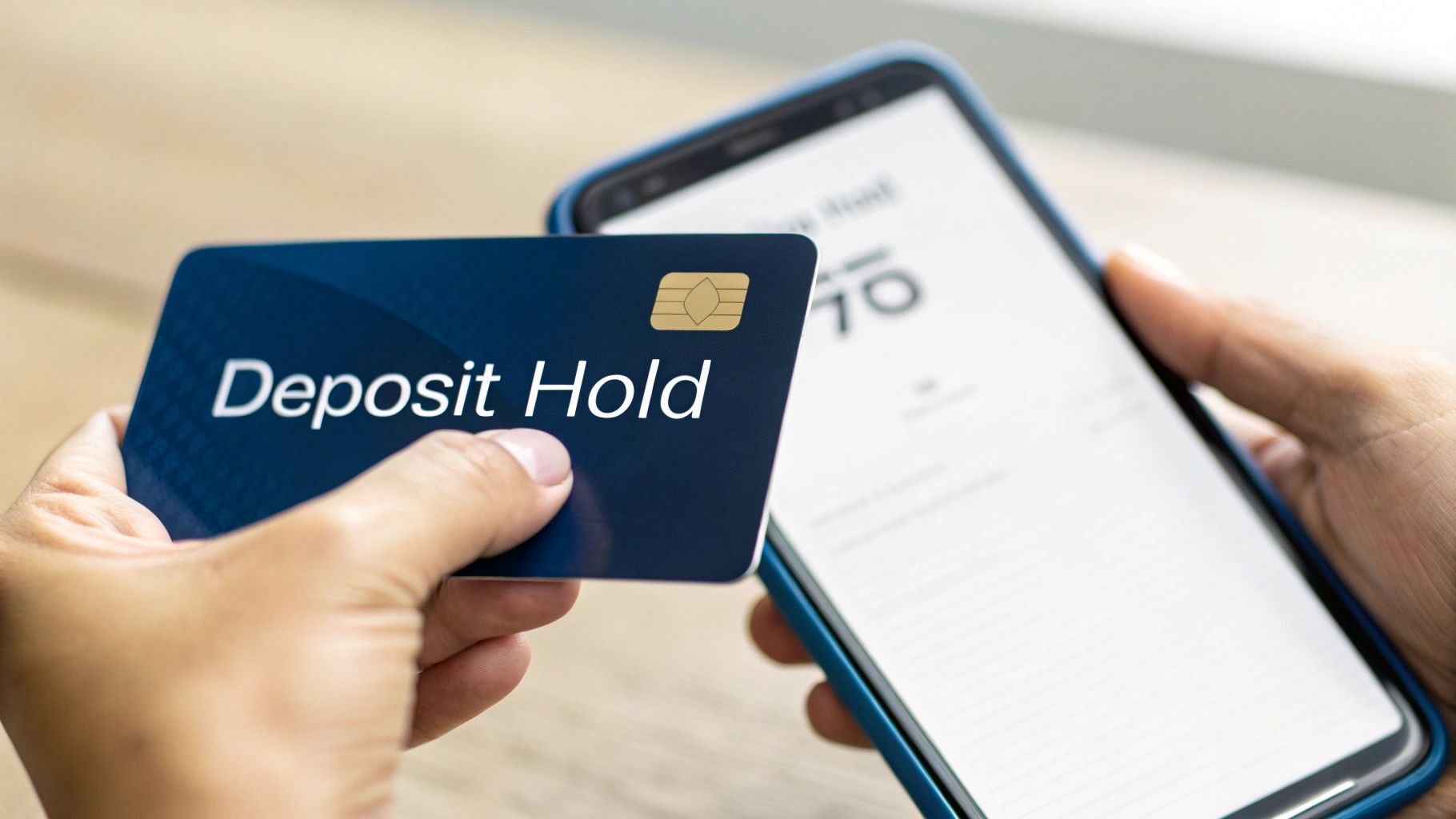
The security deposit is probably the biggest source of confusion—and frustration—when you rent with a debit card. Let's get one thing straight right away: this is not a fee. It's a temporary hold on your funds, acting as a safety net for the rental agency.
When you hand over your debit card, the company essentially freezes a certain amount in your checking account. The money is still yours, but it’s locked up and inaccessible until they release the hold. This just ensures you have enough to cover any unexpected extras like tolls, refueling charges, or small dings and scratches.
How Much Should You Expect Them to Hold?
The hold amount can vary wildly, so it pays to be prepared. For a standard car rental, you’ll typically see a hold between $200 and $500. But that’s not a hard-and-fast rule. I’ve seen that number jump to $1,000 or more depending on the situation.
So, what determines the size of the hold? A few key things:
The Car Itself: An economy sedan will have a much lower hold than a big SUV. Forget about renting luxury or specialty cars with a debit card—most companies won't allow it.
How Long You're Renting: A weekend rental will have a smaller hold than a two-week road trip. More time on the road means more potential for incidental charges.
Where You Rent: Busy airport locations are often stricter and may place a larger hold compared to your local neighborhood branch.
Your Insurance Coverage: If you decline the rental company's insurance, they might ask for a larger deposit to cover their increased risk.
My best advice? Always call the specific rental location before you book to confirm the exact deposit amount. That one quick phone call can save you from a nasty surprise when you get to the counter.
Getting Your Money Back: The Realistic Timeline
Here’s the part that really matters for your budget: when do you get your money back? Once you’ve returned the car and everything checks out, the rental company releases the hold. But the money doesn't just magically reappear in your account.
Be prepared to wait. The release process can take anywhere from 3 to 14 business days. This lag is almost always due to the processing time between the rental company's bank and your own. Once they start the release, it's pretty much out of their hands.
To give you a clearer picture, here’s a quick comparison of what you might expect for different rental situations.
Typical Debit Card Deposit Holds and Release Times
Rental Scenario | Estimated Hold Amount | Average Release Timeframe |
|---|---|---|
Weekend Economy Car Rental | $200 – $350 | 3-7 business days |
Week-Long Mid-Size Sedan | $300 – $500 | 5-10 business days |
Extended SUV Rental (10+ days) | $500 – $800+ | 7-14 business days |
This table gives you a ballpark idea, but remember to always confirm the exact amount with your specific rental branch.
Here's how to budget for this in the real world. Let’s say:
Your rental costs: $300 for the week.
The security deposit hold is: $400 (which you confirmed with the branch).
Total funds you need available: You must have at least $700 in your checking account when you pick up the car.
To stay on the safe side, just assume you won’t see that $400 for your entire trip plus another two weeks after you get home. This simple planning step ensures you don't accidentally lock up money needed for gas, food, or other travel essentials.
How to Book Your Car

Renting a car with a debit card takes a little more legwork than using a credit card, but it’s completely doable if you know the process. The key is to find the company’s policy in black and white before you commit.
Your first move should be to check the rental company’s website or a major travel aggregator. While a simple "debit card accepted" filter is rare, you can usually find the payment rules buried in the fine print.
After picking a car, hunt for a link that says “Terms & Conditions,” “Rental Policies,” or something similar. This is where you’ll find the specific rules. You're looking for clear confirmation that they accept debit cards at your chosen location.
Always Confirm the Local Policy
Here’s something most people learn the hard way: a company's corporate policy isn't always the rule at the local counter. Individual branches, especially franchises, can have their own set of requirements that might be stricter than what the main website says.
This is why a quick phone call is your best friend. Don't call the 800 number; find the direct line for the exact rental desk where you'll be picking up the car.
Ask them these three questions point-blank:
Do you accept debit cards for payment at this specific location?
What is the exact amount you'll hold for the security deposit on a debit card?
Are there any other hoops to jump through, like a credit check or needing a return flight itinerary?
Getting these answers straight from the source prevents any nasty surprises. You can check out various car rental locations and make a few calls to find a branch with a policy that works for you.
Insider Tip: When you call, have your travel dates and the type of car you want ready. The deposit amount can change depending on the car class, and giving them the details ensures you get an accurate quote.
What About International Travel?
Renting a car overseas with a debit card is a whole different ballgame. The rules in Europe, for example, can be worlds apart from what you're used to in North America. While more locations in countries like France and Germany are starting to accept debit cards, the requirements are often much more stringent.
You'll find that deposits are often significantly higher abroad. Some international locations might even force you to buy the rental company's most expensive insurance plan if you want to use a debit card. To get a better sense of these differences, you can learn more about European debit card rental policies and see how they stack up against the U.S. standards, which often focus more on things like age and proof of travel.
Common Mistakes That Get Debit Card Renters Denied
Picture this: you’ve landed, you’re ready to start your trip, but the rental agent shakes their head and says, "Sorry, we can't accept this." It's a gut-wrenching moment that happens way too often, especially when you're trying to use a debit card.
The good news is that most denials come down to a few common, easily avoidable mistakes. Let’s walk through what they are so you can sidestep them completely.
The single biggest blunder I see is trusting the corporate website’s policy as the final word. A company's main site might give a green light for debit cards, but individual branches—especially franchises—often have their own, much stricter rules. This disconnect is the #1 reason people get turned away at the counter.
The fix is simple but absolutely essential: always call the specific local branch where you’ll be picking up the car. Skip the corporate 800-number. Find the direct line for the desk you'll actually be standing at and ask them point-blank about their debit card policy, the deposit amount, and what kind of ID they need.
Forgetting About the Security Hold
Another classic trip-up is not having enough cash in your account. It’s not just about covering the cost of the rental itself. Your checking account must have enough available funds to cover the full security deposit hold, which can easily range from $200 to over $500.
If the agent attempts to authorize that hold and your account is even a dollar short, the transaction gets declined. That’s it. They’ll deny the rental on the spot, with no exceptions.
Crucial Takeaway: Before you even head to the rental office, pull out your phone and log into your banking app. Confirm the exact hold amount with the branch, then make sure your available balance can comfortably cover the rental cost plus that full deposit.
Mismatched Names and the Wrong Kind of Card
When you're renting with a debit card, the little details are everything. A tiny discrepancy that seems like no big deal to you is a major red flag for the rental agency.
These are instant deal-breakers for agents:
Name Mismatches: The name on your debit card has to be an exact match to the name on your driver's license. No nicknames, no using just an initial if your license has a full middle name, and definitely no trying to use a spouse's card.
Using a Prepaid Card: Rental companies almost universally reject prepaid debit cards, gift cards, or those temporary virtual cards. They need to see a traditional debit card linked directly to a checking account from a legitimate bank.
Try to see it from their side. They're about to hand you the keys to an asset worth thousands of dollars. Every piece of paper and plastic you hand them needs to line up perfectly to confirm your identity and financial standing. Showing up with a prepaid card or a name that doesn’t match shatters that trust and will get you sent packing.
Your Debit Card Car Rental Questions Answered
Even after you've done your homework, a few specific questions always seem to pop up right before you rent a car with a debit card. Let's get those last-minute worries out of the way so you can walk up to the counter with confidence.
Think of this as your quick-reference guide for those "what if" moments. Knowing these details can be the difference between grabbing your keys and getting turned away.
Can I Rent Any Type of Car with a Debit Card?
Probably not. Most big rental companies will limit you to their standard cars—think economy, compact, and maybe some full-size sedans. If you were hoping to cruise around in a convertible, a luxury SUV, or a big passenger van, you’ll almost certainly need to pull out a credit card.
From their perspective, it's all about risk. A high-end vehicle is a much bigger financial liability. That said, you might find some smaller, independent agencies are a bit more flexible. The key is to ask about vehicle class restrictions for debit card users before you finalize your booking.
The Bottom Line: Debit cards usually get you a standard car. For anything special like a luxury model or a large van, expect to need a credit card to seal the deal.
Will They Run a Credit Check if I Use a Debit Card?
Yes, this is a very common step, especially with the major national brands. They'll typically run a soft credit inquiry during the verification process. The good news? This kind of check doesn't impact your credit score.
The whole point is just to confirm your identity and get a sense of your financial standing. One pro tip: if you have a security freeze on your credit report, you'll need to lift it temporarily before you go to the rental counter. Otherwise, the check will fail, and so will your rental attempt. Local agencies might skip this, but it's always smart to ask about their policy ahead of time.
What Happens if I Don't Have Enough for the Deposit Hold?
This one is a deal-breaker. If your checking account can't cover the full cost of the rental plus the entire security deposit, the rental will be denied on the spot. It’s one of the most frequent reasons people get turned away, and there’s no negotiating it.
Before you even head out the door, log into your bank account. Double-check the required hold amount and make sure you have more than enough to cover it. The authorization has to go through, plain and simple.
Are Prepaid Debit Cards Accepted for Car Rentals?
The answer to this is a hard no. You can't use prepaid debit cards, gift cards, or any other type of stored-value card to secure a rental car. Rental companies need a debit card that's directly tied to a traditional bank checking account.
This rule ensures they can place the security hold and charge you later for tolls, fuel, or damages if needed. Your card must have a Visa, Mastercard, or Discover logo and be linked to your personal bank account. For more travel hacks and guides, feel free to check out the Cars4Go rental advice blog.
Ready to book your Miami trip with confidence? At Cars4Go, we make renting with a debit card straightforward and transparent. Find the perfect vehicle for your adventure today. https://www.cars4go.com
Comments