


Can You Drive on Daytona Beach? A Complete Guide
- fantasma70
- Nov 16, 2025
- 8 min read
Yes, you absolutely can drive on parts of Daytona Beach! It’s a tradition that makes the "World's Most Famous Beach" truly unique. But it's not a free-for-all—think of it more like a carefully managed park where cars are allowed, with specific rules to keep everyone safe.
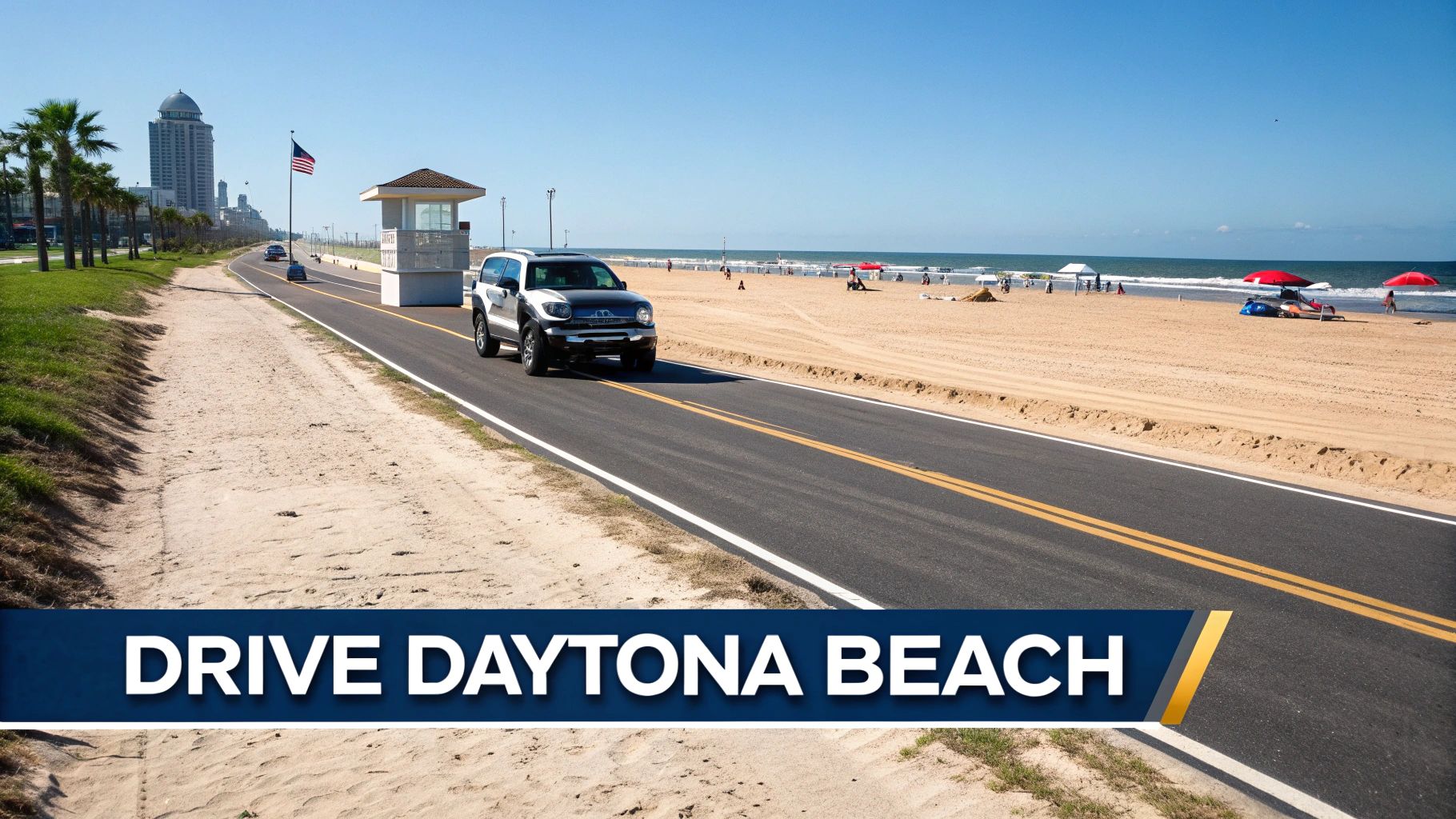
Your Guide to Beach Driving in Daytona
Driving on the sand is a privilege, and the rules are there to protect pedestrians, sunbathers, and the local wildlife. The regulations have changed over the years to balance this iconic tradition with conservation efforts.
While driving is still permitted on 16 miles of hard-packed sand, it's not allowed everywhere. You’ll find designated driving zones and other areas that are strictly for pedestrians.
This guide will walk you through everything you need to know for a smooth and fun experience, including:
Where you can and can't drive.
The seasonal hours and access fees.
The essential rules of the road for driving on the sand.
Of course, all of Florida's broader state driving laws still apply, so it’s good to have a handle on those as well. If you’re visiting and need a set of wheels, finding the right vehicle at one of the local car rental locations is a great place to start.
Finding the Designated Beach Driving Zones
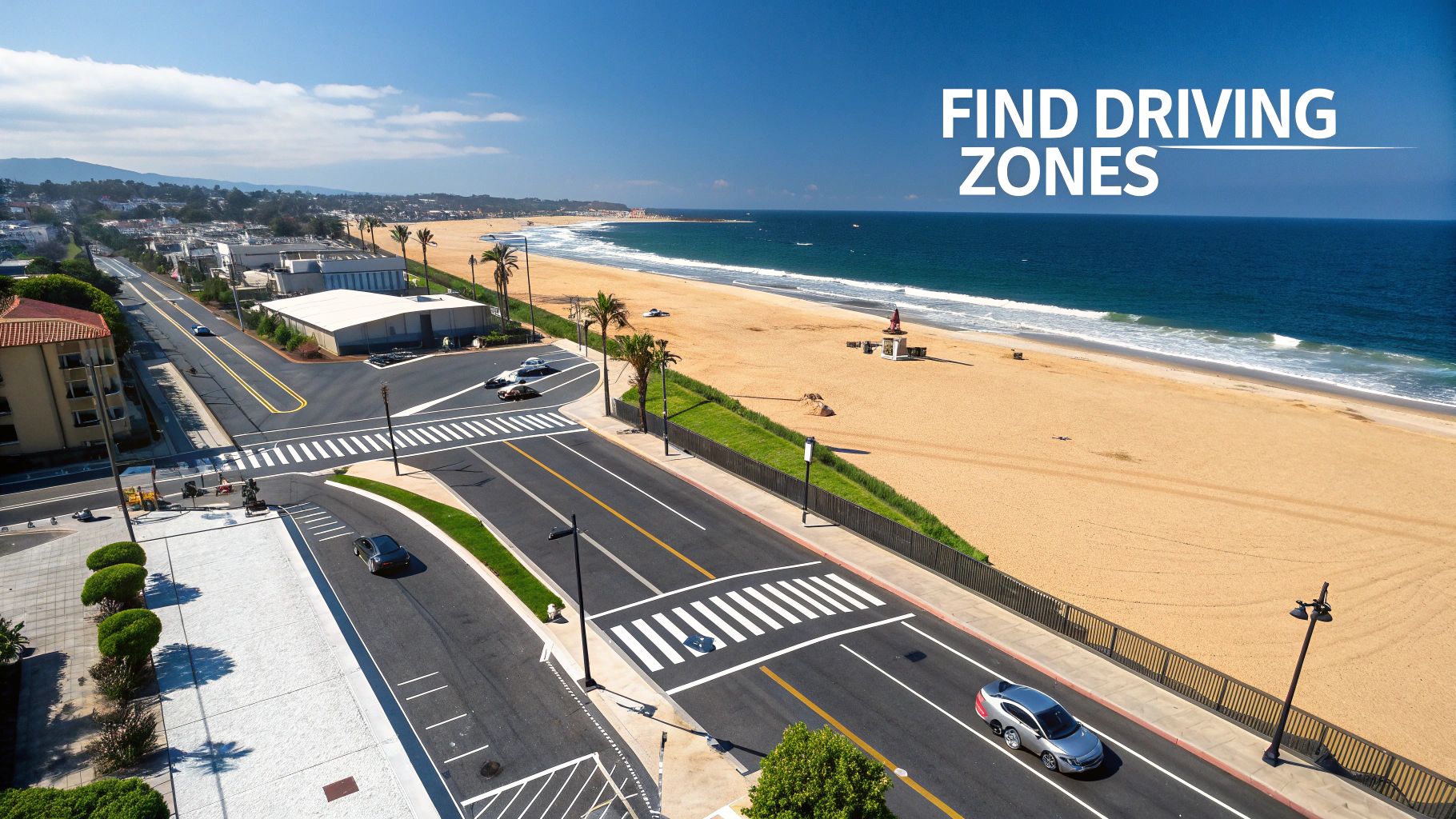
Before you get too excited about putting your tires in the sand, you need to know that driving isn't a free-for-all on Daytona Beach. You can't just drive anywhere. The coastline is carefully split into specific zones to keep everyone safe, whether they're driving, sunbathing, or building sandcastles.
Think of it like a massive park with designated roads and pedestrian-only walking paths. The beach works the same way. Some areas are open to vehicles, while others are strictly "traffic-free zones" for people to relax without worrying about cars. Getting this layout down is the first step to having a great day.
These car-free areas are usually set up in the busiest spots, creating safe havens for families to spread out and play.
Navigating to the Driving Areas
Most of the driving happens at the northern and southern ends of the main beach strip. All in all, Volusia County manages about 16 miles of beach that are open for driving, as long as the weather and tides cooperate. Finding them is easy once you know what you're looking for.
You'll get onto the sand using official beach access ramps. These are the only legal entry and exit points, and it's also where you'll pay the daily access fee.
Pro Tip: Never try to enter or exit the beach anywhere other than an official ramp. Driving over the dunes is illegal, dangerous, and tears up the fragile coastal ecosystem.
Identifying Pedestrian-Only Zones
So, where can't you drive? The biggest no-go zone is a long stretch right in the heart of Daytona Beach. This area was created to protect the most crowded tourist spots.
This main pedestrian-only area covers the sand around:
The Daytona Beach Pier: The central landmark for fishing and taking in the views.
The Boardwalk and Bandshell: This is the core of the entertainment action.
The Ocean Center: The big convention and event center that draws large crowds.
Keeping this central hub vehicle-free helps maintain that classic, resort-style vibe near the most popular attractions. Knowing where you can drive on Daytona Beach is just as much about respecting these pedestrian zones as it is about cruising on the open sand.
Getting on the Sand: Fees, Ramps, and Passes
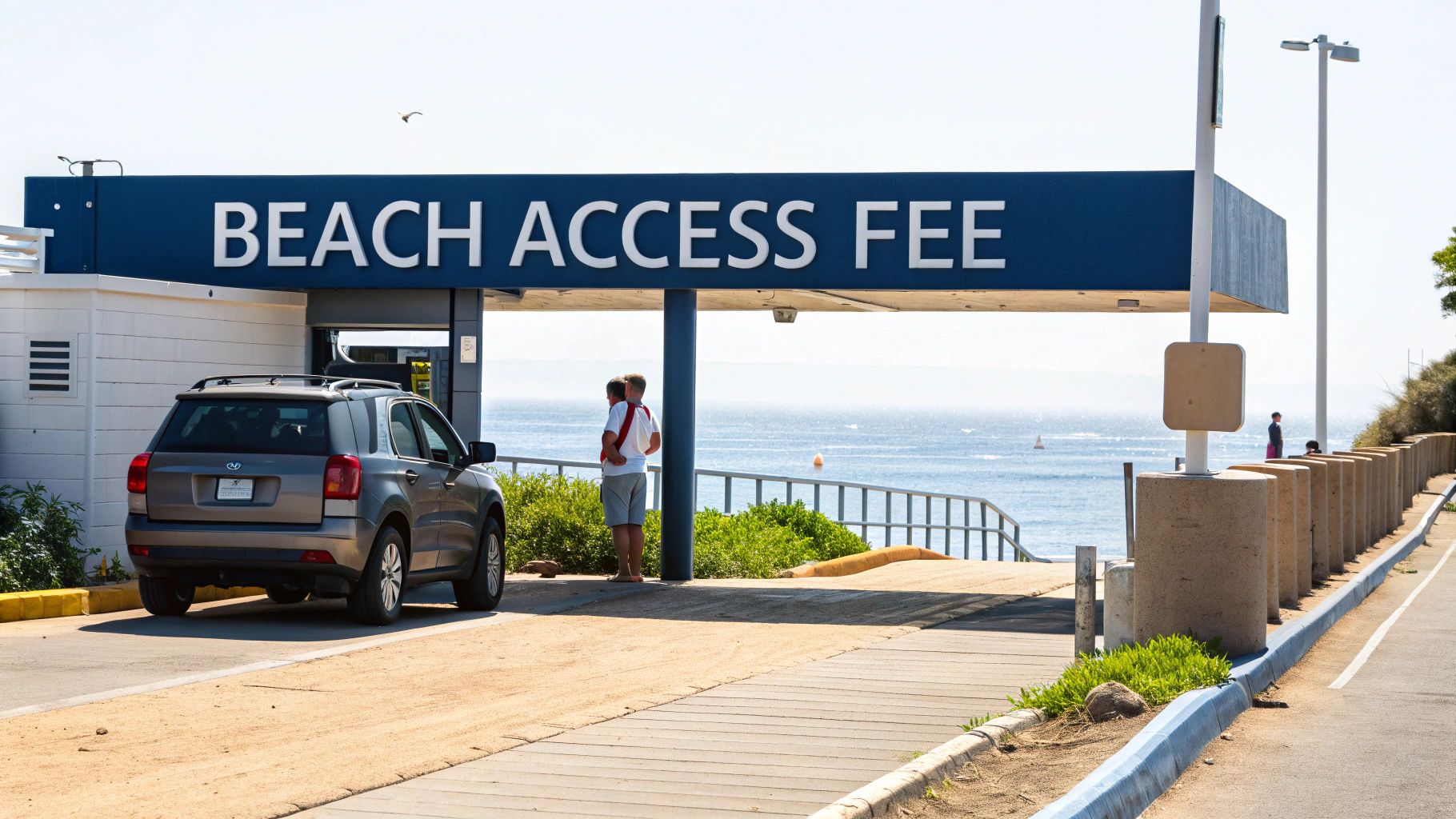
Driving on the world-famous sands of Daytona Beach is an experience like no other, but it's not a free-for-all. There’s a daily fee to get your vehicle onto the beach, and for good reason. That money goes directly toward keeping the beach safe and clean for everyone, funding everything from lifeguards to daily maintenance crews.
The current cost is $20 per vehicle for the entire day. You just pay at the booth when you enter the ramp, and you’re set. Think of it as a day pass—you can leave and come back as many times as you want without paying again.
If you’re a local or just plan on making the beach your second home, the annual pass is a no-brainer. It's a fantastic deal that gives you unlimited access for a whole year. Volusia County residents get a pretty sweet discount, but it's available for non-residents, too.
Finding an On-Ramp
Knowing where to go is half the battle. While you’ll see smaller access points up and down the coast, a few major ramps serve as the main gateways to the designated driving zones. These are your most reliable bets for getting onto the sand.
You can almost always find an open beach access ramp at these major crossroads:
International Speedway Boulevard: Right in the heart of the action and one of the most popular spots.
Seabreeze Boulevard: Another well-known entry point in a bustling area.
Dunlawton Avenue: The go-to ramp for accessing the sand in Daytona Beach Shores.
Granada Boulevard: The main entry point in Ormond Beach, just to the north.
A quick heads-up: not every single ramp is open every single day. They might close temporarily for high tides, really soft sand, or a special event. It's always smart to check for any real-time updates from Volusia County before you head out, just to make sure you know exactly where you can get on the beach that day.
Mastering the Rules of Driving on Sand
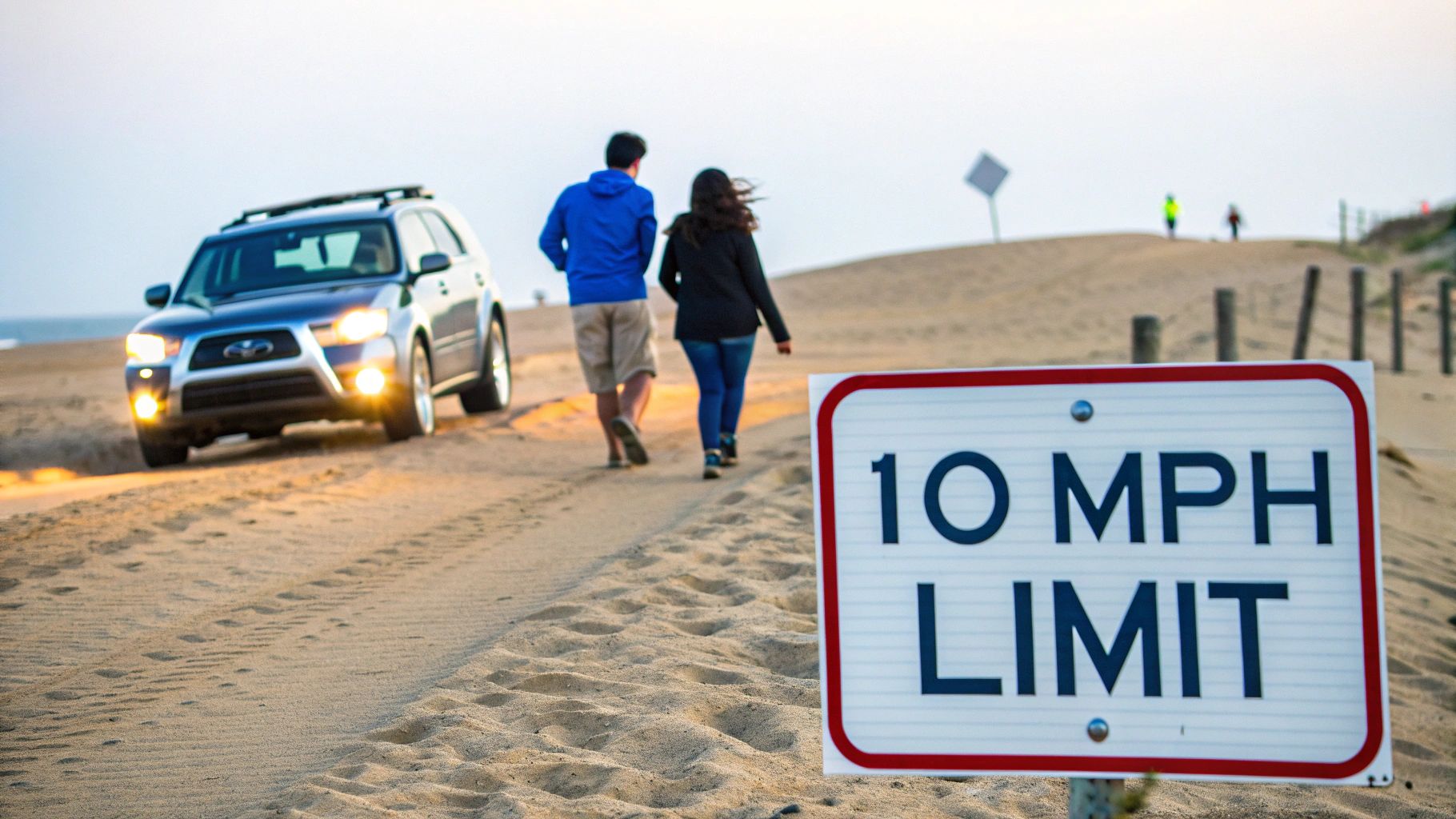
Cruising on Daytona Beach is a one-of-a-kind experience, but it’s a privilege that comes with some serious responsibility. The best way to think about it is to forget you're on a road. Instead, imagine you're part of a slow-moving parade that shares its route with sunbathers, playing children, and wandering shorebirds. Getting into that mindset is the first step to a great day.
The absolute number one rule is speed. You must stick to 10 mph or less. The Beach Safety Patrol is always watching and they don't play around with this rule. It’s all about protecting everyone enjoying the sand, and at that speed, you have plenty of time to react to anything unexpected.
Essential Beach Driving Etiquette
Beyond just slowing down, a few other bits of etiquette will make everything go smoothly. First, always drive with your headlights on, no matter how bright it is. The sun's glare off the water and sand can make it surprisingly hard for pedestrians to see approaching cars, and this simple trick makes a huge difference.
When you find a spot, always park perpendicular to the ocean. This keeps things organized, saves space, and ensures the driving lanes stay clear for everyone. Speaking of lanes, stay between the traffic posts at all times. Drifting out of the hard-packed sand is the fastest way to get stuck, and while different types of cars handle sand differently, even a 4x4 can find itself in trouble in the soft stuff.
Important Safety Note: Driving and alcohol are a bad mix anywhere, but especially on a crowded beach. Open containers are strictly forbidden in your vehicle. Staying sharp and focused is non-negotiable here.
Following the Rules for a Safe Day
Following the rules isn't just about avoiding a fine; it’s about keeping people safe. The beach is a constantly changing environment where people and pets can pop up out of nowhere. Driving here requires your full attention. Ignoring the rules could lead to devastating accidents and even potential criminal charges for reckless driving in Florida.
By taking it slow, staying alert, and respecting the guidelines, you’re doing your part to preserve this incredible Daytona Beach tradition for years to come.
Navigating Seasonal Rules and Wildlife Protection
Figuring out when you can drive on Daytona Beach isn't as simple as checking a clock. Access is a moving target, dictated by the rhythm of the ocean and the needs of local wildlife.
The most frequent reason you'll see a ramp closed is high tide. Twice a day, the Atlantic reclaims the sand, often submerging the designated driving lanes completely and making it unsafe for any vehicle. Because of this, the hours for beach driving can change daily.
But it’s not just about the water. The beach is a shared space, and we share it with some very important residents: sea turtles.
Sea Turtle Nesting Season
From May 1st through October 31st, the beach becomes a vital nursery for nesting sea turtles. This is a special time, and it comes with stricter rules to ensure these amazing creatures are protected.
During these months, you’ll see driving hours adjusted and certain areas roped off with wooden stakes and tape. These marked-off zones are active sea turtle nests. It's not just a suggestion to stay away—it’s the law. Driving too close can crush the eggs buried in the sand or confuse the tiny hatchlings trying to find their way to the sea.
A Critical Reminder: Vehicle lights at night can be fatal for sea turtle hatchlings. This is the main reason night driving is strictly forbidden. Hatchlings instinctively follow the moonlight to find the ocean, and car headlights can lead them astray, often with tragic results.
These regulations aren't new; they're part of a long-standing effort to balance a beloved tradition with critical conservation. In fact, since 1996, Volusia County has had a rule in place to close beach access to vehicles once the off-beach parking lots fill up. This helps manage congestion and protect the shoreline.
You can learn more about how these rules continue to adapt to protect Daytona Beach's unique environment.
Answering Your Top Daytona Beach Driving Questions
Alright, let's clear up some of the questions we hear all the time. Knowing the answers to these will help you plan your trip and hit the sand with confidence, so you know exactly what to expect when you get here.
What Kind of Car Do I Need?
You're probably picturing a giant 4x4, but you can relax. Thanks to Daytona's uniquely hard-packed sand, most regular cars, SUVs, and even minivans do just fine as long as they stick to the designated driving lanes.
The secret is staying where the sand is firm. The real trouble starts if you wander into the soft, deep sand near the dunes or too close to the water. That's a recipe for getting stuck, no matter what you're driving. For most folks, your everyday vehicle is all you'll need.
Can I Drive on the Beach at Night?
That's a definite no. Driving on Daytona Beach at night is strictly off-limits, and for two very important reasons: public safety and protecting sea turtles. The beach is only open to vehicles from sunrise to sunset.
All vehicles must be off the beach by sunset. This is critical during sea turtle nesting season, which runs from May 1st to October 31st. Car lights can confuse nesting mothers and their hatchlings, preventing them from safely making it to the ocean.
This rule is a huge part of the local conservation effort, so it's strictly enforced.
What Happens if My Car Gets Stuck?
First things first: stop spinning your wheels! It's everyone's first instinct, but it will only dig you in deeper. You can try digging the sand out from in front of and behind your tires to clear a path, but if you're not making progress, it's time to call for help.
Beach Safety officers are always patrolling and can usually offer a hand or connect you with a tow service experienced in sand recovery. Of course, the best way to handle this situation is to avoid it completely by staying in the hard-packed driving zones.
Are There Any Free Beach Driving Days?
The standard fee is $20 for the day, but Volusia County does offer toll-free days every now and then. These are usually tied to specific holidays or local events, so they aren't something you can count on. When they do happen, they're always announced well in advance.
If you're a frequent beach driver, your best bet is to get an annual pass. Before you head out, it's always smart to check the official county website for the latest fee information. For more great travel advice, take a look at the other guides in our blog section.
Ready to experience the thrill of driving on Daytona Beach? Cars4Go Rent A Car has the perfect vehicle for your adventure. Book your reliable and affordable rental car today at https://www.cars4go.com.
Comments