


Can I Drive a Rental Car to Canada? Your Complete Guide
- fantasma70
- Jan 19
- 11 min read
So, you're thinking about a road trip up to Canada in a rental car? Awesome idea. But before you start dreaming of poutine and mountain vistas, there's a crucial first step: making sure you're actually allowed to drive the car across the border.
The short answer is yes, you can drive a rental car to Canada. The longer, more important answer is that you absolutely must get permission from the rental company first. Just picking up a car and pointing it north can land you in a world of trouble.
Your Guide to Driving a Rental Car to Canada
Planning a drive from the U.S. to Canada is half the fun, but getting stopped at the border because you missed a key step is a trip-ruining mistake. Your journey doesn't start when you hit the highway; it begins with getting your paperwork in order.
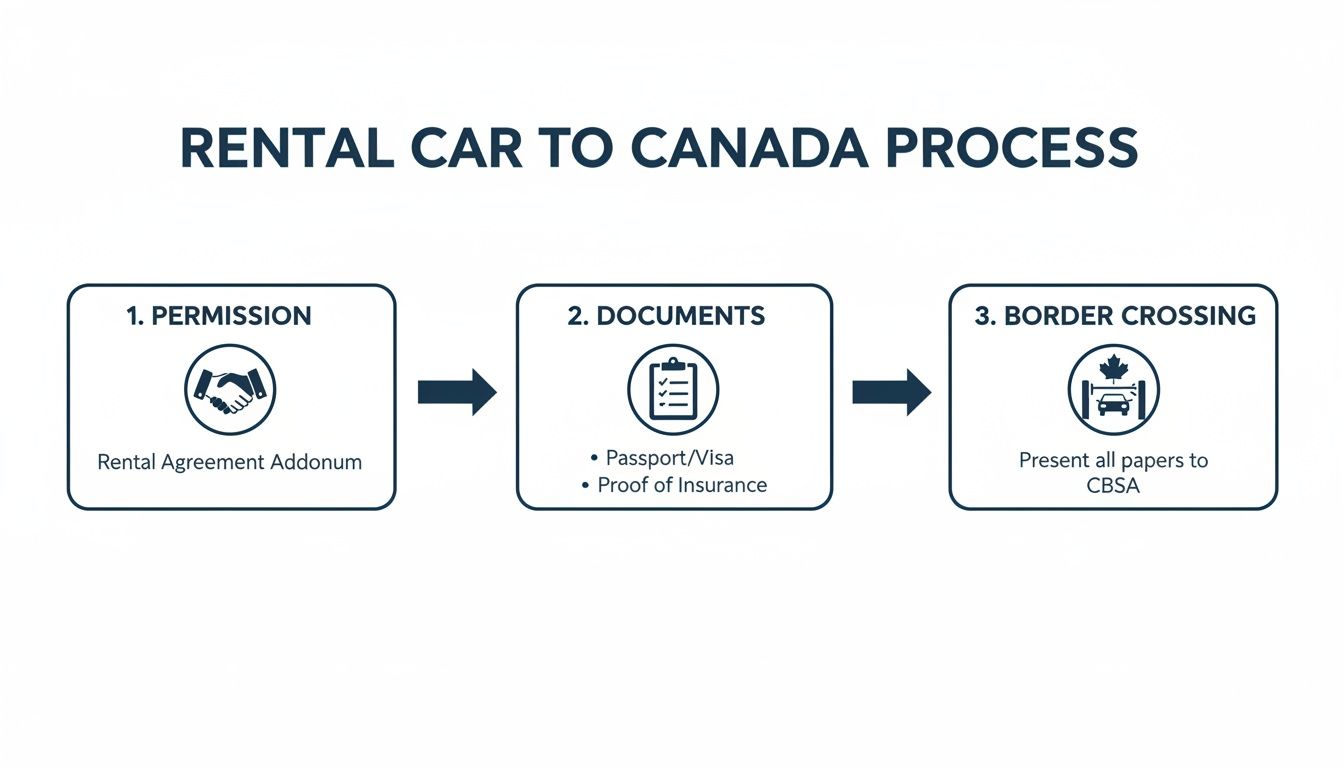
As you can see, it really comes down to a few core things: getting the green light from the rental company, having the right documents in hand, and knowing what to expect when you pull up to the customs booth.
Getting Permission Is Job Number One
Before you even book, get on the phone with the rental agency. Ask them point-blank about their policy for taking cars into Canada. Most major companies, like Cars4Go, are fine with it, but they have a specific process you need to follow.
Why is this so important? If you don't tell them you're crossing the border, you could void your entire rental agreement, including your insurance. That means if anything happens—from a fender bender to a full-on breakdown—you're on the hook for everything.
The Paperwork Isn't Optional
When you cross into Canada, you’re not just driving any car; you're driving a vehicle owned by a company, and the border agents need to see proof that you have the authority to take it across an international line. This is a non-negotiable legal requirement.
Think about it from their perspective. They need to know the car isn't stolen and that it's properly insured for travel within their country. With an estimated 2-3 million Americans renting cars for Canadian trips each year, it's a routine but very strict process.
The single most important document you’ll need is the Canadian Non-Resident Insurance Card. This is the official proof of insurance that Canadian authorities recognize. Without it, you're not going anywhere.
Your standard rental agreement works fine within the U.S., but think of the cross-border documents as a passport for the car itself. It proves you have permission to drive it in another country.
To get you started, here's a quick checklist to make sure you have everything covered.
Cross-Border Rental Car Checklist
This table breaks down the essentials you absolutely must confirm before heading to the Canadian border.
Requirement | What to Do | Why It's Critical |
|---|---|---|
Rental Company Permission | Call the rental agency directly to confirm their cross-border policy before you book. | Some companies or specific vehicle types are restricted. Not getting approval can void your contract. |
Rental Agreement | Ensure your rental contract explicitly states that cross-border travel to Canada is authorized. | This is your primary proof that you have permission to be driving the vehicle. |
Canadian Insurance Card | Request the "Canadian Non-Resident Inter-Province Motor Vehicle Liability Insurance Card." | This is mandatory proof of insurance required by Canadian law and border officials. |
Valid Driver's License | Make sure your U.S. driver's license is current and not expired. | You cannot legally operate a vehicle in Canada without a valid license from your home country. |
Passport/NEXUS Card | All travelers must have a valid passport or other approved travel document to enter Canada. | This is a standard international travel requirement for all individuals in the vehicle. |
Having these items organized and ready will make your border crossing smooth and stress-free. It’s all about being prepared.
Confirming Cross-Border Permission with Your Rental Company
Your trip to Canada doesn’t start when you turn the key in the ignition—it starts with a simple conversation. Before you even think about booking, you absolutely must get explicit, written permission from the rental company to drive their car across the border. Trust me, this is the single most important step in the entire process.
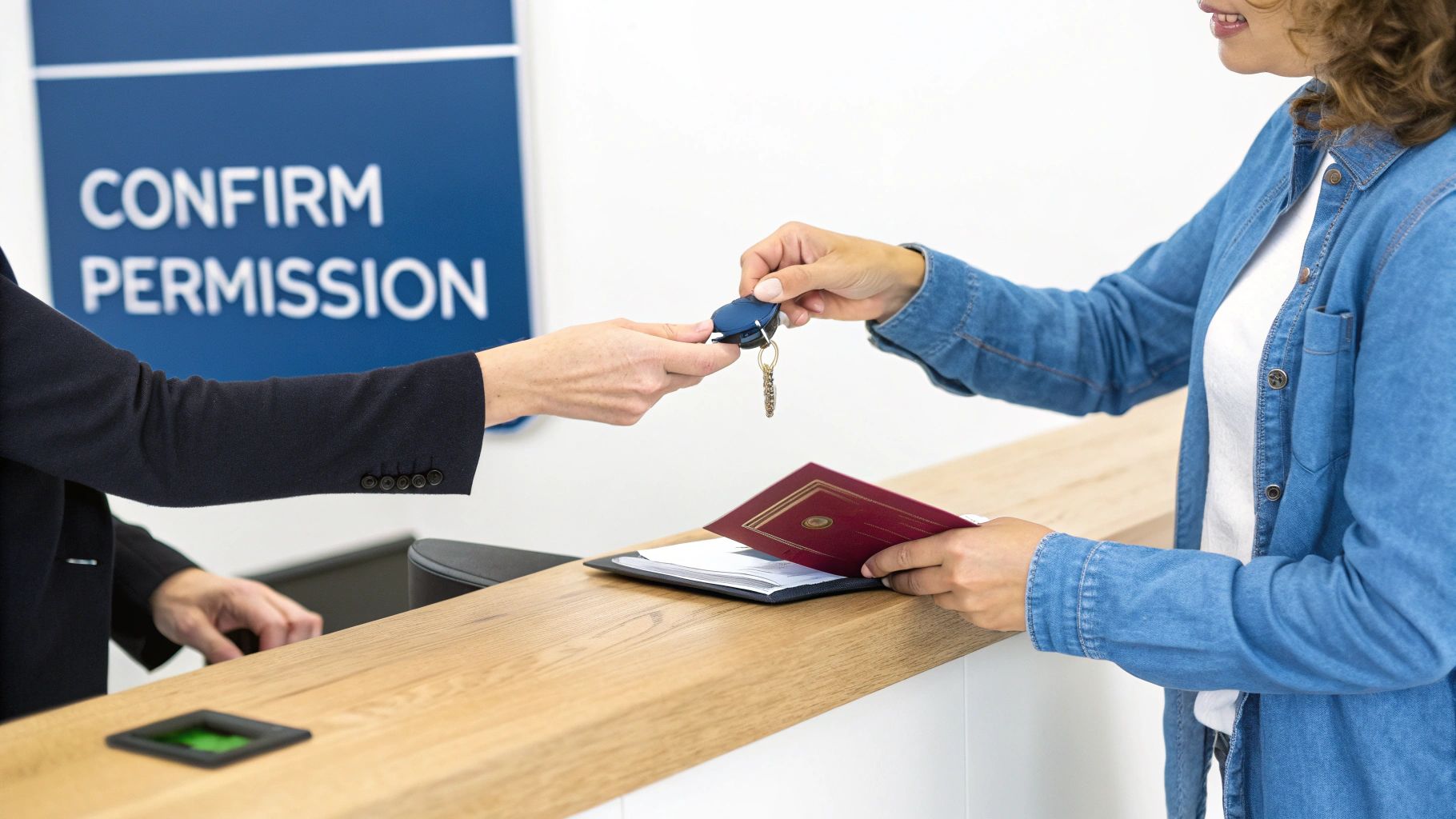
Never, ever assume you can drive a rental car to Canada. It’s a huge mistake. Not every car on the lot is cleared for international travel. Often, the restrictions boil down to specific insurance policies or the way the vehicle is registered. You'll frequently find that luxury cars, big 15-passenger vans, and exotic models are prohibited from leaving the country.
Asking the Right Questions at the Counter
When you're talking to the rental agent, you need to be crystal clear. Vague questions lead to big misunderstandings. Be direct and specific to make sure there are no surprises later.
"I'm planning to drive this rental car to Canada. Can you confirm this is permitted?" Lead with this. It’s a simple yes or no.
"Is this specific vehicle Canada-compliant?" This makes them check the car you're actually getting.
"What's the process for getting the cross-border documents I need?" This gets them started on preparing your paperwork.
This isn’t just about playing by the rules; it’s about protecting yourself. If you drive into Canada without authorization, you immediately void your rental agreement and any insurance you have. That means if you get into an accident, you’re personally on the hook for 100% of the costs—from a dented bumper to a major lawsuit.
Key takeaway: Do not walk away from that counter without two crucial documents. You need an addendum to your rental agreement that specifically authorizes Canadian travel, and you need the Canadian Non-Resident Insurance Card. This little card is your golden ticket at the border.
Get It All in Writing
A verbal "sure, no problem" from the agent is not enough. You need physical proof you can show the Canada Border Services Agency (CBSA) officer. This written authorization, attached right to your rental contract, proves the car's owner—the rental company—is okay with you taking their property into another country.
This paperwork is non-negotiable. Without it, you’re looking at a very real risk of being turned away at the border, which is a frustrating and expensive way to ruin your trip.
A little prep work goes a long way. Take the time to find the right vehicle from one of the many Cars4Go rental locations ready to set you up for your Canadian adventure. It makes the difference between a stressful border inspection and a simple, welcoming formality.
Getting Your Paperwork in Order for the Border
Rolling up to the Canadian border and fumbling for paperwork is the quickest way to put a damper on your trip. A smooth, easy crossing is all about preparation, especially when you’re in a rental car. The Canada Border Services Agency (CBSA) officer will need to see more than just your passport—they need to know you have full permission to bring that vehicle into the country.
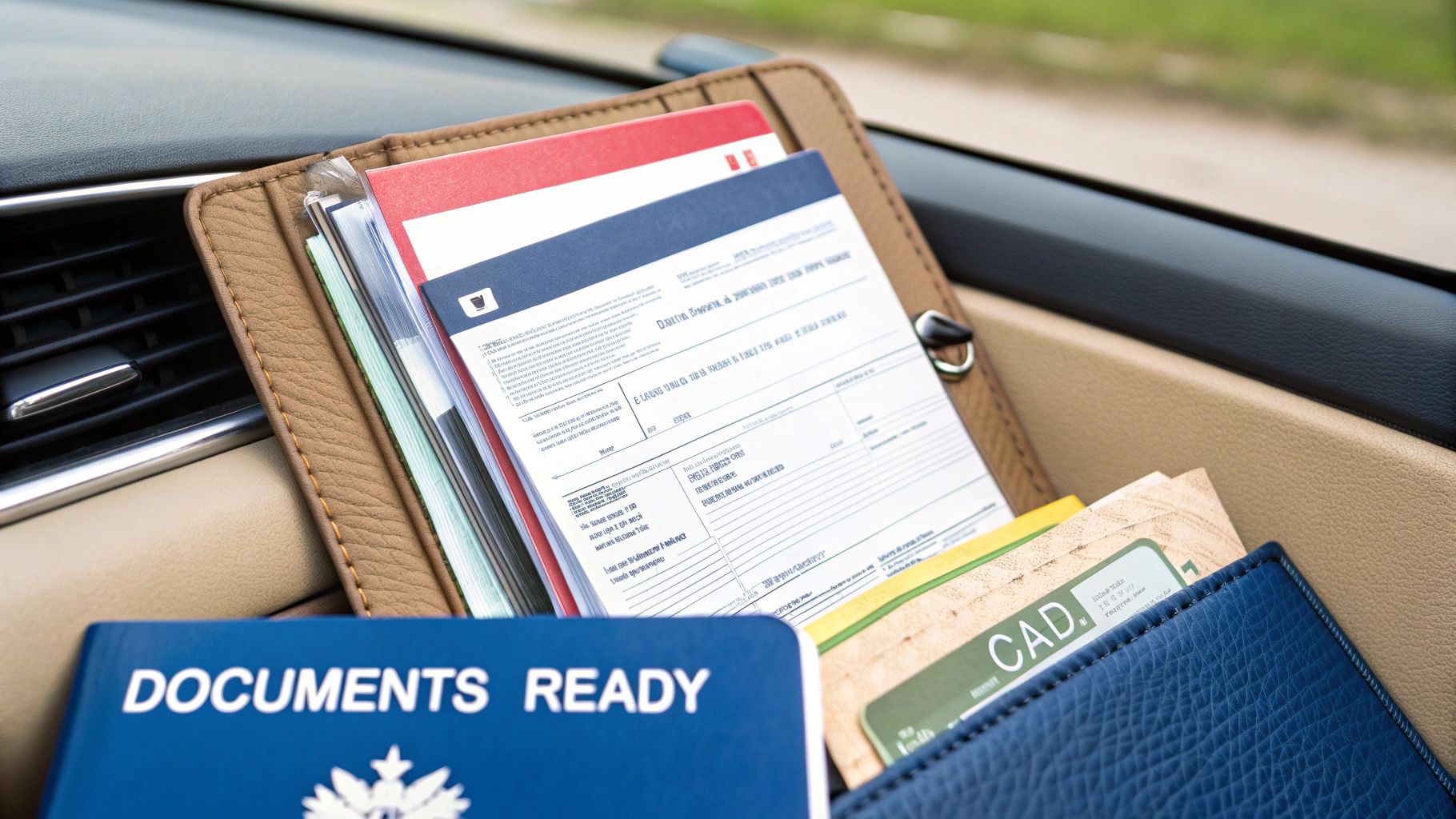
Picture this: A family from Miami pulls up to the booth. Instead of a frantic search under the seats, they have a small folder ready to go. When the officer asks for their documents, they hand over a tidy packet. That simple act turns a moment of potential stress into a quick, welcoming start to their vacation. It all boils down to having the right documents within arm's reach.
Your Rental Car Document Checklist
This goes beyond your personal ID; the car itself needs its own set of "travel papers." Before you even pull out of the rental lot, do a quick audit and make sure you have these items together in one spot, like the glove compartment or a designated travel folder.
The Original Rental Agreement: This is the key document. It proves the car is legally in your possession. The border officer will want to see the official contract that ties you to that specific vehicle.
Cross-Border Permission: This is your golden ticket. It's usually a separate form or a specific note on your contract explicitly stating you can take the car into Canada.
Canadian Non-Resident Insurance Card: Don't overlook this one. This is the official, Canadian-recognized proof of insurance that shows you’re covered for your trip. It's non-negotiable.
The Car's Registration: The original vehicle registration should always be with the car. It's standard practice, but it's good to confirm it’s there before you leave.
Having these four documents organized and ready for the CBSA officer is the secret to a hassle-free border crossing. It demonstrates you’ve done your due diligence and are entering the country responsibly.
Personal Documents for Every Traveler
Of course, the car's paperwork is only half the equation. Every single person in the vehicle needs their own valid identification. This is standard procedure for any international border, but it’s just as critical.
Make sure every passenger has their valid passport, passport card, or NEXUS card. The driver also needs their current U.S. driver's license.
If your license isn't in English or French, it's wise to get an International Driving Permit (IDP). For international visitors from non-English or French-speaking countries, you might need to look into professional driver's license translation services to avoid any hang-ups with law enforcement during your travels.
Think of this collection of documents as the passport for your entire journey. Keeping everything in one folder not only makes your life easier but also shows the border agent that you're a prepared, respectful traveler, which is a great way to start your Canadian adventure.
Understanding Rental Insurance for Canada
Driving into another country means playing by a new set of rules, and this is especially true for car insurance. A common mistake is assuming your U.S. rental coverage automatically works perfectly in Canada. It doesn't. The insurance landscape up north can be surprisingly different.
While your standard U.S. rental policy might offer some protection, it's often not enough to meet the legal minimums in Canada. For example, some provinces require at least $200,000 in third-party liability coverage. That's a lot more than what many U.S. policies or standard rental agreements cover, leaving you dangerously exposed if you get into an accident.
Why You Absolutely Need the Canadian Non-Resident Insurance Card
This is where the Canadian Non-Resident Inter-Province Motor Vehicle Liability Insurance Card comes in. Don't let the long name scare you; it's a critical document. Think of it as a special insurance passport for your rental car.
When Cars4Go gives you this card, they are officially certifying that the vehicle meets the insurance requirements for every Canadian province you might drive through. Without it, you could be turned away at the border or face serious legal and financial trouble if you're stopped by law enforcement.
Key Takeaway: Don't try to substitute your personal car insurance or credit card benefits for this card. Canadian officials specifically look for the official Canadian Non-Resident Insurance Card.
Getting a Handle on Provincial Rules
Insurance laws can change quite a bit as you drive from one province to the next. Before you go, it's smart to get a basic feel for how things work. For example, it’s worth a few minutes understanding no-fault insurance in Ontario, which has a unique system for handling claims no matter who caused the accident.
Knowing these little differences can save you a massive headache and helps you understand your responsibilities on the road.
Don't Forget to Budget for Cross-Border Fees
Lastly, make sure you ask about cross-border fees. Most rental companies, including ours, add a small daily or one-time charge for taking a car into Canada. This fee isn't a surprise gimmick; it covers the administrative work and the specific insurance riders needed for international travel.
Asking about it when you book means you can factor it into your budget and avoid any unexpected charges on your final bill. With cross-border rentals from the U.S. to Canada having jumped by 18% since 2010, this has become a very standard part of the process.
What to Do If You Have an Accident or Break Down
Let's be honest, a fender bender or a flat tire is a major headache, but having one in another country can feel like a full-blown crisis. Don't panic. If you run into trouble with your Cars4Go rental in Canada, we've got you covered, and the process is more straightforward than you might think. Your first priority is always safety.
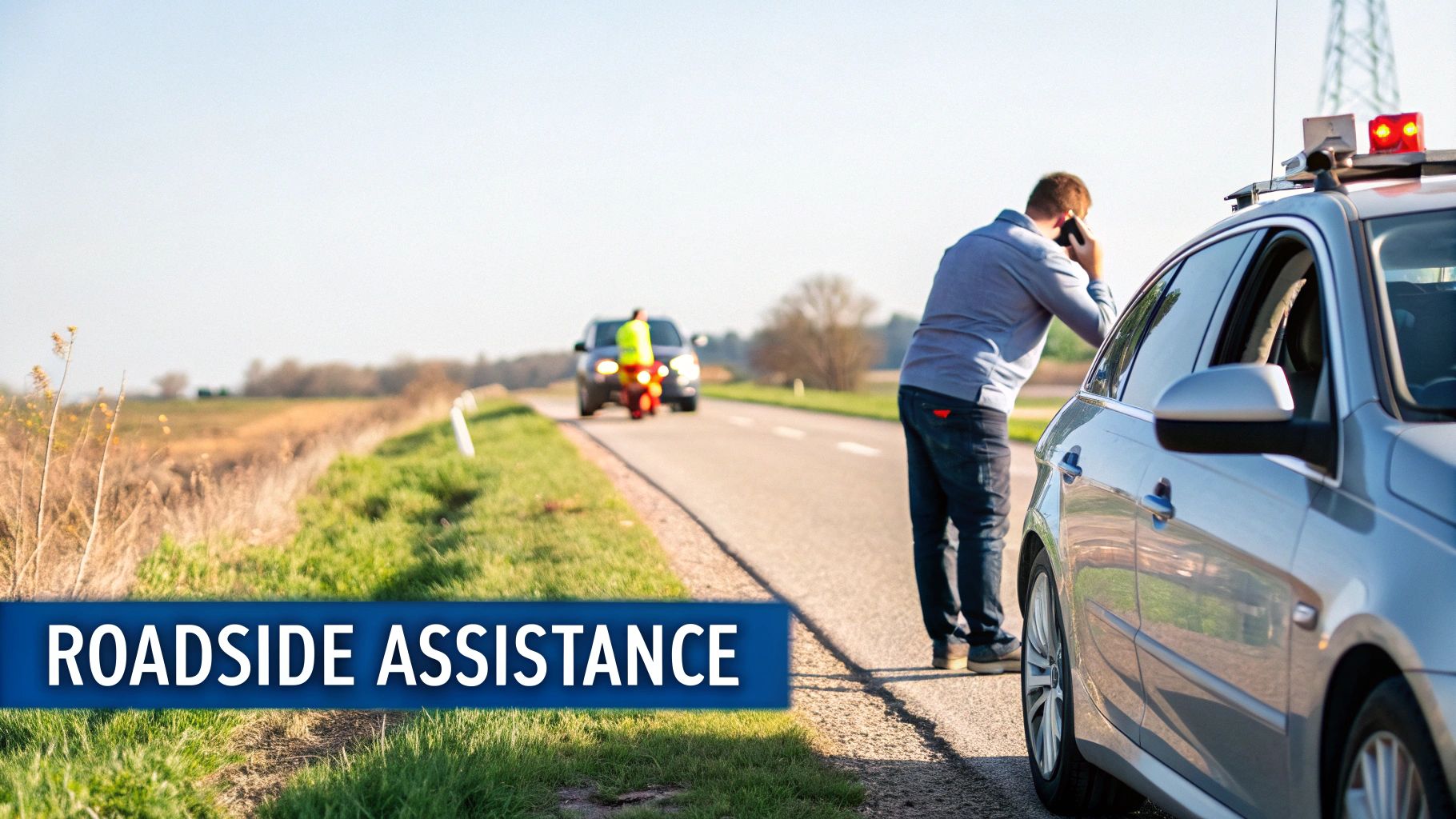
Get your vehicle to a safe spot off the road, flip on your hazard lights, and take a deep breath. If anyone is injured or there's serious damage, call 911 immediately—it works just the same in Canada.
Fender Bender? Here’s the Game Plan.
If you get into a collision, the steps are pretty much what you’d follow at home, but with a couple of crucial details. Once you've made sure everyone's okay and called for an ambulance if needed, your next call should be to the local Canadian police.
Even for a minor bump, you absolutely need a police report. This isn't just a suggestion; it's the official record that both we and the insurance companies will need to process everything correctly. While you're at the scene, be sure to collect:
The other driver’s information: Name, address, phone number, license, and their insurance details. Snap a picture of their documents if you can.
Witness contacts: If anyone stopped to help or saw what happened, get their name and number. Their account can be invaluable.
Plenty of photos: Use your phone to document everything—the damage to all cars involved, their license plates, and the general accident scene.
Once the immediate situation is stable, your very next call must be to the Cars4Go 24/7 roadside assistance number. You’ll find this in your rental agreement. Let us know what happened right away so we can start guiding you through the next steps.
When Your Rental Car Just Stops Working
A mechanical issue might be less dramatic than a crash, but it can stop your trip just as fast. Whether it’s a dead battery or an engine that won't cooperate, your lifeline is the roadside assistance number in your rental packet.
When you get permission from Cars4Go to drive a rental car to Canada, you’re also getting access to our cross-border support network. Just give us a call with your rental agreement number and your location (use your phone's GPS to get the exact spot). We’ll coordinate with our Canadian partners to send a tow truck, a jump-start, or whatever you need to get you moving again. You won’t be left stranded.
Common Questions About Driving a Rental to Canada
Even the best-laid plans can hit a snag, and when it comes to a cross-border road trip, a few unanswered questions can create a lot of last-minute stress. We get these questions all the time from travelers, so let's clear the air on the most common ones.
Here are the straightforward answers you need to drive into Canada with confidence.
Can Any Rental Car Go to Canada?
Not quite. It’s a common misconception that you can take any car in the rental lot across the border.
The reality is that high-value luxury cars, exotic models, and sometimes even large 15-passenger vans are often off-limits for international travel. This is usually due to insurance restrictions and specific company policies.
That’s why you absolutely must tell the rental company you're heading to Canada when you book. This is non-negotiable. They'll make sure to assign you a vehicle that’s already cleared for Canadian entry. Don’t just assume it’s okay—always get confirmation.
The biggest mistake people make is assuming their rental is automatically cleared for travel to Canada. This can get you turned away at the border and put you in serious breach of your rental agreement.
What if I Cross the Border Without Permission?
Driving into Canada without getting the green light from the rental company first is a huge mistake with serious consequences. The second your tires touch Canadian soil, your rental insurance is typically void.
This means you become personally responsible for 100% of any costs if the car is damaged, stolen, or involved in an accident. We're talking about potentially devastating financial liability.
On top of that, you could be hit with steep fines from the rental company for violating your contract. Canadian border officials also need to see proof that you have the owner's permission to take the vehicle out of the country. Without it, they have every right to deny you entry.
Can I Use My Own Car Insurance?
This one's a bit tricky because it really depends on your personal policy. Some U.S. auto insurance plans extend to rental cars in Canada, but many don't, or they offer very limited coverage. You have to call your insurance agent before your trip to find out exactly where you stand.
But even if your personal insurance does offer coverage, you still need the Canadian Non-Resident Insurance Card provided by the rental company. This is the official document Canadian authorities recognize. Your personal insurance card won't cut it at the border. Think of it as your official passport for the car.
For more deep dives into travel prep, feel free to browse the other articles on the Cars4Go travel blog.
Are There Extra Fees for This Trip?
Yes, you should expect to pay a cross-border fee. This isn't a surprise charge; it’s a standard fee that covers the extra paperwork and insurance required for taking a vehicle into another country.
The fee might be a small daily charge or a single flat rate for the entire trip. The rental agent should explain this clearly when you mention your plans to visit Canada. Always ask about it upfront so you can factor it into your budget and avoid any sticker shock on your final invoice.
Ready to plan your Canadian road trip the right way? At Cars4Go Rent A Car, we specialize in making cross-border travel simple. We'll set you up with a Canada-ready vehicle and all the required documents. Book your rental today and head north with total peace of mind.
Comments