


Are There Alligators in the Florida Keys A Visitor Guide
- fantasma70
- Nov 30, 2025
- 9 min read
Let's get straight to the point: Yes, there are alligators in the Florida Keys, but your chances of bumping into one are incredibly slim. They are not a common sight, and they stick to very specific habitats, so an encounter is highly unlikely for the average traveler.
The Real Story of Reptiles in the Keys
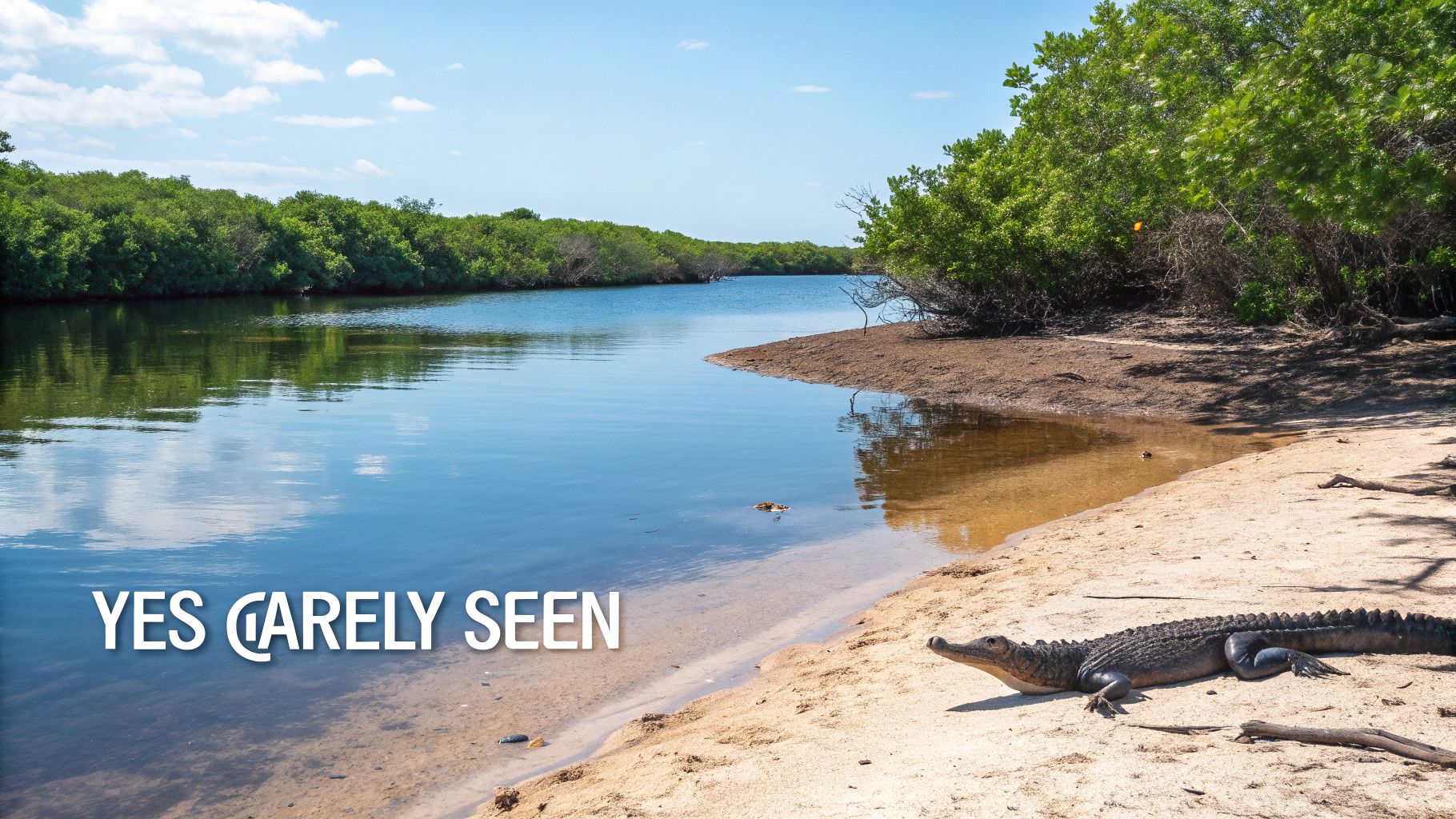
While the Keys are famous for endless saltwater, a few isolated pockets of freshwater exist, and that’s exactly where you’ll find the American alligator. These aren't recent transplants, either. Historical records show they’ve been part of this unique ecosystem for a very long time.
In fact, one detailed study confirmed 133 alligator sightings across the lower Keys. Crucially, this included 46 juveniles or hatchlings, which proves they are a self-sustaining, naturally reproducing population. You can dive deeper into the findings on native alligator populations to see the data for yourself. These gators are a resilient, native species, not just lost wanderers.
That said, the reptile you are far more likely to hear about—or even spot—is the American crocodile. Crocodiles are perfectly at home in the brackish and saltwater mangrove swamps that define the islands.
Knowing the difference between these two is the key to understanding the wildlife here.
Here’s the main thing to remember: Alligators need freshwater, which is a rare commodity in the Florida Keys. Crocodiles, on the other hand, are built for the saltwater that surrounds the islands.
Alligators vs Crocodiles in the Florida Keys at a Glance
This quick table should help you tell them apart and understand what you might encounter.
Feature | American Alligator | American Crocodile |
|---|---|---|
Population | Very Rare in the Keys | More Common but elusive |
Primary Habitat | Freshwater ponds and canals | Saltwater and brackish mangroves |
Typical Encounter Risk | Extremely Low for visitors | Very Low but possible in specific areas |
So, while both of these ancient reptiles call this region home, your focus should really be on the crocodile if you're curious about local crocodilians.
Finding the Freshwater Havens Where Alligators Thrive
So if the Keys are surrounded by saltwater, where are people seeing alligators? The short answer is: in very specific, isolated pockets of freshwater. Alligators just aren't built to handle salt the way crocodiles are, so their entire existence in the Keys hinges on these rare freshwater sources.
Think of it like this: the Keys are a saltwater desert, and these freshwater spots are the oases. You won’t find a gator hanging out on a sandy ocean beach or cruising through salty mangrove channels. They stick to the few places that hold fresh water year-round, which makes their hangouts pretty predictable.
The Famous Blue Hole on Big Pine Key
Without a doubt, the most famous alligator spot in the entire island chain is the Blue Hole on Big Pine Key. It's an old rock quarry that naturally filled with rainwater, creating a freshwater pond that has become a permanent home for a few gators.
A Unique Ecosystem: It’s a reliable source of fresh water, which is precisely why a small, stable gator population has managed to survive here for so long.
A Safe Viewing Spot: The Blue Hole is part of the National Key Deer Refuge and has a great observation deck, so the animals here are used to people watching them from a safe distance.
Honestly, this one spot is probably the main reason most visitors even know there are any alligators in the Keys. It’s a true geological oddity for the islands.
The alligators in the Florida Keys are living on the edge, completely dependent on these small pockets of fresh water. Their survival here is a fascinating example of animal adaptability, but it also shows just how limited their range really is.
Beyond the Blue Hole, you might occasionally hear of a gator sighting in a man-made pond, like on a golf course or in the back of a residential area. These artificial ponds basically create accidental sanctuaries by mimicking the freshwater wetlands of mainland Florida. But these aren't tourist spots, and stumbling upon a gator in one is incredibly rare.
Gators vs. Crocs: What's the Difference, Really?
In South Florida, knowing your reptiles is more than just trivia—it's a practical skill. At a glance, alligators and crocodiles can look awfully similar, but a few key features make it easy to tell them apart, even from a safe distance.
The quickest giveaway is the snout. An American alligator has a wide, rounded snout that looks a lot like a 'U'. Think of it as a powerful shovel, built for crushing things. The American crocodile, on the other hand, has a skinny, pointed snout shaped like a 'V', which is perfect for snapping up fish.
Next, check out their smile. When an alligator's mouth is shut, you can't really see its bottom teeth. A crocodile, however, always looks like it's grinning, with a big fourth tooth on its lower jaw that sticks up over its top lip. It's a pretty distinct, jagged look.
Where They Live is Everything
The biggest difference—and the main reason alligators are so rare in the Florida Keys—boils down to one thing: salt.
Alligators are freshwater animals. They need freshwater to survive because they can't process saltwater the way crocodiles can.
Crocodiles are built for the coast. They have special glands that let them filter out salt, so they thrive in the brackish and saltwater mangrove forests that make up most of the Keys.
This one biological difference is the whole story. Crocs own the saltwater coastlines, while gators are stuck in the few and far between freshwater ponds or canals on the islands.
This is why finding a gator in the Keys is such a big deal. They are limited to the very few places that offer a freshwater refuge.
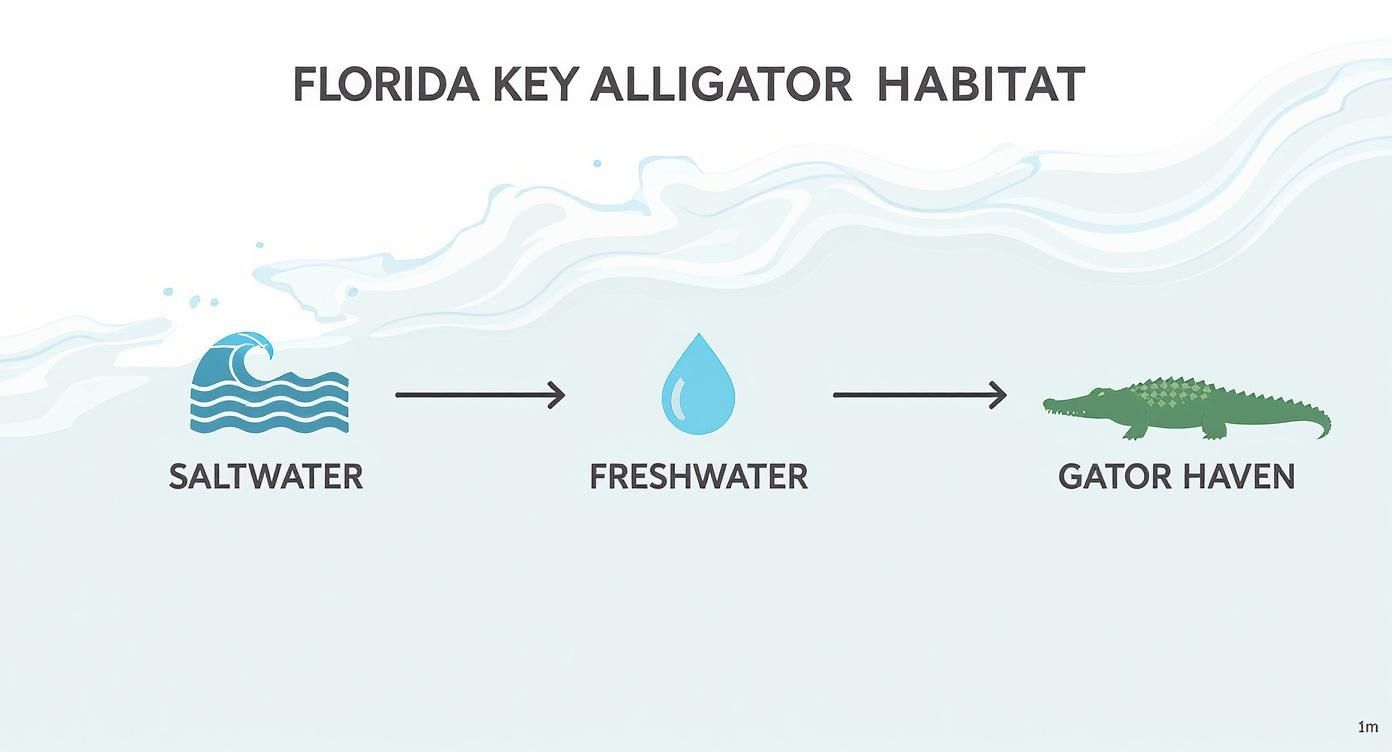
As you can see, a gator has to find that one specific freshwater "haven" in a landscape dominated by saltwater. Their survival here depends entirely on these isolated pockets.
To make it even clearer, here’s a quick side-by-side comparison.
Key Differences Between American Alligators and American Crocodiles
Characteristic | American Alligator | American Crocodile |
|---|---|---|
Snout Shape | Broad, U-shaped | Narrow, V-shaped |
Teeth | Only upper teeth visible when mouth is closed | Both upper and lower teeth visible (toothy grin) |
Color | Dark grayish-black | Lighter grayish-green or olive-brown |
Habitat | Freshwater (rivers, swamps, lakes) | Saltwater or brackish water (coastal areas, mangroves) |
Demeanor | Generally less aggressive, avoids humans | Warier and shyer, but can be more aggressive if provoked |
So, while you're far more likely to see a crocodile in the Keys, it's these subtle differences that tell you exactly what you're looking at.
A True Florida Comeback Story
The few alligators you might find in the Florida Keys are part of a much bigger, more dramatic story of survival. It wasn't that long ago, just a few decades back, that the American alligator was on the verge of being wiped out completely—not just from the Keys, but from all of Florida.
Throughout the 20th century, a double-whammy of unregulated hunting and massive habitat loss pushed the species to the brink. As Florida’s towns and cities grew, huge swaths of wetlands were drained to make way for farms and neighborhoods, devastating the alligators that called those swamps home.
From Near-Extinction to a Remarkable Recovery
The numbers are pretty staggering. South of the Tamiami Trail, the alligator population collapsed, dropping by over 90 percent from its historical peak. This wasn't just a natural dip; it was a direct result of us re-engineering Florida's landscape to suit human needs. You can dive deeper into the ecological history of this population collapse to understand the full scope of the changes.
Thankfully, people realized what was happening. In 1967, the American alligator was officially listed as an endangered species, granting it federal protection. This was a game-changer. Making it illegal to hunt them gave the gators the breathing room they desperately needed to start their slow climb back.
The American alligator’s recovery is one of America's greatest conservation success stories. It's living proof that when we step in with legal protection and smart habitat management, we can pull a species back from the very edge of extinction.
Today, the alligator population on the mainland is healthy and stable. Their small but stubborn presence in the Florida Keys is a living testament to this incredible turnaround. It's also a powerful reminder of why these animals are still protected and why we all need to respect their space to keep Florida's wild heart beating.
How to Safely Share the Keys with Local Wildlife
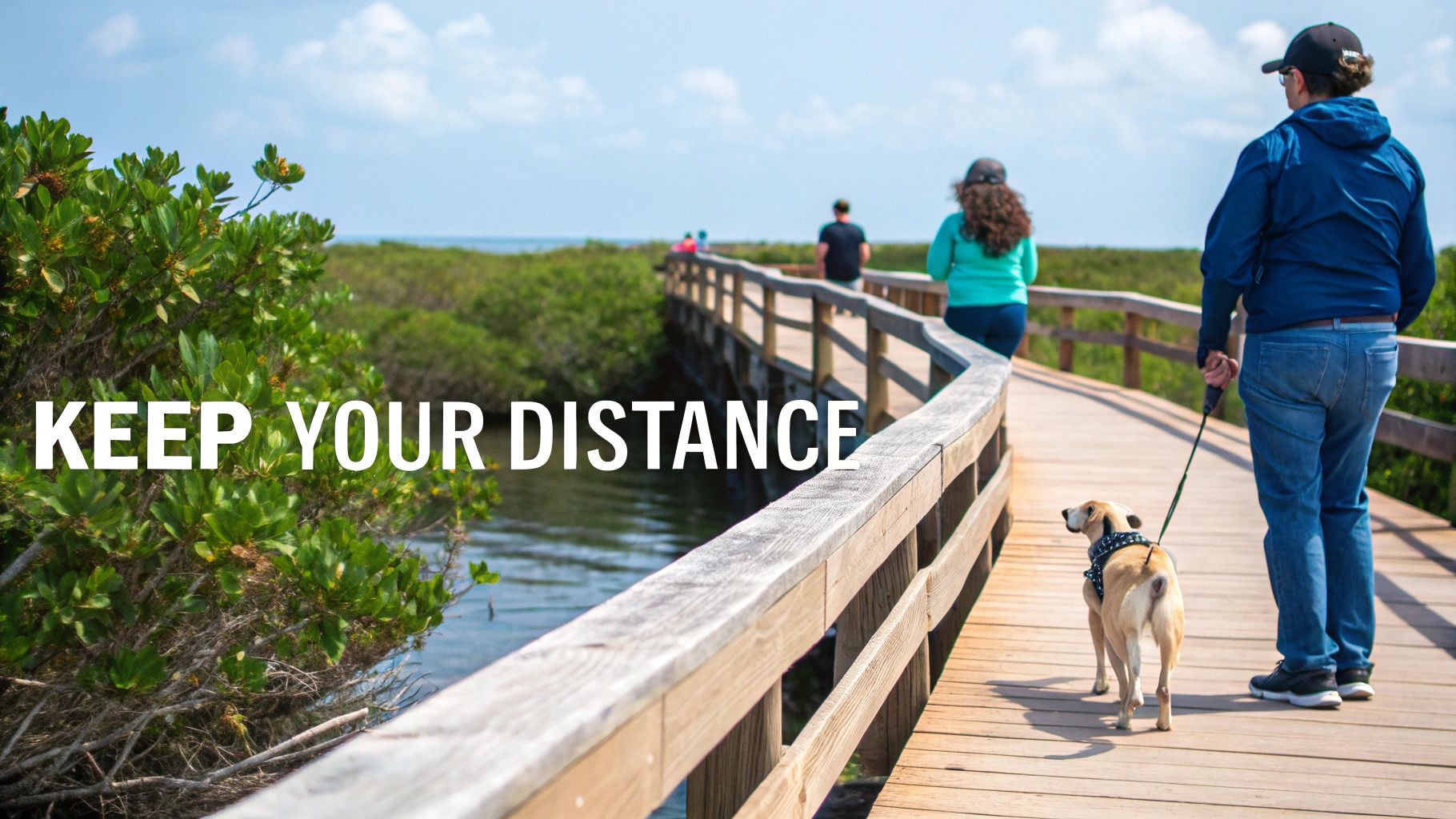
While you're not likely to stumble across an alligator in the Florida Keys, you'll definitely be sharing the islands with American crocodiles and other native species. It’s a huge part of what makes this place so special. The secret to a good experience is simple: respect their space.
Nearly every bad run-in with wildlife happens when someone gets too close or tries to interact. These are wild animals, and they're naturally cautious of people. If you leave them alone, they’ll almost always return the favor. Think of it as a quiet agreement—you admire them from afar, and they go about their day.
Simple Rules for Safe Wildlife Viewing
A little common sense goes a long way. Following these basic guidelines not only keeps you safe but also helps protect the animals that live here.
Never Feed Wildlife: This is a big one. Feeding crocodiles or alligators is not only illegal, but it's incredibly dangerous. It makes them lose their natural fear of people and see us as a food source.
Keep a Safe Distance: The gold standard is to stay at least 60 feet away—that's roughly four car lengths. A simple test: if the animal stops what it's doing to watch you, you're too close.
Secure Your Pets: Keep your pets leashed and well away from the water's edge, especially in areas where you know crocodiles might be hanging out.
Swim Smart: Always swim in designated areas. Try to avoid taking a dip at dawn or dusk, as this is when crocs and gators are most active.
The core principle of wildlife safety is observation without interaction. Your goal is to be a silent spectator, leaving no trace behind and taking only memories and pictures.
Remember, it’s not just the big reptiles you need to think about. The Keys are full of life, so it pays to be aware of other dangerous aquatic animals that call these waters home. A little bit of awareness is all it takes to safely enjoy the stunning natural beauty of the Florida Keys.
Where to Responsibly See Reptiles in the Wild
Forget trying to hunt down that one elusive gator in the Keys. If you want to see iconic Florida reptiles, your best bet is to go where they actually hang out. Responsible wildlife viewing keeps you safe and lets the animals live their lives in peace.
The good news? Your drive down to the Keys takes you right through prime gator country. Before you even cross that first bridge onto Key Largo, make a pit stop at Everglades National Park. This is the heart of alligator territory, and an airboat tour is a fantastic—and safe—way to see them thriving in their natural habitat.
Top Spots for Ethical Wildlife Viewing
Once you're actually in the Florida Keys, you'll need to know where to look. A few spots offer great opportunities to see local reptiles without getting in their way.
The Blue Hole on Big Pine Key: This old freshwater quarry is part of the National Key Deer Refuge and is hands-down the most reliable place to see one of the Keys' few resident alligators. They even have a safe observation platform to watch from.
Crocodile Lake National Wildlife Refuge: Up on North Key Largo, this refuge was created specifically to protect the American crocodile. While public access is limited to preserve their habitat, you can often spot crocs in the surrounding mangrove canals.
If you're hoping to get some great photos of the Keys' unique creatures, it's worth checking out some wildlife photography tips for beginners. A little know-how goes a long way in capturing a beautiful moment respectfully.
Remember, the best wildlife encounter is one where the animal doesn't even know you were there. Using binoculars or a zoom lens allows you to appreciate these creatures without causing stress.
Your Top Questions About Florida Keys Gators
Got a few lingering questions? Let's tackle some of the most common ones so you can explore the Keys with confidence.
Can I Swim in the Ocean?
Yes, absolutely. The ocean around the Keys is generally very safe for swimming. Alligators are freshwater animals, plain and simple—they just can't handle the salt.
You're more likely to find American crocodiles, which can live in saltwater, but they are notoriously shy and steer clear of busy places like public beaches. The golden rule is to stick to designated swimming spots and always keep an eye on your surroundings.
Are Alligators Protected by Law?
They sure are. The American alligator is a federally protected species. In Florida, it’s illegal to harass, harm, or, most importantly, feed them.
These laws are the reason the alligator population made such a remarkable comeback from the brink of extinction on the mainland. Following the rules helps keep both people and gators safe.
What if I Actually See an Alligator?
First off, count yourself lucky! It's an incredibly rare sight in the Keys. The number one rule is to give it space—a lot of space. The official recommendation is to stay at least 60 feet away.
Never, ever approach, feed, or corner an alligator. Just admire it from a safe distance and let it go on its way. If you spot one in a place where it could be a danger to people, like a backyard or a busy park, you should call the Florida Fish and Wildlife Conservation Commission (FWC) Nuisance Alligator Hotline.
Comments