


A Parent's Guide to Car Seat Rental
- fantasma70
- Nov 4, 2025
- 14 min read
Traveling with kids is an adventure, but let’s be honest—dragging a bulky car seat through an airport is one part of the adventure we could all do without. This is where a car seat rental comes in. It's a simple, practical way to skip the extra baggage fees and the sheer hassle of lugging heavy gear, ensuring a safe, clean, and appropriate seat is waiting for you when you land.
Why Smart Families Choose Car Seat Rental

For a lot of families, the decision to rent a car seat really just comes down to convenience and peace of mind. Instead of wrestling with your own seat on a plane (and worrying about potential damage), you can arrive at your destination and find a clean, modern car seat ready to go. That simple switch can transform the start of your vacation from a stressful scramble to a smooth beginning.
Opting for a car seat rental is one of the easiest ways to simplify the logistics of traveling with car seats. It just takes one major headache completely off your plate.
The Practical Perks of Renting
Beyond just avoiding the heavy lifting, renting a car seat has some real, tangible benefits that experienced travelers have come to appreciate. If you're traveling internationally, for example, you'll find that safety regulations can be different from what you're used to at home. Renting a seat locally guarantees it's up to code with all regional safety laws—a crucial detail that’s surprisingly easy to miss.
This shift towards convenience isn't just a feeling; it's a clear market trend. The baby gear rental service market is set to grow from just over $250 million in 2025 to a global valuation of nearly $551 million by 2033. It’s clear that more families are choosing to rent.
The real win is trading logistical stress for more quality family time. Having a safe, appropriate car seat waiting for you means your vacation starts the moment you land, not after a frustrating struggle in the airport parking lot.
Renting vs. Bringing Your Own Seat
Deciding whether to rent a car seat or bring your own can be tough. Both options have their pros and cons depending on your specific travel plans. Here’s a quick look at the key differences to help you decide which option is best for your family.
Factor | Renting a Car Seat | Bringing Your Own Car Seat |
|---|---|---|
Convenience | High. The seat is waiting for you at your destination. | Low. You have to carry it through the airport and check it. |
Cost | Daily rental fee can add up, especially for long trips. | No extra cost, but potential airline baggage fees. |
Familiarity | Your child might not be used to the model provided. | High. Your child is comfortable with their own seat. |
Safety Standards | Guaranteed to meet local safety regulations. | May not comply with international safety laws. |
Condition | Typically clean and well-maintained, but check yourself. | You know the seat's history and condition. |
Ultimately, the best choice depends on your trip's length, your destination, and what you value most—convenience or familiarity.
Times When Renting Just Makes Sense
While bringing your own seat can work for some trips, certain situations make renting the obvious, hassle-free choice.
Think about these common travel scenarios:
Visiting Grandparents: Flying to see family? They can easily pick up a rental for you ahead of time, saving you the trouble of checking it as baggage.
Multi-Stop Trips: If you're hopping between cities or using different types of transport, a rental means you don't have to carry a car seat on trains, buses, or ferries.
Short City Breaks: For a quick weekend getaway, the cost and sheer effort of bringing your own seat often just aren't worth it.
Renting gives you flexibility and ensures your child's safety without cramping your travel style. For more tips on making family trips easier, feel free to check out our other travel guides at https://www.cars4go.com/blogs.php.
Finding the Right Car Seat for Your Child
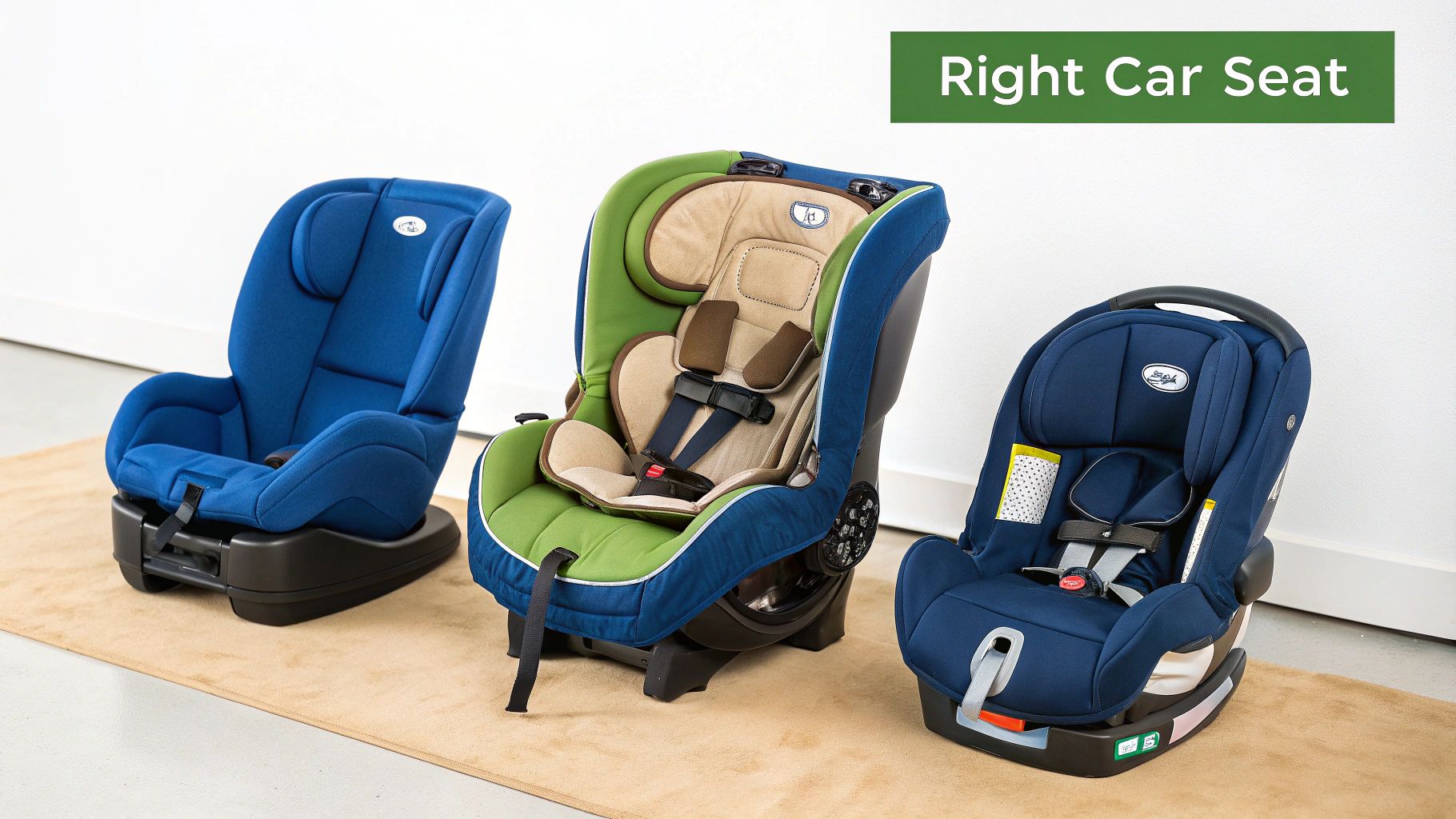
Let's be honest, picking the right car seat is the most critical part of this whole process. It’s not just about ticking a box; it’s about making sure your child is actually safe. Getting this right from the start saves a ton of headaches later.
Before you do anything else, you need your child's exact stats. Don't estimate their height and weight—grab a measuring tape and a scale. A few pounds or inches can be the difference between a seat that fits perfectly and one that's not quite right, and that's not a chance you want to take.
Matching the Seat Type to Your Child
Once you have those numbers, you can figure out which type of seat you need. Rental companies generally have three main options, and each one is built for a specific stage of a child's growth.
Here’s a quick rundown of what you’ll likely see:
Infant Car Seats (Capsules): These are rear-facing only, built for newborns and small babies, usually up to 22-35 pounds. The big plus is the detachable base, which lets you click the carrier in and out without waking a sleeping baby. A lifesaver.
Convertible Car Seats: Think of this as the all-rounder. It starts as a rear-facing seat for infants and toddlers, then flips around to a forward-facing seat as they grow. They cover a huge weight range (often 5 to 65 pounds), making them ideal for almost any trip with a toddler.
Booster Seats: Once kids have outgrown their forward-facing harnesses, it's time for a booster. This seat simply "boosts" them up so the car's own seat belt fits them properly. They’re for kids who are at least 40 pounds and mature enough to sit still.
So, if you're planning a quick city visit with your six-month-old, the infant capsule is your best friend for convenience. But for that week-long road trip with a two-year-old, a convertible seat rental is the way to go.
Pro Tip: Always, always check the car seat's expiration date. There should be a sticker on the side or bottom with the manufacturing date. Plastic degrades over time, so seats are only good for about 6-10 years. If it’s expired or close to it, ask for a different one.
Essential Features to Look For
Okay, so you know the type of seat you need. Now, what features make a real difference?
First up, make sure it has a five-point harness system. This is non-negotiable for infant and convertible seats. It secures your child at their shoulders, hips, and between their legs, which is the safest way to distribute force in a crash.
It’s also a huge help if the seat has clear instructions printed on the side or even a QR code linking to an installation video. A car seat is only safe if it's installed correctly. Don't hesitate to ask the rental staff for a newer model if the one they give you looks worn out or lacks these key features. Your child's safety comes first, period.
Where to Rent and How to Book Confidently
So, you've figured out exactly what kind of car seat you need. The next big question is: where do you actually get it? These days, you’ve got more options than ever, which is great, but it can also be a little overwhelming. Generally, you’re looking at two main routes.
You can rent directly from a major car rental company like Hertz, Avis, or Enterprise. Or, you can go with a dedicated baby gear rental service, like BabyQuip or a smaller local business that lives and breathes family travel.
Car Rental Agencies: The Good and The Bad
Tacking a car seat onto your car rental is, without a doubt, the easiest option. You grab your keys, they hand you a car seat, and you're on your way. It’s one less thing to worry about, especially when you're trying to wrangle kids and luggage at the airport.
But that convenience can be a double-edged sword. For these big agencies, car seats are just an add-on, not their specialty. This means the quality and cleanliness can be a total crapshoot. You might get a seat that looks like it's been through a war, an older model that lacks modern safety features, or one that just feels… sticky.
It really is a "luck of the draw" situation. I've heard from so many parents who got a fantastic, like-new seat on one trip and a grimy, questionable one the next. When you’re standing at the counter with a tired toddler, you don’t have much bargaining power.
Specialized Baby Gear Rental Services
This is where dedicated baby gear rental companies really shine. Their entire business is built on providing safe, clean, and top-of-the-line equipment for families. They get it.
Many of these services will deliver the car seat right to your hotel, vacation rental, or even meet you at the airport arrivals area. It’s a game-changer.
Here's why so many parents are going this route:
You Know What You're Getting: You can often pick the exact brand and model you want when you book. No surprises.
They're Serious About Cleanliness: These companies brag about their cleaning protocols, and for good reason. They know it's what parents care about most.
Real Expertise: The staff actually know about car seats. They can answer your questions and often provide installation tips.
The only real downside is that it’s a separate transaction. You have to book it apart from your car and coordinate the drop-off. But for the peace of mind that comes with a high-quality, sanitized seat, it's often a small price to pay. It’s a fast-growing trend, too. In popular U.S. travel spots, up to 25–30% of families are now choosing a car seat rental from a specialized service. You can learn more about the baby gear rental market over at booqable.com.
How to Book Your Rental Like a Pro
No matter who you decide to rent from, asking a few key questions upfront will save you a world of headaches later.
Before you click "confirm," make sure you get answers to these:
"What's your cleaning process?" Don't be shy. A reputable company will be proud to tell you exactly how they sanitize their gear between rentals.
"How old is the seat?" Ask for a model that was manufactured in the last couple of years. This ensures it has up-to-date safety features and is nowhere near its expiration date.
"What's your cancellation policy?" Kids get sick, flights get canceled. Life happens. Make sure you understand the fine print if your plans go sideways.
"Can you confirm availability at my destination?" This is especially important for car rental agencies. Check that your specific airport or pickup spot has a reliable inventory. When you browse different car rental locations, it's worth a quick call to the local desk to confirm they’ll have what you need.
What to Inspect When Your Rental Arrives
The moment your rental car seat shows up is your first and most important chance to make sure it's safe. Whether it’s waiting for you at the airport counter or delivered straight to your hotel, you absolutely must take five minutes to give it a thorough once-over. Don't even think about putting your child in it until you do.
The First Look: A Hands-On Check
Start by playing detective. Your first step is a quick visual scan, but don't just look—use your hands. Run your palms along the entire plastic shell, feeling for any hairline cracks, deep gouges, or tell-tale white stress marks in the plastic. These are signs that the seat's structure might be compromised.
Next, turn your attention to the harness. Grab the straps and give them a good, firm tug. Look closely for any fraying, thinning, or obvious wear, paying special attention to where the straps pass through the buckle and adjustment slots. A worn-out harness is a serious red flag.
Digging Deeper for Critical Safety Info
After the surface check, it’s time to find two crucial details: the expiration date and the user manual.
Believe it or not, car seats have a limited lifespan. The plastic degrades over time, becoming brittle and less safe in a crash. You should find a date of manufacture printed on a sticker, usually on the side or bottom of the seat. Most car seats are good for 6 to 10 years from that date. If the sticker is missing, you can't read it, or the seat is already expired, politely refuse it. Ask for a different one.
Never, ever accept a car seat if you can't confirm its age and expiration. An expired seat is a massive safety gamble that you just don't want to take.
The instruction manual is your best friend for getting the installation right. It should be tucked away in a little storage compartment on the seat itself. Make sure it's there before you walk away.
Your Final Pre-Approval Checklist
Before you officially accept the seat, run through this quick mental checklist. It covers the most common issues people run into and will help you feel confident about your choice.
Test the Buckle: Click the chest clip and crotch buckle together and apart a few times. They should snap securely into place and release without a fight. A sticky buckle is a sign of trouble.
Check for All Parts: Make sure everything is there. If you needed special infant inserts or extra padding, confirm they're included with the seat.
Give it a Cleanliness Check: Rental companies are supposed to clean their seats, but standards can vary wildly. Look for obvious stains, sticky residue, or any weird smells. You have every right to a clean, sanitary seat for your child.
If the car seat fails any of these tests, don't be shy about speaking up. Calmly explain your concerns and request a different seat. Your child’s safety is the top priority. For a better idea of what to expect from different companies, check out what other parents have said in our guide to rental car reviews. Knowing what to look for will help you advocate for your child with confidence.
Getting the Installation Right
You’ve picked the perfect rental seat, and now comes the most important part: installing it correctly. A top-of-the-line car seat won't do its job unless it's properly secured in the car. I know it can feel a little daunting, especially when you're dealing with an unfamiliar rental vehicle, but a few simple checks will give you total peace of mind.
Whatever you do, don't rush this. Give yourself a good 15-20 minutes in the rental lot or at your hotel to get it just right. A solid installation is the bedrock of your child's safety for the entire trip.
Before you even start, give the seat a quick once-over.
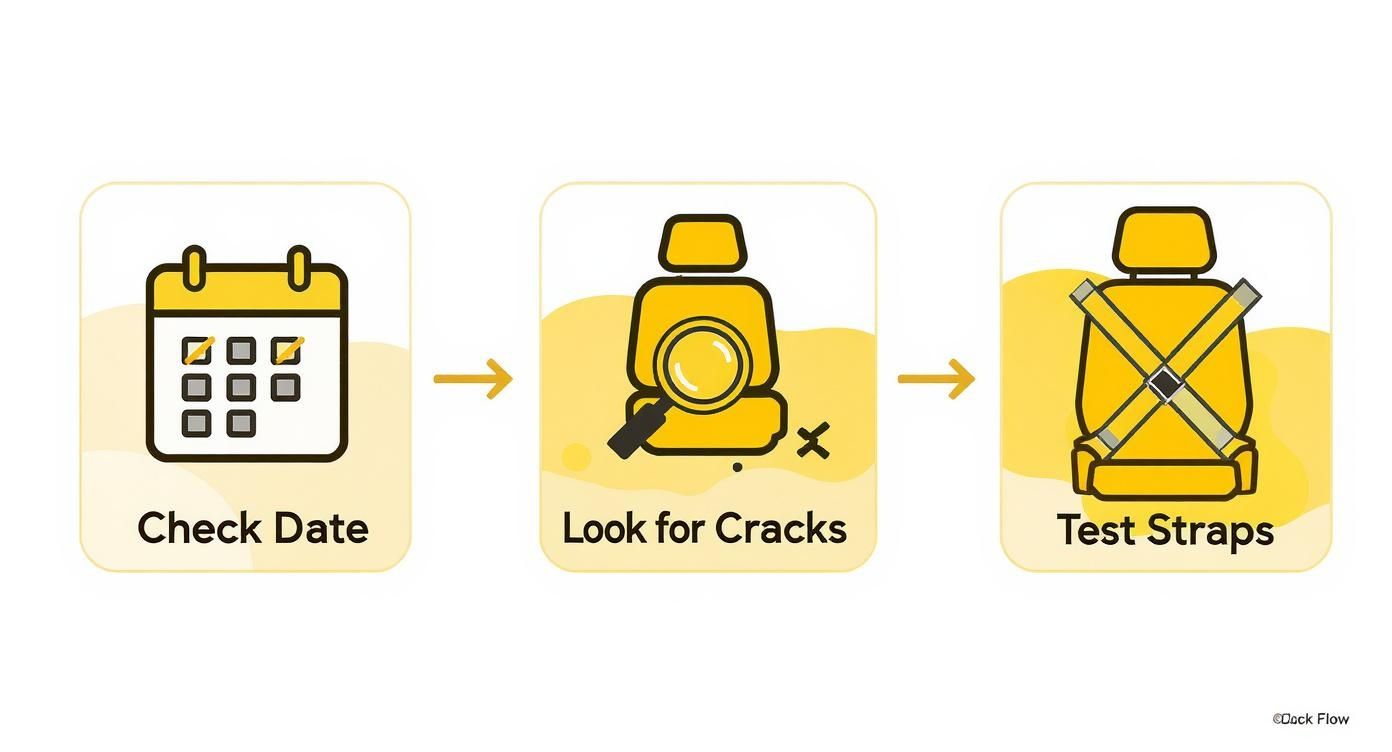
This visual is a great reminder of the non-negotiables: check the expiration date, look for any signs of damage, and make sure the straps are in good working order.
A Quick Pre-Installation Walkthrough
Before wrestling the seat into the car, run through this quick checklist. It only takes a minute and can save you a major headache later.
Your Pre-Installation Safety Checklist
Check Point | What to Look For | Why It Matters |
|---|---|---|
Expiration Date | Find the sticker on the seat's plastic shell (often on the bottom or back). | Plastic degrades over time, becoming brittle and less effective in a crash. Never use an expired seat. |
Visible Damage | Look for cracks in the plastic, frayed straps, or twisted webbing. | Any sign of wear and tear could mean the seat has been in a previous accident or is no longer structurally sound. |
Buckles & Adjusters | Click and unclick all the buckles. Pull on the harness adjuster strap. | You need to know everything is functioning smoothly before your child is in the seat. A sticky buckle is a major red flag. |
Instruction Manual | Check if the manual is tucked into its storage spot on the seat. | This is your go-to guide for installation specifics. If it's missing, ask the rental company for a replacement or look it up online. |
This isn't just about ticking boxes; it's about making sure the equipment you’re trusting with your child's life is up to the task.
LATCH vs. Seat Belt: Choosing Your Method
Most car seats today give you two ways to install them: using the vehicle's seat belt or the LATCH (Lower Anchors and Tethers for Children) system. Your rental car's owner's manual will have a handy diagram showing you exactly where the LATCH anchors are.
The LATCH System: For many parents, this is the easier route. The car seat has connectors that clip directly onto small metal bars built into the crease of the vehicle's back seat. It's usually a straightforward click-and-tighten process.
The Vehicle Seat Belt: This method is every bit as safe as LATCH, as long as it's done right. You'll simply thread the car's seat belt through a specific path on the car seat and pull it tight until it locks.
Crucial Tip: This is a big one. You should use either the LATCH system or the seat belt for installation—never both at the same time, unless the car seat manual explicitly says it's okay. Using both can create unsafe pressure points on the seat's frame.
The One-Inch Rule: Your Test for a Secure Fit
Once you've threaded the belt or clipped the LATCH connectors, it's time to get that seat rock-solid. Here’s a pro tip: put your knee into the car seat and apply your body weight, pressing it down firmly into the vehicle's cushion as you pull the LATCH strap or seat belt tight.
Your goal is to get rid of all the slack.
Now for the moment of truth: the "one-inch rule." Grab the car seat at the belt path (the area where the LATCH strap or seat belt passes through it) and give it a firm tug side-to-side and front-to-back. The seat shouldn't move more than one inch in any direction. If it does, you need to unbuckle and tighten it again.
This focus on a secure fit is a huge deal. In fact, the U.S. National Highway Traffic Safety Administration (NHTSA) is rolling out updated federal standards in 2024 that include even stricter installation testing for all new car seats. These changes push manufacturers to design safer, more user-friendly seats, which is great news for families who rent. You can get more details on how these child safety seat market trends are making travel safer.
Final Checks: Harness and Positioning
The seat is in tight—great! The last step is to make sure it's adjusted perfectly for your little one.
The position of the harness straps is key and depends on which way the seat is facing.
Rear-Facing: The straps should come from a slot that is at or just below your child’s shoulders.
Forward-Facing: The straps should come from a slot that is at or just above their shoulders.
Finally, do the "pinch test." After you buckle your child in and tighten the harness, try to pinch a horizontal fold of the strap webbing at their collarbone. If you can grab any excess webbing, it’s too loose. Keep tightening until the strap is snug and flat.
Your Top Car Seat Rental Questions Answered
Even with the best-laid plans, renting a car seat for the first time can bring up a few last-minute questions. That's completely normal. Let's walk through some of the most common concerns parents have, so you can book and travel with total confidence.
What if My Flight Is Delayed or Canceled?
This is probably the number one worry for traveling families. We all know how unpredictable air travel can be, especially with little ones in tow.
The good news is that most baby gear rental companies are pros at handling travel hiccups. The absolute best thing you can do is communicate with them as soon as you know your plans have changed.
If you’re just delayed by a few hours, a quick call or text is usually enough for them to adjust the drop-off time. If your flight gets canceled altogether, you’ll need to refer to their specific cancellation policy, which is why it’s always a good idea to read it before you book.
A Game-Changing Tip: Always give the rental company your flight number when you make the reservation. This lets them track your flight status themselves. They can often anticipate delays before you even have a chance to call, making everything go that much smoother.
How Do I Know the Car Seat Is Safe?
Another huge concern is the history of the seat. You have no way of knowing if it’s been in an accident, which is a completely valid fear. Reputable companies will always retire a seat after any crash, but you are your child's best advocate.
You should also be aware of car seat expiration dates. Yes, they expire! It’s crucial to check this yourself on the seat’s label before you even think about installing it.
What About Insurance if Something Happens?
Parents often ask what happens if the seat gets damaged, lost, or stolen. This is a great question to clear up before you finalize your rental.
Check the Rental Policy: Ask the company directly what their policy covers. Many offer an optional damage waiver for a small fee, which can be well worth the peace of mind.
Look at Your Credit Card Benefits: Some credit cards provide coverage for rented items. It’s worth a quick call to your card issuer to see what's included.
Review Your Travel Insurance: If you have a travel insurance policy, dig into the fine print. It might already cover lost or damaged rental gear.
Getting these questions out of the way beforehand makes for a much less stressful trip. A quality rental service will be ready and willing to provide clear, reassuring answers.
At Cars4Go Rent A Car, we provide safe, clean, and modern car seats to give your family peace of mind. Book your vehicle and car seat together for a seamless Miami travel experience by visiting us at https://www.cars4go.com.
Comments