


A Guide to Airport Rental Car Return
- fantasma70
- Nov 3, 2025
- 11 min read
Returning a rental car at the airport should be the easy part of your trip, not a last-minute scramble. The secret to a smooth drop-off? A little prep work before you even start the engine. Taking just a few minutes to get organized can save you from a world of travel-day stress and unexpected fees.
Your Pre-Return Game Plan
Think of this as your pre-flight checklist for the car. Airport rental locations are busy places—they account for over 38% of the global car rental market revenue, after all. A bit of planning helps you navigate the chaos like a pro and avoid the common pitfalls that catch other travelers off guard.
Let's break down what to do before you head to the airport. It really comes down to three things: getting your paperwork in order, dealing with the gas tank, and making sure you don't leave any souvenirs behind.
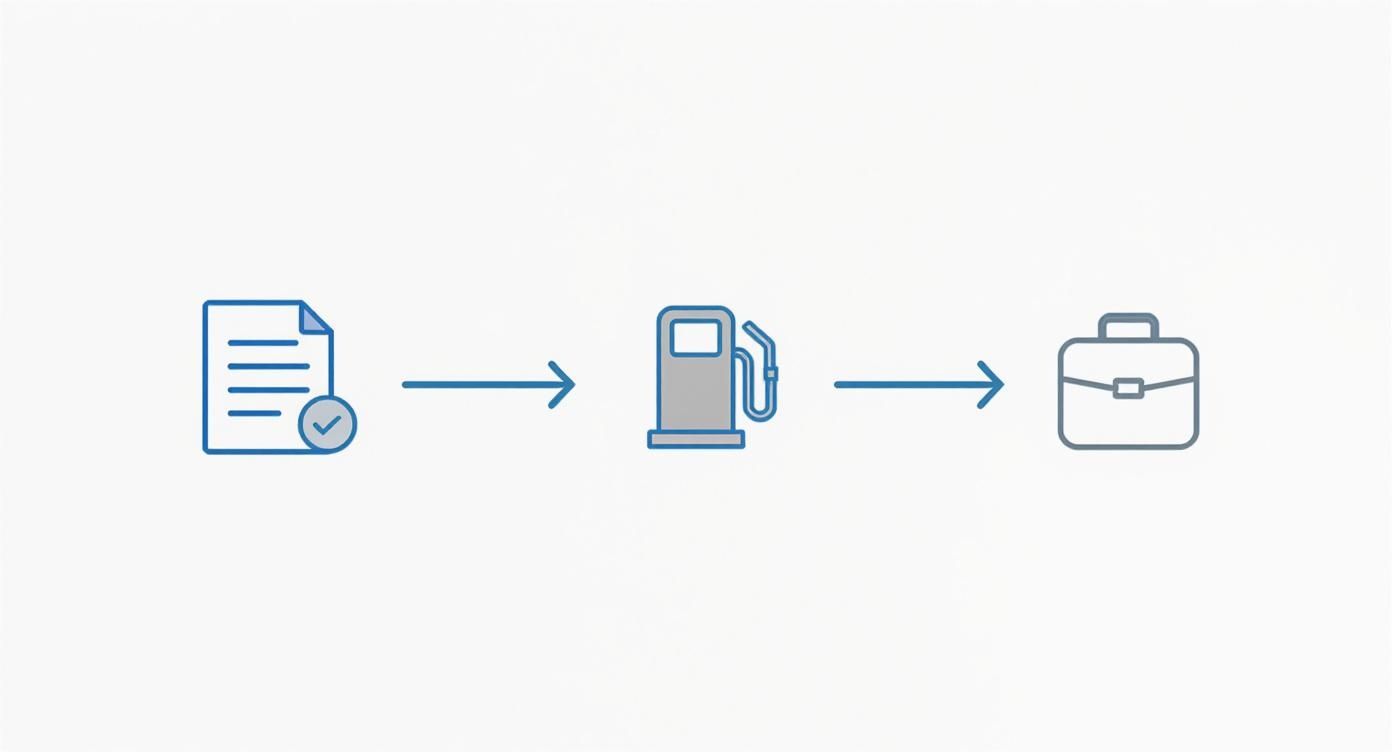
This graphic gives you a great visual of the whole process, from getting your documents ready to that final, all-important sweep for your belongings.
Documents and Fuel Policy
First things first, find your rental agreement. Have it handy along with your driver's license. This simple step saves you from that frantic pocket-patting or purse-digging moment when the return agent is waiting.
While you have the agreement out, double-check the fuel policy. Did you agree to a "Full to Full" policy, or did you pre-pay for a tank? Getting this wrong is the #1 way people get hit with ridiculously high refueling charges. Rental companies are not shy about charging a premium for every gallon they have to pump.
Final Sweep for Belongings
Before you lock the door of your hotel or Airbnb for the last time, give the car a thorough once-over. Pop the trunk, check under the seats, and don’t forget the glove compartment and door pockets. It's amazing what gets left behind. Finding that forgotten phone charger now is a minor inconvenience; trying to get it back after you're through security is a major headache. For more travel-savvy advice, you can find other helpful articles right here: https://www.cars4go.com/blogs.php.
To make this even easier, here’s a quick checklist to run through.
Rental Return Pre-Departure Checklist
This table is your quick-glance guide to ensuring you've covered all the bases before you drive to the rental car return lot.
Task | Why It Matters | Pro Tip |
|---|---|---|
Gather Rental Agreement | The return agent will need it to process your return quickly. | Keep it in the glove box with your license so it's ready to go. |
Check Fuel Policy | Avoids expensive refueling fees from the rental agency. | Use an app like GasBuddy to find a cheap gas station near the airport. |
Inspect for New Damage | Protects you from being blamed for dings you didn't cause. | Snap a few quick photos of the car's condition in a well-lit area. |
Clean Out Trash | Some companies charge a cleaning fee for excessively messy cars. | Keep a small bag in the car for trash throughout your trip. |
Check for Personal Items | Prevents the stress and cost of recovering lost belongings. | Look under seats, in seat-back pockets, and in the trunk one last time. |
Following these simple steps turns what could be a frantic rush into a calm, straightforward end to your trip.
Key Takeaway: The most common return headaches—surprise fees and lost items—are almost always preventable. A ten-minute check before heading to the airport is your best defense against a frustrating experience.
Prepping Your Car for a Smooth Drop-Off
After years of renting cars, I can tell you that two small details cause the biggest headaches and surprise fees when you return a vehicle: fuel and cleanliness. If you want a fast, fee-free drop-off, a little prep work goes a long way.
Most rental agreements use a "Full to Full" policy. It’s simple: you pick up the car with a full tank, and you bring it back with a full tank. If you don't, the rental company will happily top it off for you—at a wildly inflated price, often double or triple what you'd pay at a local pump.
You might also see a "Pre-purchase" fuel option, where you pay for a full tank upfront. This only makes sense if you know for a fact you'll return the car running on empty. For most people, that's just not practical. Your best bet is almost always to fill it up yourself.
Finding Fuel and Dodging Airport Prices
Here’s a classic traveler’s mistake: waiting until the last minute and filling up at the first gas station you see by the airport. Those stations count on your desperation and hike their prices accordingly.
The trick is to plan ahead. Use your favorite map app to find a gas station five to ten miles before you reach the airport exit. You'd be surprised at the difference it makes. For example, the station right off the airport exit might be charging $0.50 more per gallon than one just a couple of exits down the highway. That quick stop can easily save you a few bucks.
How Clean is "Clean Enough"?
Let's be clear: you don’t need to get the car professionally detailed. But you can’t treat it like your personal trash can, either. Rental companies expect the car back in a "reasonably clean" state, which allows for normal, everyday use.
A few crumbs on the floor or some dust on the dash? No big deal. But leaving behind a major mess is just asking for a cleaning fee. For an idea of what goes beyond "normal," think about what a professional cleaning involves. This apartment move out cleaning checklist gives a good sense of the level of detail that warrants extra charges.
Here are the most common culprits that trigger those pesky fees:
Sand, sand, and more sand. If you've been to the beach, make sure you get most of it out of the seats and floor mats.
Pet hair. It gets everywhere and is a pain to remove, so companies will definitely charge for it.
Sticky spills or food stains. If it needs more than a quick wipe-down, it's a problem.
Lingering odors. Smoke is the number one offender here and almost always results in a fee.
Keep in mind that expectations might vary slightly with different https://www.cars4go.com/car-types.php, but the basic rules of tidiness always apply.
Pro Tip: I always keep a small trash bag in the car during my trip. Before heading to the return lot, I spend five minutes at the gas station tossing out any wrappers, bottles, and receipts. It's the easiest way to ensure you won't face any surprise cleaning charges.
Finding Your Way Back: The Airport Return Maze

Nothing gets the heart racing like trying to navigate a sprawling airport complex when you have a flight to catch. Finding the airport rental car return can feel like a stressful scavenger hunt, but a little prep work makes all the difference. Honestly, it's all about knowing what to look for before you even turn the key.
First things first: be smarter than your GPS. Don't just punch in the airport's main address, or you'll end up in the departures drop-off chaos. Instead, get specific. Search for "Rental Car Return" plus the airport code, or even the name of your rental company, like "Avis Return LAX." This simple trick guides you straight to the correct entrance, not the passenger terminal loop.
Trust the Signs (They Actually Work)
Once you’re getting close to the airport, your focus should shift from your phone to the road signs. Airports are designed for people from all over the world, so they rely on universal symbols. Keep an eye out for that little icon of a car with a key above it—that's your North Star. Follow those signs like your flight depends on it, because it just might.
You'll also need to know if your drop-off is on-site or off-site. Your rental agreement will tell you. Many big airports have a massive, central garage for all the rental companies, but others use separate lots that require a shuttle bus. Knowing this ahead of time is crucial for planning. You can get a feel for different airport setups by checking out various car rental locations online.
On-Site vs. Off-Site: What’s the Difference?
Here’s a quick rundown of what to expect for each:
On-Site Facilities: Usually a big parking garage right next to or a short walk from the terminals. Super convenient, but they can be a madhouse during peak hours.
Off-Site Lots: Located a little ways from the airport itself. You'll drop the car and then hop on a shuttle bus to your terminal. Be sure to budget an extra 15 to 30 minutes for the shuttle ride alone.
Understanding the airport's layout is a huge advantage. For example, just looking at a map of parking spaces near Louis Armstrong New Orleans International Airport can give you a mental picture of where things are before you even arrive.
My Personal Rule: I always build in a buffer. For an on-site return, I add an extra 30 minutes to my schedule. If it's an off-site lot, I tack on 45 minutes. This little bit of padding saves me from the panic of hitting unexpected traffic or getting stuck in a long line, ensuring I walk to my gate with time to spare.
The Final Inspection and Handover
Okay, you've navigated the airport signs, found the rental return lane, and parked the car. The finish line is in sight, and it’s so tempting to just drop the keys and make a run for your gate.
Hold on. These next five minutes are the most important part of the entire rental experience. This is your last chance to make sure you don't get hit with a surprise bill weeks after your trip is over.
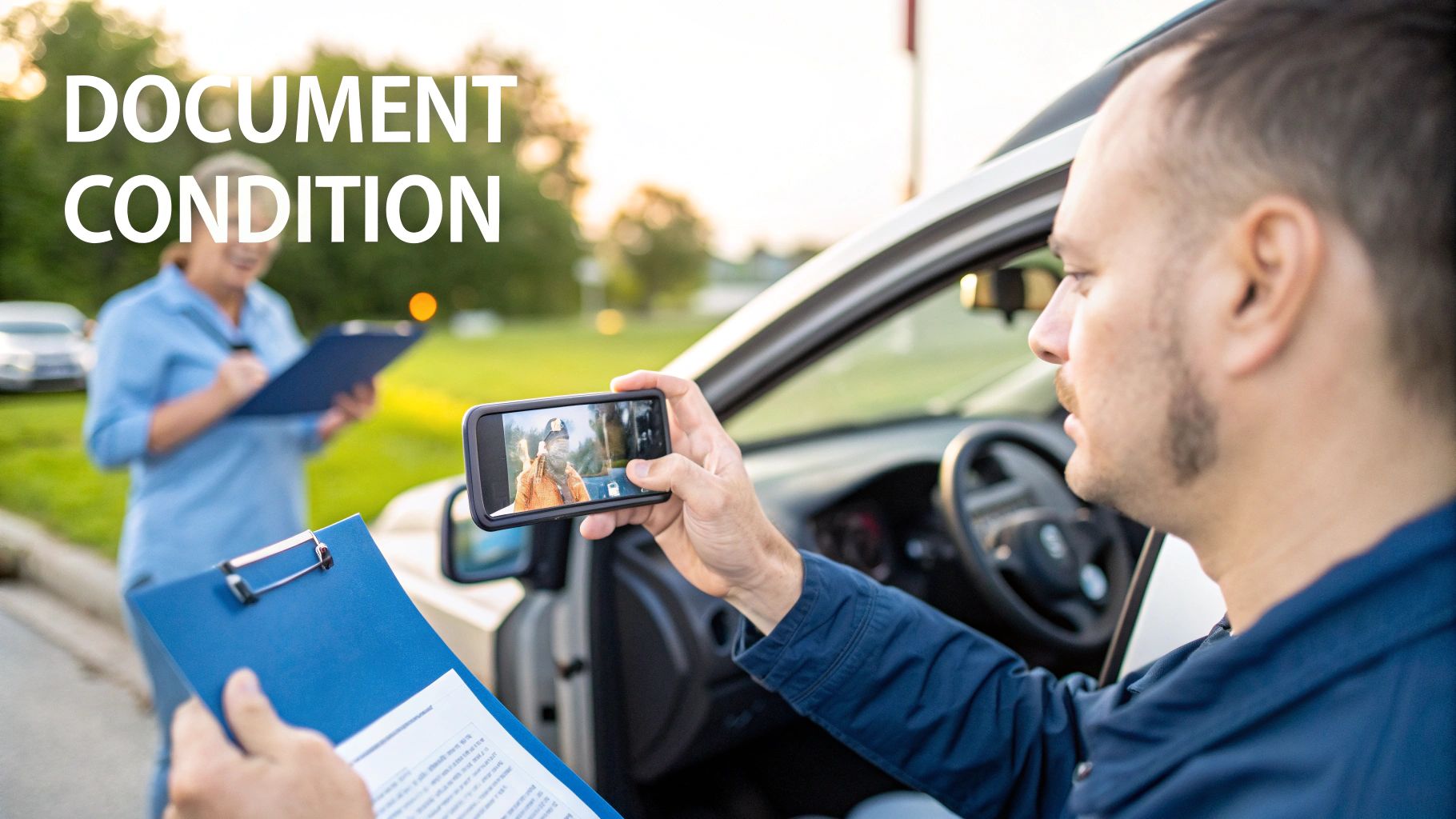
Don't just hand over the keys and hope for the best. The first thing you should do—before you even look for an employee—is pull out your phone and document the car's condition. It might feel a little over-the-top, but it’s your best defense. Some agencies now use automated scanners that can flag the tiniest scuff, and that can lead to a dispute you weren't expecting.
Your Five-Minute Video Walkthrough
The easiest way to cover yourself is to shoot a quick video. Just hit record and do a slow walkaround of the entire car. It’s simple, fast, and creates an undeniable record.
Here’s a quick checklist for your video:
The Exterior: Get all four sides of the car. Make sure you get close-ups of the bumpers, doors, and wheels—the common areas for dings and scratches. I like to narrate as I go, saying something simple like, "Driver's side door, no damage."
The Interior: Do a slow pan across the front and back seats. This just shows that the upholstery is clean and there are no new tears or stains.
The Dashboard: This is the big one. Zoom in nice and clear on the dashboard to capture two key pieces of information: the final mileage and the fuel gauge sitting on "Full."
This whole process takes maybe two minutes, and that video is your proof of exactly how you left the car. Just keep it on your phone for a few weeks until you see the final charge hit your credit card and everything looks good.
Expert Insight: I can't stress this enough: never skip documenting the car's condition on return. A quick phone video is your absolute best defense against surprise damage claims, which are definitely on the rise. It's a tiny bit of effort for total peace of mind.
Completing the Handover
With your video evidence saved, you're ready to find an agent. They’re usually walking around the return lanes with a handheld scanner. They'll do their own quick inspection, scan a barcode on the car, and confirm the fuel and mileage.
The agent will then close out your rental contract and either email you the receipt or print a small one right there. Do not walk away without getting this receipt. It’s your official proof that the rental is over.
Glance over the receipt before you head out. Just confirm a few things:
The return date and time are accurate.
The final mileage matches what you filmed.
There are no weird, unexpected charges.
Once you have your final receipt and your video saved, the airport rental car return is officially done. Now you can head for the terminal, confident that everything is squared away.
Checking Your Final Bill for Hidden Fees
You've dropped off the car, made your flight, and you think you're done. Not quite. The rental car return process isn't truly over until that final charge hits your credit card.
It’s tempting to just see the charge come through and assume it’s correct, but that's a mistake I've seen travelers make too often. Surprise fees can pop up days or even weeks later, so you need to be your own best advocate.
The moment you get that final, itemized invoice, pull up your original rental agreement and the receipt you got at the drop-off counter. Compare them line by line. You’d be surprised how often discrepancies pop up. A little vigilance here can save you a lot of money and frustration.
Where Unexpected Charges Hide
A few specific charges tend to appear out of nowhere. Keep a sharp eye out for these usual suspects when you’re reviewing your bill.
Fuel Surcharges: The most common offender. If you followed the fuel policy and returned the car with a full tank, there should be zero fuel charges. Make sure you weren't hit with an expensive refueling fee by mistake.
Late Return Fees: Did they get the time right? A five-minute grace period can turn into an extra day's charge if the return time was entered incorrectly. Check it against the time stamped on your receipt.
Cleaning or Damage Claims: This is a big one. If you suddenly see a fee for "excessive dirt" or a scratch you know wasn't your fault, this is where your own photos from the drop-off become your best evidence.
Toll Violations: Take a look at the dates and locations listed for any toll charges. Do they actually line up with where you drove? Sometimes a simple clerical error can assign another driver's tolls to your bill.
Found a charge that doesn't add up? Don't wait. Call the rental company’s customer service line right away. Have your rental agreement number, photos, and receipts ready to go. A well-documented case is much harder for them to ignore.
Got Questions About Your Airport Rental Return? We've Got Answers
Even the smoothest trips can have a few hiccups, especially when it comes to returning your rental car. Let's tackle some of the most common questions and sticky situations you might run into, so you can handle them like a pro.
What Happens if I Need to Return the Car After Hours?
Flying out on a red-eye? Don't sweat it. Most major airport rental locations are prepared for this and offer 24/7 key drop-off.
You’ll typically park in the usual return lane, jot down the final mileage and fuel reading on the rental agreement folder, and then drop your keys into a secure lockbox. It’s pretty straightforward.
Just remember, you're technically still on the hook for the car until the office opens and an employee officially checks it in the next morning.
Pro Tip: Before you walk away, pull out your phone. Take a quick video or several clear photos of the car's interior and exterior, making sure to capture the final mileage on the odometer and the fuel gauge. This is your proof of the car's condition when you left it, and it can save you a massive headache if any questions about damage or fuel levels pop up later.
I Panicked and Left Something in the Car. Now What?
It happens to the best of us. That sinking feeling when you realize your sunglasses, tablet, or kid's favorite toy is still sitting in the center console.
The moment you realize something's missing, call the specific rental location at the airport directly—don't waste time with the generic 1-800 number. Time is of the essence, as you want to catch them before the car is cleaned and prepped for the next renter.
To help them find your item quickly, have this info ready:
Your rental agreement number
The car’s make, model, and license plate
A clear description of what you lost
Where you think it might be inside the car (e.g., "in the driver's side door pocket")
If they find it, they'll work with you to get it shipped back. Just be ready to pay for the shipping costs, which is standard procedure.
For a rental experience that’s smooth from booking to drop-off, check out Cars4Go Rent A Car for your next trip. You can see our fleet and get a straightforward quote at https://www.cars4go.com.
Comments