


10 Essential Miami Car Rental Tips for 2025
- fantasma70
- Oct 29, 2025
- 16 min read
Renting a car in Miami can transform your trip from a standard vacation into a sun-soaked adventure, giving you the freedom to explore everything from South Beach's vibrant streets to the serene landscapes of the Everglades. However, navigating the rental process can feel overwhelming, with hidden fees, insurance complexities, and upselling tactics waiting at every turn. This guide cuts through the noise and provides actionable strategies to make your experience smooth and cost-effective.
We've compiled 10 essential, Miami-specific car rental tips designed to save you money, time, and stress. Forget generic advice; these are practical steps for booking smarter, inspecting your vehicle like a pro, and understanding the fine print before you sign. Getting the right car is just one part of the equation; having a plan for your destination is equally important. To ensure your Miami road trip is truly seamless, consider resources for finding parking in Miami Beach, a key aspect of any rental guide that can prevent major headaches.
Throughout this guide, we'll also highlight how a service like Cars4Go streamlines the experience with transparent pricing and customer-focused perks, ensuring your Miami journey starts smoothly the moment you land.
1. Book Early and Compare Multiple Platforms
One of the most effective car rental tips for securing a great deal in a high-demand location like Miami is to book your vehicle well in advance. Procrastination is the enemy of a travel budget. By reserving your car 4 to 6 weeks before your trip, you can often lock in rates that are 20-30% lower than last-minute bookings. This strategy not only saves you money but also ensures a wider selection of vehicles, which is crucial during peak tourist seasons or major events.

Why Early Booking and Comparison Matters
Rental car pricing is dynamic, meaning it fluctuates based on supply and demand. Booking early places you ahead of the demand curve. However, simply booking early isn’t enough. You must also compare prices across different platforms. A rental from the same company can have vastly different prices on its direct website versus on a third-party aggregator like Kayak or a deal-finder service like Autoslash.com. Each platform may have exclusive discounts or negotiated rates.
Actionable Steps for Smart Booking
To maximize your savings, implement a multi-pronged approach to your booking process. Don't just check one site and assume you've found the best price.
Set Price Alerts: Use travel comparison sites to set up alerts for your travel dates. You'll receive notifications when prices drop.
Clear Your Cookies: Before searching, clear your browser's cookies and history. Some websites use tracking cookies to increase prices on repeat visits.
Book Mid-Week: Aim to book your car on a Tuesday or Wednesday. Rental companies often update their pricing mid-week, releasing new deals.
Compare the "All-In" Price: Always compare the final price, which includes the base rate plus all taxes, airport surcharges, and mandatory fees. A low base rate can be misleading if the fees are high.
2. Inspect the Vehicle Thoroughly Before Leaving the Lot
One of the most critical car rental tips is to conduct a meticulous vehicle inspection before you drive off the rental lot. This simple step can save you from being held liable for pre-existing damage, potentially preventing hundreds or even thousands of dollars in unjust charges. Taking just five to ten minutes to document the car's condition provides irrefutable proof that protects you from disputes when you return it.
Why a Pre-Rental Inspection is Non-Negotiable
Rental companies process hundreds of vehicles daily, and it's easy for minor dings, scratches, or interior stains to be overlooked between rentals. If you fail to document this existing damage, the company may assume it occurred during your rental period and bill you for the repairs. For example, a renter who documented pre-existing bumper damage with a timestamped photo was successfully protected from an $800 damage charge. Similarly, a video inspection prevented a $1,200 dispute over interior stains left by a previous driver.
Actionable Steps for a Flawless Inspection
To ensure you're fully protected, follow a systematic inspection process. Your smartphone is your most valuable tool here, so make sure it's ready.
Use Video and Photos: Walk around the entire vehicle, taking a slow-motion video in clear daylight. Capture all four sides, the roof, wheels, and bumpers. Take close-up photos of every scratch, dent, or scuff you find.
Document the Interior: Don't forget the inside. Check for stains, rips in the upholstery, and any damage to the dashboard or console. Check that the A/C, radio, and wipers are functional.
Check Key Details: Note the mileage and the fuel level on the dashboard, making sure it matches the rental agreement. A quick photo of the dashboard is a great way to record this.
Get It in Writing: Point out all damage to a rental agent before you leave. Insist that they note it on the official rental agreement or a separate damage report and have them sign it.
3. Understand Insurance Coverage and Decline Unnecessary Add-ons
One of the most impactful car rental tips for managing your budget is to avoid paying for redundant insurance. Rental companies often push their own insurance policies, like a Collision Damage Waiver (CDW) or Loss Damage Waiver (LDW), at the counter. These add-ons can cost an extra $15-30 per day, but you may already have sufficient coverage through your personal auto insurance or credit card benefits, making this additional expense entirely unnecessary.
Why Understanding Your Coverage Matters
Paying for the rental company's insurance when you don't need it is like buying a second ticket for a flight you're already on. Many personal auto insurance policies, like those from State Farm, extend liability coverage to rental cars within the U.S. Similarly, premium credit cards such as the American Express Platinum often provide robust secondary rental car coverage, sometimes up to $75,000. Knowing your existing protection allows you to confidently decline expensive, overlapping policies and save significantly.
Actionable Steps for Smart Insurance Decisions
Before you arrive at the rental counter, a few simple checks can save you over a hundred dollars on a week-long trip. Be proactive to avoid making a costly last-minute decision under pressure.
Call Your Auto Insurer: Contact your insurance agent to confirm that your policy covers rental vehicles and ask for the specifics, including your deductible.
Check Credit Card Benefits: Review your credit card's guide to benefits or call the number on the back of the card to verify its rental car insurance provisions.
Decline with Confidence: If you confirm you have adequate coverage, politely decline the CDW/LDW and any supplemental liability insurance offered at the counter.
Identify Genuine Gaps: Only consider purchasing rental insurance if you identify a genuine gap, such as not having collision coverage on your personal policy. For a more general overview of protecting your trip, explore this comprehensive guide on what travel insurance covers.
4. Return the Vehicle with a Full Tank and Document the Condition
One of the most easily avoidable yet common extra charges in car rentals comes from fuel and damage disputes. Always return your vehicle with a completely full tank of gas and meticulously document its condition upon return. Rental companies often charge exorbitant, non-negotiable rates for refueling, sometimes two to three times the local price. A few minutes spent at a gas station before drop-off can save you a significant amount.
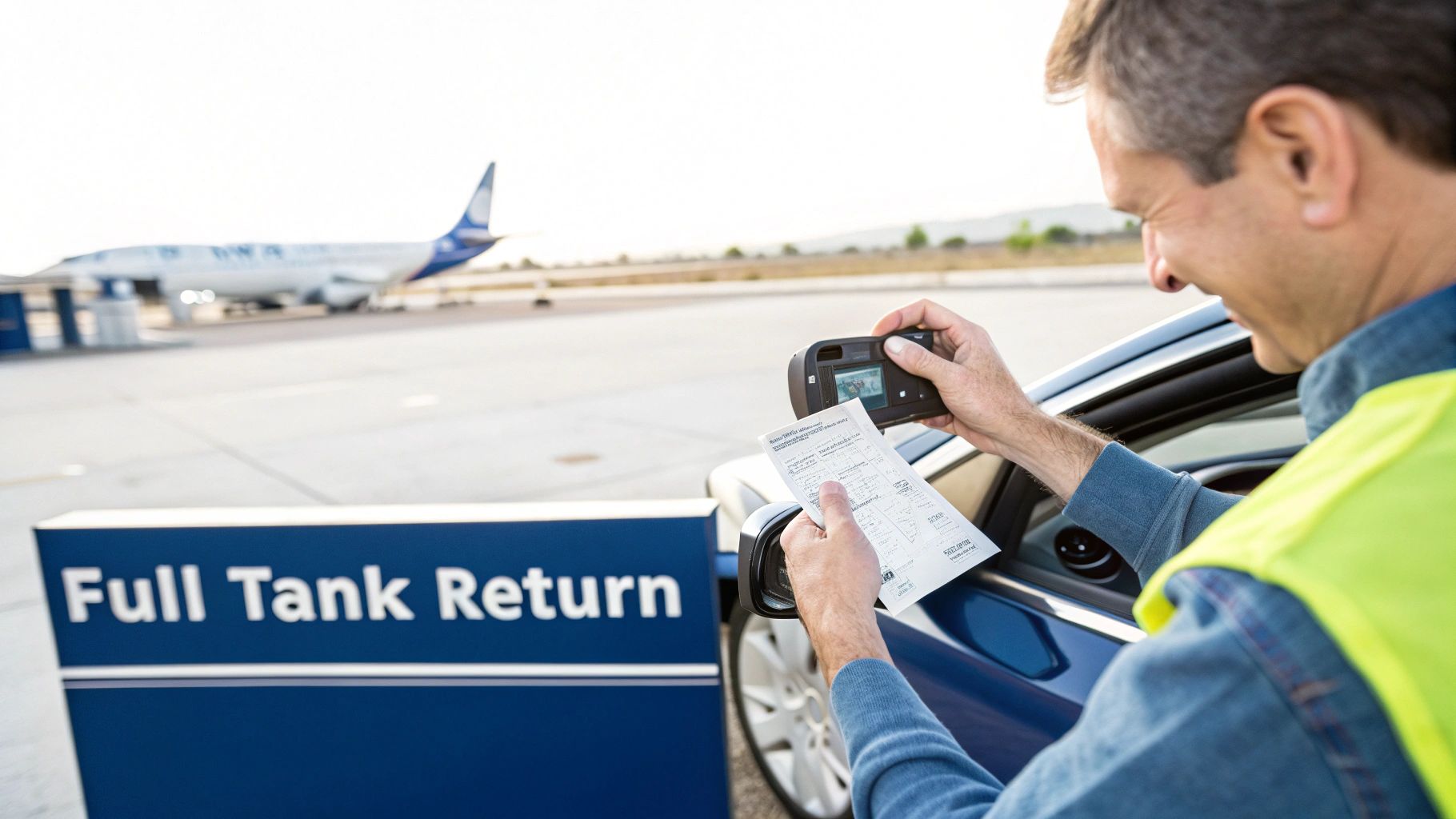
Why Refueling and Documentation is Crucial
Rental agencies bank on convenience fees. If you return a car with less than a full tank, you'll be billed for the missing fuel at a premium. For instance, you might pay over $6 per gallon through the rental company when the local Miami average is closer to $3. This simple oversight can add $50 or more to your final bill. Similarly, without photo evidence of the car’s condition at drop-off, you leave yourself open to potential claims for pre-existing or non-existent damage.
Actionable Steps for a Smooth Return
Protect your wallet and avoid post-rental stress by following a clear return protocol. This is one of the most important car rental tips to remember at the end of your trip.
Decline Pre-Paid Fuel: Unless you are absolutely certain you will return the tank empty, politely decline the pre-purchase fuel option at the rental counter. It’s almost always more expensive.
Locate Nearby Gas Stations: Before heading to the airport or rental office, use an app like GasBuddy to find the cheapest and closest gas station to your drop-off location.
Get a Receipt: After filling the tank completely, keep the gas station receipt as proof of your final fill-up.
Take Final Photos: Before you hand over the keys, take clear, time-stamped photos of the fuel gauge showing "Full," the final odometer reading, and a walk-around video of the car’s exterior and interior.
5. Choose Standard or Intermediate Cars Over Luxury Upgrades
While the allure of cruising through Miami in a high-end luxury vehicle is tempting, one of the smartest car rental tips is to opt for practicality over prestige. Rental companies are masters of the upsell, often pushing premium vehicles at the counter that come with significantly higher daily rates and increased insurance liability. Choosing a standard or intermediate car provides excellent value, better fuel economy, and lower financial risk in case of damage.
Why Resisting the Upgrade Saves You More
The true cost of an upgrade extends far beyond the daily rate. A "small" upgrade from a compact car at $30/day to a premium SUV at $75/day adds up quickly. More importantly, the financial liability skyrockets. The damage liability for a standard sedan might be capped around $15,000, whereas for a luxury car, it could exceed $45,000. Furthermore, consider fuel efficiency: a compact car averaging 32 mpg is far more economical for city driving than a large SUV getting only 18 mpg.
Actionable Steps for Sticking to Your Budget
Being prepared is your best defense against persuasive upselling tactics at the rental counter. You can secure the vehicle you need without paying for unnecessary extras.
Pre-Book Your Class: Lock in the specific vehicle class you need online, such as "Standard Sedan" or "Intermediate SUV," before you arrive. This solidifies your choice and makes it harder for agents to push an upgrade.
Politely but Firmly Decline: When offered an upgrade, have a simple, firm refusal ready. A polite "No, thank you, the car I booked is perfect for my needs" is all that is required.
Focus on Your Needs: Remind yourself that for getting from the airport to your hotel or navigating city streets, you don't need luxury features. Safety, reliability, and cost-effectiveness are the priorities.
Compare Vehicle Types: Before finalizing, explore different car types on cars4go.com to understand the pricing and features of each category, ensuring you make an informed decision from the start.
6. Verify Age Requirements and Driver License Details Beforehand
One of the most disruptive surprises at a rental counter is discovering you don't meet the company's age or license requirements. Rental agencies have strict policies, and eligibility issues found upon arrival can lead to a canceled reservation or significant extra fees. Addressing these details during the booking process is a critical car rental tip that prevents last-minute crises and unexpected costs.
Why Pre-Verification is Essential
Rental companies in Florida typically require drivers to be at least 21 years old, but drivers under 25 are often subject to a "young driver surcharge." This fee can add a substantial amount to your total bill; for instance, a $20 daily surcharge on a week-long rental adds an extra $140. Furthermore, an expired license or lack of an International Driving Permit for foreign visitors can result in an outright denial, forcing you to find expensive alternative transportation on the spot.
Actionable Steps for Smooth Pick-up
Avoid rental counter headaches by confirming your eligibility far in advance. This simple check ensures your pick-up process is seamless and free of costly surprises.
Check Policies When Booking: Don't wait until you arrive. Review the rental company's specific age requirements and young driver fees on their website before you finalize your reservation.
Inspect Your Driver's License: Ensure your license is valid and will not expire during your rental period. The name on the license must exactly match the name on your credit card.
Secure an International Driving Permit (IDP): If you are an international traveler with a non-Roman alphabet license, an IDP is often required alongside your original license.
Confirm All Documentation: Before you travel, double-check that you have all necessary documents: a valid driver's license, a major credit card in the renter's name, and any required international permits.
7. Use Loyalty Programs and Corporate Discount Codes
One of the most underutilized car rental tips involves leveraging loyalty programs and corporate discount codes to unlock significant savings. These programs are often free to join and can provide immediate benefits like 10-25% savings, complimentary upgrades, and the ability to skip long counter lines. For frequent travelers or even one-time renters, these perks translate into both cost and time savings, enhancing the overall rental experience.
Why Loyalty and Discount Codes Matter
Rental car companies reward loyalty. Programs like Hertz Gold Plus, Avis Preferred, and National Executive Plus offer members-only rates and benefits that aren't available to the general public. For instance, National Executive Plus members can often receive a free premium car class upgrade. Corporate discount codes, provided through employers or organizations like AAA, can offer an additional 10-15% reduction on base rates, which can be stacked with other promotions for maximum value.
Actionable Steps for Smart Savings
To take full advantage of these programs, you need to be proactive. Simply having a membership isn't enough; you must know how to apply the benefits effectively to your Miami car rental.
Enroll in Major Programs: Before booking, sign up for free loyalty programs with major providers like Hertz, Avis, and Enterprise. The process is quick and can be done online.
Check for Corporate Codes: Ask your employer's HR or travel department if the company has a corporate discount code with any rental agencies.
Utilize Memberships: Don't forget to use codes from organizations like AAA, AARP, or Costco, which often provide 10-15% discounts.
Stack Your Savings: Look for opportunities to combine a corporate discount code with a loyalty program member rate or a weekend promo code to amplify your savings.
8. Understand GPS and Navigation Options to Avoid Expensive Rentals
One of the easiest ways to inflate your car rental bill is by opting for the company's GPS unit at the counter. These devices often come with a hefty daily fee, typically ranging from $10 to $15. While seemingly convenient, this cost quickly adds up, especially on longer trips. The simple truth is that the powerful navigation tool you already own, your smartphone, provides a superior and free alternative.

Why Early Booking and Comparison Matters
The cost difference between using your phone and renting a GPS is significant. Over a seven-day rental, that $15 daily fee balloons into an extra $105. By simply declining this add-on, you keep that money in your pocket. Furthermore, apps like Google Maps and Waze offer features that dedicated rental GPS units often lack, such as real-time traffic updates, accident alerts, and crowd-sourced information on speed traps, making your drive through Miami's busy streets smoother and safer.
Actionable Steps for Smart Booking
To navigate Miami like a local without paying extra, prepare your personal devices before you even pick up the keys. This is one of the most effective car rental tips for cutting unnecessary costs.
Download Offline Maps: Before your trip, use Google Maps to download the entire Miami area map to your phone. This ensures you have navigation even if you lose cell service.
Bring a Phone Mount: Pack a small, inexpensive windshield or dashboard phone mount ($10-$20). This allows for safe, hands-free viewing of your route.
Leverage Waze: Use Waze for its excellent real-time, crowd-sourced traffic data, which is invaluable for avoiding I-95 gridlock or finding the quickest route to South Beach.
Conserve Your Battery: Navigation apps can drain your phone's battery. Bring a car charger and enable your phone’s battery-saver mode to ensure it lasts the entire journey.
9. Negotiate Rates and Ask About Unstated Discounts
Many travelers assume the price they see online is final, but this isn't always the case. Car rental rates often have built-in flexibility, and a direct conversation can unlock significant savings. Proactively asking about unstated discounts or promotions is one of the most underutilized car rental tips, yet it can dramatically lower your total cost. A simple phone call can reveal everything from weekend specials to loyalty member perks that aren't advertised.
Why Direct Negotiation Works
Unlike fixed airline fares, car rental pricing can be influenced by local demand, inventory levels, and even the agent you speak with. Rental companies empower their managers and local offices with some discretion to adjust rates to secure a booking, especially during slower periods. For example, a polite inquiry about a manager's discount could potentially turn a $250 weekly rental into a $175 deal, simply because the location needs to move its inventory.
Actionable Steps for Effective Negotiation
To successfully lower your rental rate, you need a strategy. Don't just ask for a lower price; come prepared with specific questions and leverage timing to your advantage.
Call the Local Office Directly: Bypass the national 1-800 number. Local agents have a better understanding of their on-site inventory and may have more authority to offer deals.
Ask Open-Ended Questions: Instead of asking "Do you have discounts?", try "What other promotions or unpublished discounts might I be eligible for?" This encourages a more detailed response.
Mention Your Affiliations: Always state if you are a member of AAA, AARP, or have military or government status. These can unlock discounts of 15% or more.
Rent During Slower Days: You'll have more negotiating power when booking a car for a Tuesday or Wednesday pickup, as demand is typically lower than on weekends.
Inquire About Competitor Matching: Politely mention that you are comparing rates with other companies. This can sometimes prompt an agent to offer a better deal to win your business.
To discover what current deals are available, you can also explore our car rental deals in Miami for a baseline of competitive pricing.
10. Read the Fine Print: Terms, Conditions, and Hidden Fees
One of the most crucial car rental tips is to meticulously read the rental agreement before signing. Car rental contracts are notorious for containing clauses that lead to unexpected and costly surprises upon return. These documents detail everything from fuel policies to mileage limits, and overlooking them can easily add hundreds of dollars to your final bill, turning a good deal into a budgetary nightmare.
Why Scrutinizing the Agreement is Non-Negotiable
The low advertised rate is rarely the final price. Hidden fees are buried within the terms and conditions, and by signing, you legally agree to them. For example, an Airport Concession Fee or Customer Facility Charge can add an extra 10-15% to your total, a detail not always prominent in the initial quote. Similarly, toll charges can be marked up significantly; a $2.50 toll might appear as a $5.00 charge on your invoice due to administrative fees.
Actionable Steps to Avoid Surprise Charges
Take a few minutes at the counter to review the contract thoroughly. This small investment of time can save you a significant amount of money and prevent disputes later.
Confirm the "All-In" Price: Ask the agent to walk you through the final price, line by line, including all taxes, surcharges, and fees.
Verify Mileage Policies: Even if you booked an "unlimited mileage" plan, confirm it in the contract. Some plans have geographic restrictions or convert to a per-mile charge if you leave the state.
Understand Fuel and Toll Options: Clarify the company's policy for refueling and tolls. Pre-paying for fuel is often more expensive, and opting into a toll transponder program can come with a daily service fee, whether you use it or not.
Check for One-Way Fees: If you plan to drop the car off at a different location, ensure any one-way rental premiums (which can range from $50 to over $200) are clearly stated.
10-Point Car Rental Tips Comparison
Strategy | Implementation complexity | Resource requirements | Expected outcomes | Ideal use cases | Key advantages |
|---|---|---|---|---|---|
Book Early and Compare Multiple Platforms | Low–Medium (advance planning, research) | Internet, comparison sites, price alerts | Lower rates and better vehicle availability | Peak travel, planned trips, limited inventory | Significant cost savings; better selection; rate locking |
Inspect the Vehicle Thoroughly Before Leaving the Lot | Low (15–20 minutes, methodical) | Smartphone for photos/video, agent cooperation | Protection from disputed damage claims | High-value rentals, used/older cars, contested returns | Legal documentation; avoids unexpected charges |
Understand Insurance Coverage and Decline Unnecessary Add-ons | Medium (pre-rental verification) | Insurance policy review, credit card benefit check, phone call | Avoid duplicate coverage; lower rental cost | Domestic rentals with existing coverage; cardholders | Saves daily insurance fees; preserves existing benefits |
Return the Vehicle with a Full Tank and Document the Condition | Low (planning and brief documentation) | Fuel cost, receipts, smartphone for photos | Avoid fuel surcharges and late-return disputes | Airport returns, short rentals, tight budgets | Prevents expensive refueling fees; clear return proof |
Choose Standard or Intermediate Cars Over Luxury Upgrades | Low (booking decision) | None special beyond booking choice | Lower daily rate, lower liability, better fuel economy | Most travelers, city driving, economy-focused trips | 20–40% cost savings; lower damage exposure; better mpg |
Verify Age Requirements and Driver License Details Beforehand | Low (policy checks) | Driver's license, possibly IDP, time to confirm | Prevents rental denial or young-driver surcharges | Young drivers, international rentals | Avoids last-minute issues; allows surcharge budgeting |
Use Loyalty Programs and Corporate Discount Codes | Low–Medium (enroll and track) | Account enrollment, corporate codes, membership cards | Consistent discounts, faster service, upgrades | Frequent renters, business travel | 10–25% savings; express service; complimentary upgrades |
Understand GPS and Navigation Options to Avoid Expensive Rentals | Low (use personal device) | Smartphone, data or offline maps, phone mount, charger | Save GPS fees; improved navigation and traffic info | Domestic travel with smartphone coverage; long drives | Eliminates $10–15/day GPS fees; superior real-time routing |
Negotiate Rates and Ask About Unstated Discounts | Medium (calls and negotiation) | Time, competitor quotes, willingness to call/ask | Potential additional savings and uncovering hidden deals | Flexible schedules, slow-season travel, corporate rates | Potential 10–30% extra savings; may yield upgrades |
Read the Fine Print: Terms, Conditions, and Hidden Fees | Medium–High (careful review) | Time to read contracts, screenshot tools, questions for agent | Avoid unexpected fees; accurate total cost understanding | Airport rentals, one-way trips, unfamiliar locations | Prevents $200–500+ surprises; enables true cost comparison |
Drive Smarter and Make Your Miami Trip Unforgettable
Renting a car in Miami doesn't have to be a source of stress or unexpected expenses. By now, you're armed with a comprehensive set of car rental tips designed to transform you from a hopeful tourist into a savvy traveler. The journey from booking online to returning the keys is filled with opportunities to save money, avoid hassles, and enhance your overall experience. The key is to be proactive, not reactive.
The most powerful takeaways from our guide are rooted in preparation and awareness. Booking early isn't just a suggestion; it's a strategic move to lock in lower prices. A meticulous pre-rental inspection is your best defense against post-rental damage claims. Similarly, understanding your existing insurance coverage before you reach the rental counter empowers you to confidently decline expensive, often redundant, add-ons. These actions alone can save you hundreds of dollars and significant peace of mind.
Your Action Plan for a Seamless Rental Experience
To put this knowledge into practice, focus on these three core principles for your next Miami trip:
Diligence Before You Book: Spend time comparing platforms, reading the fine print on terms and conditions, and verifying driver requirements. A few minutes of research can prevent major headaches later.
Vigilance at the Counter and Lot: Don't rush the pickup process. Ask direct questions about fees, negotiate politely, and document the vehicle's condition with photos or video. This creates a clear record and holds the rental company accountable.
Mindfulness During and After: Keep track of your fuel level to avoid exorbitant refueling charges. Adhere to return times and document the car's condition once more upon drop-off. A clean return process is the final step to a successful rental.
Mastering these car rental tips does more than just save you money; it gives you control. It allows you to focus on what truly matters: exploring the vibrant streets of South Beach, driving down to the Keys, or simply enjoying the freedom of the open road. Your rental car should be a tool for adventure, not a source of frustration. By applying these strategies, you ensure your South Florida journey is defined by unforgettable moments, not by unexpected fees and fine-print traps. Drive smart, travel well, and make the most of every mile.
Ready to experience a rental process where these tips are standard practice? Cars4Go Rent A Car offers a transparent, customer-focused approach with clear pricing, door-to-door delivery, and no hidden fees, letting you enjoy your Miami trip without the usual rental worries. Book your perfect vehicle today at Cars4Go Rent A Car and drive with confidence.
Comments