


Rent a Car for a Week Your Ultimate Guide to Smart Savings
- fantasma70
- Jan 3
- 12 min read
Thinking about a week-long trip? Renting a car for seven days is almost always the smartest move, giving you total freedom without breaking the bank. This guide will walk you through everything, from picking the perfect ride for a Miami beach vacation to understanding what you'll actually pay.
Why Renting a Car for a Week Is a Game-Changer

When you rent a car for a week, it’s not just about getting from Point A to Point B—it’s about owning your schedule. Think about it: you can take a spontaneous drive down the coast, find a hidden-gem restaurant miles from your hotel, or completely change your plans without being at the mercy of ride-share surge pricing or confusing bus schedules.
The seven-day rental period is the perfect sweet spot. It gives you plenty of time to really dig in and explore, and the daily rates are often much cheaper than if you were to rent for just a day or two. You’re not just scratching the surface like you would on a quick weekend trip; you have the time to really get a feel for a place.
The Numbers Don't Lie: Weekly Rentals are Soaring
It’s no surprise that more travelers are choosing weekly rentals. The global car rental market hit a staggering USD 149.87 billion in 2024, and short-term rentals—the kind perfect for a 7-day adventure—account for a massive 65.53% of that. In North America, where the industry is biggest, practical economy cars are what most people are booking. You can dig into the full story in this deep dive on the car rental market.
This trend points to a major shift in how we travel. People want value, but they also want convenience and the freedom to do their own thing. For a week in Florida, having a rental with unlimited miles means you can cruise from Miami down to the Keys without constantly watching the odometer. It’s a totally different experience.
At its core, a weekly car rental transforms your trip from a series of destinations into a seamless journey. It’s the difference between seeing a place and truly experiencing it on your own terms.
What This Guide Covers
Think of this as your personal roadmap to a smooth, no-surprises rental experience. We’ll cut through the confusion and show you how to snag great deals while avoiding the common traps. You'll learn why companies like Cars4Go have a real advantage with perks you often have to pay extra for elsewhere, like:
Unlimited miles anywhere in Florida
A second driver added for free
Transparent online pricing—no gotcha fees at the counter
Family essentials like car seats included
Ready to get on the road? Let’s make sure your week-long car rental is simple and affordable.
Finding and Booking the Right Car for Your Trip

Before you even think about getting the keys, the real first step to a great week-long rental is asking yourself one simple question: what kind of trip is this, really? The answer will point you straight to the perfect vehicle for your adventure.
Think about it. A solo business traveler darting around downtown Miami needs something completely different from a family of four heading to the theme parks, loaded down with luggage and a trunk full of souvenirs. It's tempting to just grab the cheapest option, but take a minute to consider your actual itinerary.
Sure, an economy car is a lifesaver on gas and a breeze to park in tight city spots. But if you’re traveling with family or a lot of gear, you'll be thankful for the extra room in an SUV or minivan. When you rent a car for a week, matching the vehicle to your plans is the best way to avoid a week of headaches. No one wants to play luggage Tetris every morning.
Choosing the Right Vehicle Class
To nail down the best choice, let's look at a few common scenarios:
The City Explorer: Sticking to urban areas with just one or two people? A compact or economy car is your best friend. They get great mileage and handle city traffic like a champ.
The Family Vacation: If you have a group of three or more, or you’re bringing kids along, a mid-size SUV or a minivan is pretty much essential. You need that space for car seats, strollers, and all the other things that come with family travel.
The Scenic Road Tripper: Got plans to cruise down the scenic A1A? This is where a convertible or a roomy full-size sedan can turn a simple drive into the best part of your trip.
If you’re still on the fence, it helps to browse through detailed descriptions of the various car types available for rent to see what clicks.
Securing Your Booking with Confidence
Once you’ve zeroed in on the right ride, it's time to book. It can be tempting to use those big aggregator sites to compare prices, but be warned—they're notorious for hiding extra fees that magically appear when you get to the rental counter. Booking directly with the rental company is almost always the safer, more transparent way to go.
Look for a straightforward online booking system where the price you see is the price you actually pay. That’s a clear sign of a company that values its customers. At Cars4Go, we make sure our online quotes match our in-person rates, so you can lock in your vehicle without dreading last-minute surprise charges.
The U.S. car rental industry is a massive $60.7 billion market. While 43% of that business still happens at airports, there's a big shift toward local rentals and even door-to-door delivery. It just goes to show that more and more travelers want the convenience of having a car brought right to their hotel or doorstep.
This direct approach makes planning your budget so much simpler. When you know the total cost upfront, including all taxes and any extras, you can map out your week-long trip with confidence. It’s the smartest way to get your journey started on the right foot.
Getting Your Paperwork and Payments in Order
Okay, you’ve picked out the perfect ride for your trip. Now for the less exciting—but super important—part: handling the payment, paperwork, and insurance. Getting these details sorted out ahead of time is the secret to a smooth, hassle-free pickup. It’s all pretty straightforward, but a little prep work can save you from a major headache at the rental counter.
First things first, let's talk documents. You'll obviously need a valid driver's license. If you're visiting from another country and your license isn't in English, it’s a smart move to also have an International Driving Permit (IDP). You’ll also need a payment card that matches the name on the driver's license.
Paying Your Way
In the past, renting a car without a credit card was nearly impossible. That old-school rule can be a real roadblock for a lot of people. Thankfully, forward-thinking rental companies now offer more flexibility by accepting both credit and debit cards.
At Cars4Go, we get it. That’s why we happily accept both credit and debit cards. Our whole philosophy is about making rentals easy and accessible, so you can book the car you want without jumping through hoops.
This simple, modern approach means you can secure the vehicle you need with the card you actually use. It’s a small thing that makes a huge difference when you need to rent a car for a week.
Making Sense of Rental Car Insurance
Insurance can seem like a confusing mess of acronyms, but it really boils down to two key things you need to understand.
Collision Damage Waiver (CDW): This is a big one. It's not technically insurance, but it works like it. If the car gets damaged or stolen, the rental company agrees to "waive" the right to bill you for the full cost. You're usually still on the hook for a deductible, but it protects you from a massive bill.
Liability Insurance: This covers you if you cause damage to someone else's car or property, or if someone is injured in an accident you cause. It’s about protecting you from claims made by other people.
Before you say yes to the extra insurance at the counter, do a little homework. A quick phone call to your personal auto insurance agent can tell you if your policy already covers rental cars. Many major credit cards also offer rental car protection as a perk, as long as you use that card to pay for the rental. Five minutes of investigation could save you from paying for coverage you already have.
While your rental insurance is there for the car itself, it's also wise to know the general car accident procedures just in case. Knowing what to do in a stressful situation helps you stay calm and in control. Once you’ve got your documents and insurance figured out, you're all set to grab those keys and hit the road.
Getting the Most Value: Add-Ons and Money-Saving Tips
Getting a great deal on a weekly car rental goes way beyond just the sticker price. It’s really about the total value you walk away with. A few smart moves on add-ons and some insider knowledge on saving money can make a huge difference to your wallet and your trip's overall enjoyment. You have to look at the whole picture, not just the daily rate.
So many rental agencies nickel and dime you for every little extra. Need to add your spouse as a driver? That's a fee. Need a GPS? That's another fee. Those "small" charges pile up fast over a week, and your great deal suddenly isn't so great anymore. The smarter companies, however, are starting to bundle these essentials right into their standard rates, which is a much better way to do business.
At Cars4Go, we just don't believe in surprise fees. That's why we include a complimentary second driver and car seats at no extra cost. When you're driving across Florida, you shouldn't have to pay more to share the wheel. And if you're traveling with kids, you definitely shouldn't be dinged for needing safe car seats.
How to Really Save on Your Weekly Rental
When you decide to rent a car for a week, timing is everything. The global car rental market is massive—expected to reach USD 252.94 billion by 2030—and it follows predictable patterns. Take a hot spot like Miami, for example. Demand can easily jump by 40% over a weekend, and you can bet the prices do too. If you can schedule your rental to start on a Tuesday or Wednesday instead of a Friday, you'll often find much better rates.
Another huge money-saver, especially in a state as big as Florida, is finding a company that offers unlimited mileage. Think about it: the drive from Miami to Orlando and then down to the Keys can rack up hundreds of miles. With unlimited miles, you can just drive. No stress, no constantly checking the odometer, and definitely no nasty surprise fees when you return the car.
The secret to saving big on a weekly rental is to think like an experienced traveler. You're looking for bundled value, booking during those quieter mid-week days, and always choosing policies like unlimited mileage that give you true freedom.
Smart Add-Ons That Are Actually Worth It
Some extras are more than just a convenience—they offer genuine peace of mind and can even save you money in the long run. Here are a few worth thinking about:
GPS Units: Sure, your phone has maps, but a dedicated GPS unit won't drain your phone's battery or eat up your mobile data. This is a big deal if you're traveling internationally and trying to avoid roaming charges.
Loyalty Programs: If you rent cars even a couple of times a year, signing up for a loyalty program is a must. The points you earn on a week-long rental can quickly add up to discounts, free upgrades, or even a free rental day on your next trip.
Prepaid Fuel Options: This one can be tricky. It’s incredibly convenient to just drop the car off without having to hunt for a gas station. But, you're paying for a full tank, and you won't get a refund for any fuel you don't use. You have to weigh if the convenience is worth the potential extra cost.
You can apply these same principles to other parts of your trip, too. Using smart booking strategies for travel for your hotels can also lead to big savings. And before you book anything, always hunt for special weekly packages or promotions. Companies often have great car rental deals that bundle everything you need for one discounted price, giving you the absolute best bang for your buck.
Nailing the Pick-Up and Drop-Off
How your rental starts and ends can set the tone for your entire trip. A quick, easy pick-up gets you on the road and into vacation mode faster, while a hassle-free drop-off means you head home without any lingering stress. Let's walk through how to make both ends of the journey a breeze.
When most people think of renting a car, they picture those long, snaking lines at the airport counter. But you don't have to start your trip that way. Many modern rental services, including us at Cars4Go, offer door-to-door delivery. Imagine having the car brought right to your hotel or Airbnb—no shuttle buses, no crowded counters, just grab the keys and go. It’s a game-changer when you rent a car for a week and every minute counts.
Your 5-Minute Pre-Drive Checkup
Before you even think about hitting the road, take five minutes for a quick walk-around. Seriously, this small habit can save you from a massive financial headache down the line. Just pull out your smartphone and play detective for a moment.
Start by taking a quick video or photos of the car from every angle. Then, zoom in on any little imperfections you spot. I'm talking about anything and everything:
Tiny scratches on the doors or bumper
Small dents you might otherwise ignore
Chips or cracks in the windshield
Scuffs on the wheels or hubcaps
Make sure your phone's timestamp is on. Don't be shy—point out every single mark to the rental agent and watch them add it to your rental agreement before you sign and drive off. This creates a bulletproof record that the damage was there before you were.
A few minutes spent documenting the car’s condition is the single best way to protect yourself from getting blamed for someone else's bumps and scrapes. Your photos are your proof.
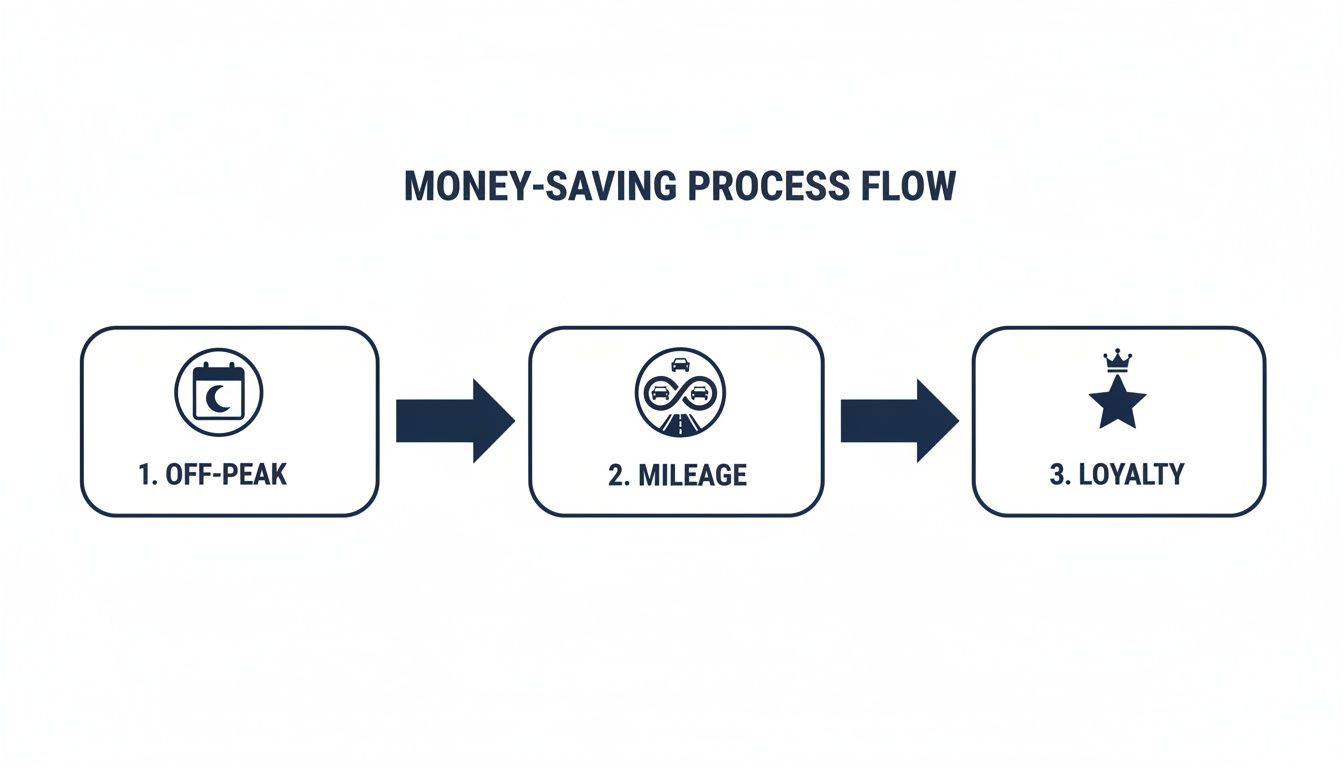
The real trick to saving money is stacking your strategies. Booking during off-peak times, finding a deal with unlimited mileage, and using loyalty perks all add up to significant savings.
Returning Your Car Like a Pro
When your trip is over, a smooth return is the final step. Most agencies use a "full-to-full" fuel policy, meaning you get the car with a full tank and you're expected to bring it back the same way. The easiest way to handle this is to find a gas station a few miles from the drop-off location and top it off right before you head in.
Dropping the car off at the same location where you picked it up is almost always the cheapest and easiest route. "One-way" rentals can sound convenient, but they often come with surprisingly high fees. Planning a round trip from the same branch helps you dodge those extra costs. You can find our most convenient car rental locations to map out a route that makes sense for your travel plans.
Got a Few More Questions About Your Weekly Rental?
Planning a week-long trip can feel like juggling a dozen different things, and it's totally normal to have a few lingering questions about your car rental. Let's clear up some of the most common ones so you can lock in your booking and get back to the fun part—planning your adventure.
Is It Really Cheaper to Rent for a Full Week?
In almost every case, yes. It might sound counterintuitive, but renting a car for seven days is often cheaper than renting for five or six.
Rental companies love longer bookings because it means less paperwork and less time spent turning over cars. They pass those savings on to you in the form of a heavily discounted weekly rate. The per-day cost drops significantly when you book a full week.
Next time you're booking, play around with the dates. You might find that adding a day or two to your rental actually lowers the total price. It’s a little trick of the trade that can save you a surprising amount of money.
What Paperwork Should I Have Ready?
Showing up to the rental counter without the right documents is a surefire way to start your trip with a headache. It's simple stuff, but you have to get it right.
Here’s exactly what you'll need:
A Valid Driver's License: Make sure it's not expired and is from your home state or country.
A Credit or Debit Card in Your Name: This is non-negotiable. The name on your payment card must perfectly match the name on your driver's license.
Passport (for international travelers): If you're visiting from abroad, your passport is your primary form of ID.
While an International Driving Permit (IDP) isn't always mandatory if your license is in English, it’s a good idea to have one. It's an official translation that can prevent any confusion.
I can't stress this enough: the number one reason people get turned away at the rental counter is a name mismatch between their license and credit card. Check it now, and save yourself a world of trouble later.
Can We Add Another Driver for a Week-Long Trip?
You absolutely can, and for a seven-day rental, I highly recommend it. Having a co-pilot to share the driving load makes for a much safer and more relaxing road trip, especially on long stretches of highway.
Most companies will let you add a second driver, but they’ll hit you with a daily fee for the privilege. Over a week, that can easily add $70-$100 to your bill. This is one of those "hidden fees" that can catch you off guard.
At Cars4Go, we think that’s just silly. A road trip is meant to be shared, so we include a second driver free of charge on all our rentals. All they need to do is show up at pickup with their valid license and meet the age requirements. Simple as that.
What Happens If I'm Running Late to Return the Car?
Life happens, and sometimes you just can't make it back on time. Rental companies understand this, but their policies can be strict.
Most agencies offer a short grace period, usually around 29 minutes, before the late fees start rolling in. If you cross that threshold, you'll probably be charged for an extra hour. A few hours late? Expect to be billed for an entire extra day.
Here's the kicker: that extra day is usually charged at the company's standard (and much higher) daily rate, not the discounted weekly one you got. The best thing you can do is communicate. If you know you're going to be late, call the rental office immediately. They can walk you through their policy and might be able to work with you to avoid a nasty surprise on your final bill.
Ready to book a weekly rental where everything is straightforward and simple? Cars4Go Rent A Car gives you transparent pricing, free second drivers, and unlimited Florida miles. Book your car today at https://www.cars4go.com.
Comments